


Framed or unframed, desk size to sofa size, printed by us in Arizona and Alabama since 2007. Explore now.
Shorpy is funded by you. Patreon contributors get an ad-free experience.
Learn more.



- Texas Flyer wanted
- Just a Year Too Soon
- WWII -- Replacing men with women at the railroad crossing.
- Yes, Icing
- You kids drive me nuts!
- NOT An Easy Job
- I wonder
- Just add window boxes
- Icing Platform?
- Indiana Harbor Belt abides
- Freezing haze
- Corrections (for those who care)
- C&NW at Nelson
- Fallen Flags
- A dangerous job made worse
- Water Stop
- Passenger trains have right of way over freights?
- Coal
- Never ceases to amaze me.
- Still chuggin' (in model form)
- Great shot
- Westerly Breeze
- For the men, a trapeze
- Tickled
- Sense of loneliness ...
- 2 cents
- Charm City
- What an Outrage
- Brighton Park
- Catenary Supports

Photos submitted by Shorpy members!
Print Emporium
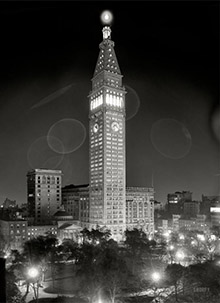



Norge: 1938
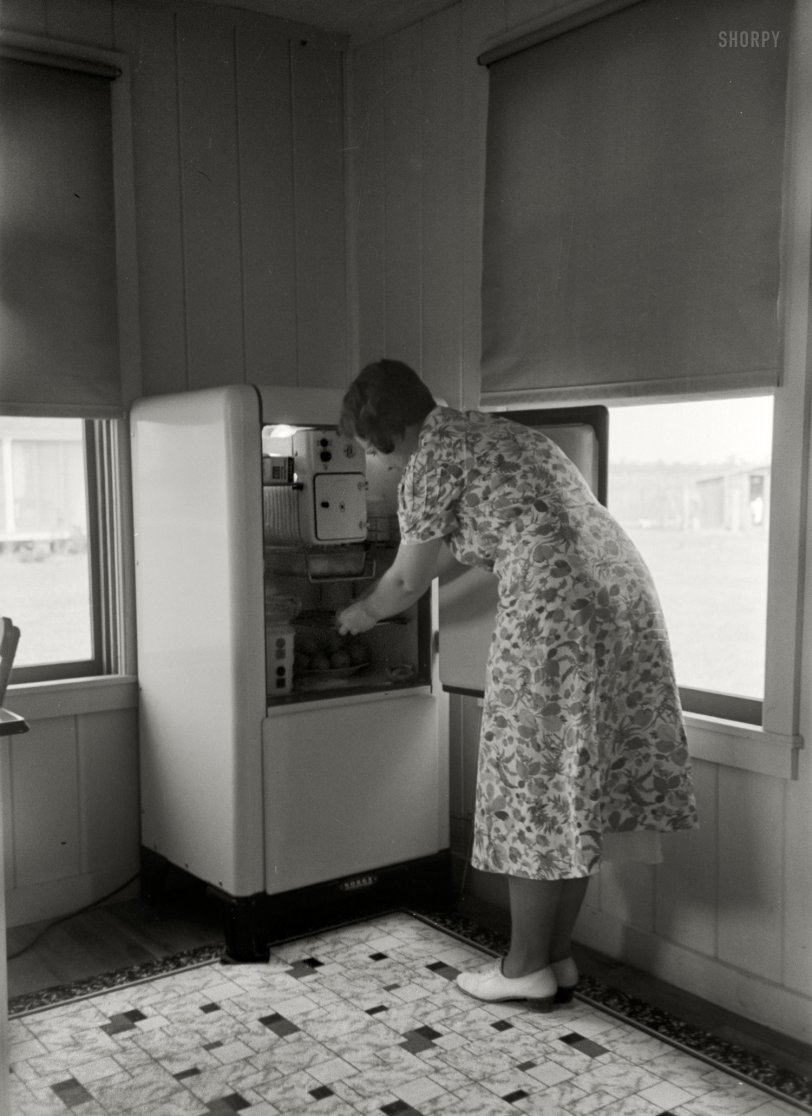
September 1938. "Kitchen in farmer's home, Lake Dick Project, Arkansas." 35mm negative by Russell Lee for the Farm Security Administration. View full size.
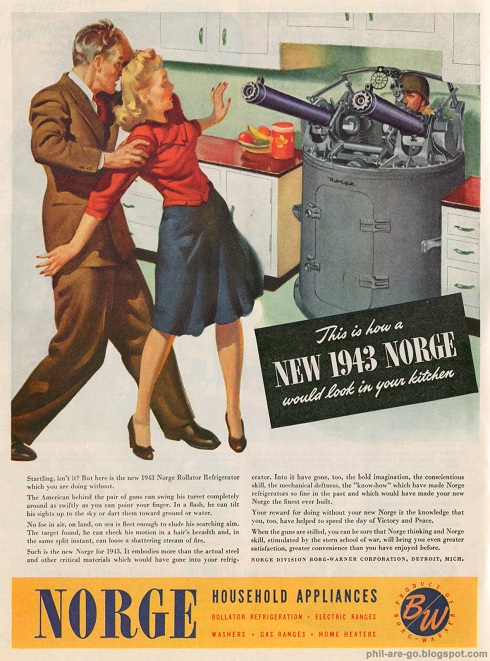
Norge, five years later
How do you sell appliances in 1943 that you're not selling in 1943?

Ice cream
had to be eaten immediately in the days before large capacity freezers! (No inconvenience, when you think about it!)
You typically got it hand delivered in town, and hand churned it out of town.
If you had no electricity, gas-powered fridges were available. They are still used in RVs and similar applications.
The linoleum lives on ~
I have two old grange tables that are topped with that lino pattern. it has beiges as the background, and red and blue for the blocks of color - it's not so bad to look at.
A Rare Treat
The federal farm electrification program began in 1936, same time as the 'new deal' farm resettlement project. When the Lake Dick Resettlement Project was completed in 1938, most farms were still without juice. (electric, not cow!)
Those are some HUGE windows.
But I guess they don't have to worry much about keeping the kitchen warm durog an Arkansas winter.
The Linoleum rug is very modern and low maintenance (compared to wood floors, I suppose).
Brrrr
And you had to manually remove the ice from the outside of the freezer compartment. Eat up the left over ice cream that was inside first. Shut off the power, a fan helps to loosen the frost.
Re: Cold Cokes
My parents also had a refrigerator similar to this one, a 1934 Westinghouse. The "freezer" was pretty much useless, as it would have to be set pretty low to keep a half-gallon of ice cream frozen, but it couldn't be beat for keeping drinks chilled. It had a degree setting instead of the "1-2-3-4" settings of modern fridges.
It finally gave up the ghost in 2008. They don't build them like that anymore.
Freezing Cold
As Norwegian I find it hurtful to have my land and nation associated with cold environments like this. :P
Cold Cokes
My grandmother had a fridge very similar to this one. She put the six and a half ounce Coca Colas in the tray under the freezer, and to this day, I have never tasted a colder or better drink. That old fridge ran for more than forty years. This photo brings back memories of my grandmother and her ice cold cokes.
The large freezer compartment....
When I was very young back in the late 40s we had a Norge refrigerator that was just slightly newer than the one shown.
What I find really interesting is the freezer is NOT the large area below the open refrigerator compartment but the small square door in the center just below the woman's head.
The lower area was where the belt driven compressor and its associated motor resided. As a youngster I would run the other way whenever my father removed the cover on this "scary" area.
 Shorpy.com is a vintage photography site featuring thousands of high-definition images. The site is named after Shorpy Higginbotham, a teenage coal miner who lived 100 years ago. Contact us | Privacy policy | Accessibility Statement | Site © 2024 Shorpy Inc.

On Shorpy:
Today’s Top 5