



Framed or unframed, desk size to sofa size, printed by us in Arizona and Alabama since 2007. Explore now.
Shorpy is funded by you. Patreon contributors get an ad-free experience.
Learn more.



- Tough Guys
- Lost in Toyland
- And without gloves
- If I were a blindfolded time traveler
- Smoke Consumer Also Cooks
- Oh that stove!
- Possibly still there?
- What?!?
- $100 Reward
- Freeze Frame
- Texas Flyer wanted
- Just a Year Too Soon
- WWII -- Replacing men with women at the railroad crossing.
- Yes, Icing
- You kids drive me nuts!
- NOT An Easy Job
- I wonder
- Just add window boxes
- Icing Platform?
- Indiana Harbor Belt abides
- Freezing haze
- Corrections (for those who care)
- C&NW at Nelson
- Fallen Flags
- A dangerous job made worse
- Water Stop
- Passenger trains have right of way over freights?
- Coal
- Never ceases to amaze me.
- Still chuggin' (in model form)
Photos submitted by Shorpy members!
Print Emporium
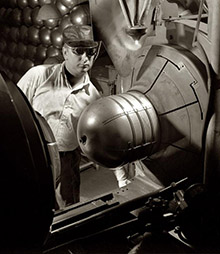

Light Cleaning: 1943
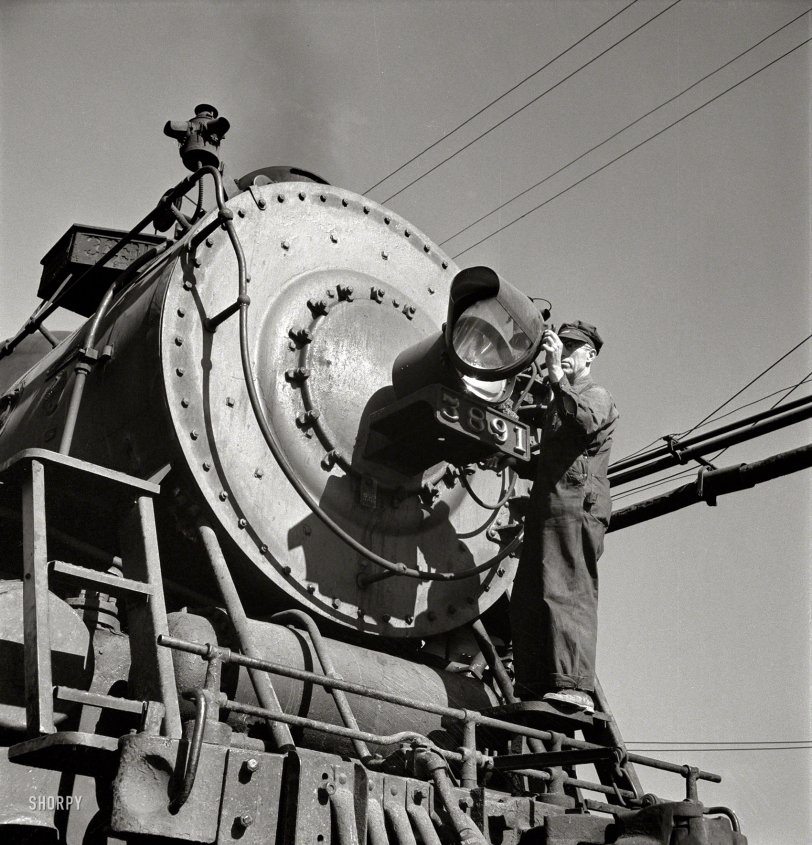
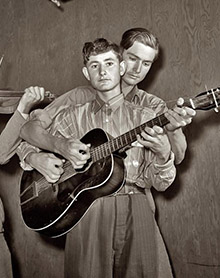
March 1943. "Needles, Calif. Electrician B. Fitzgerald cleaning the headlight of a locomotive at the Atchison, Topeka & Santa Fe yard. All engines operating west of Needles are equipped with hooded headlights in accordance with the blackout regulations." Photo by Jack Delano, Office of War Information. View full size.
He'll get busier
When the war is over, railroads will continue their mad dash to replace the steam locomotive with diesels and diesels need electricans, which will make them busier than ever and other trades, such as boilermakers, no longer needed.

Other Electrical?
Lights in the cab, gauge lights, and possibly Cab Signals or Automatic Train Stop also need electricity on a steam locomotive.
Afterthoughts
Used primarily on West Coast locomotives, it was used to prevent a wayward Japanese eye from seeing it at night!
Also, this guy was an "electrician" on a steam engine, besides the headlight, and markers (if equipped) and the steam-driven generator, what else did he fix? ?
Love the photos of old timers and trains, together in a photo. It's a bit different today oddly enough...when the hair turns white, you retire (e.g., not many OLD TIMERS in any profession for that matter, but especially in RR'ing).
A "Santa Fe" locomotive
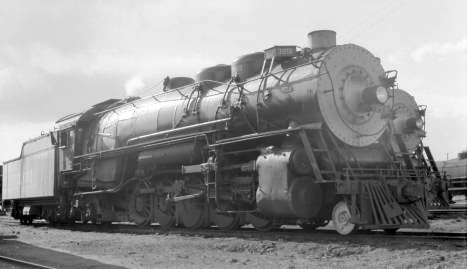
This 3891 locomotive is classed as a SANTA FE 2-10-2 type first used by AT&SF in 1903, it had 85,486 lbs of tractive effort, you convert it to horsepower.
 Shorpy.com is a vintage photography site featuring thousands of high-definition images. The site is named after Shorpy Higginbotham, a teenage coal miner who lived 100 years ago. Contact us | Privacy policy | Accessibility Statement | Site © 2024 Shorpy Inc.
On Shorpy:
Today’s Top 5