


Framed or unframed, desk size to sofa size, printed by us in Arizona and Alabama since 2007. Explore now.
Shorpy is funded by you. Patreon contributors get an ad-free experience.
Learn more.



- Icing Platform?
- Indiana Harbor Belt abides
- Freezing haze
- Corrections (for those who care)
- C&NW at Nelson
- Fallen Flags
- A dangerous job made worse
- Water Stop
- Passenger trains have right of way over freights?
- Coal
- Never ceases to amaze me.
- Still chuggin' (in model form)
- Great shot
- Westerly Breeze
- For the men, a trapeze
- Tickled
- Sense of loneliness ...
- 2 cents
- Charm City
- What an Outrage
- Brighton Park
- Catenary Supports
- Just a Little Before I was Born
- Afternoon normal
- The Flat Iron Cafe survives
- Aging in Place
- Raise your hand
- Good and Bad
- Oh, the 70's
- Nooooooi

Photos submitted by Shorpy members!
Print Emporium







No. 842
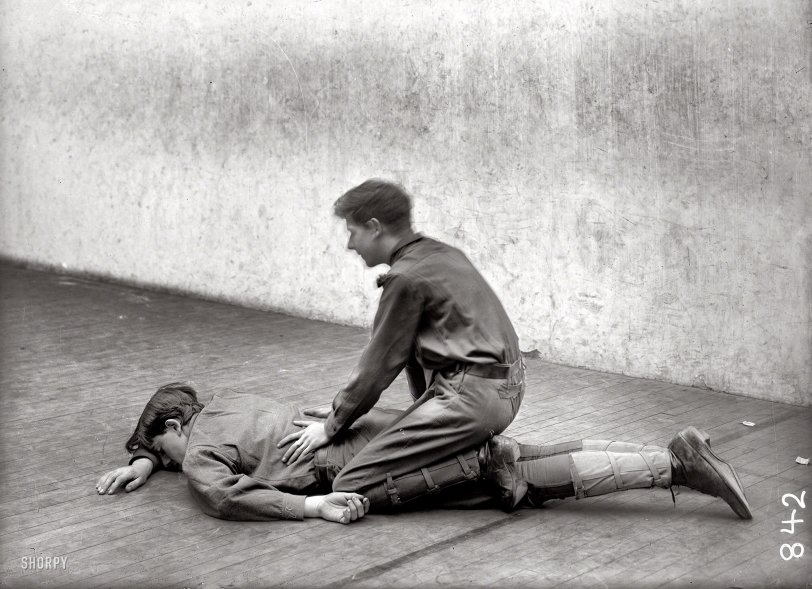
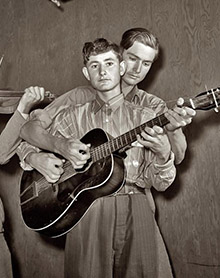
Washington D.C., 1912. Illustrating something from the Boy Scout training manual or possibly the 842nd verse of the Kama Sutra. Either way, heavily influenced by Indian lore. Harris & Ewing glass negative. View full size.
PETA & puttees
I wonder how many waterproof ducks it took to make one pair of these leggings.
[The only creatures harmed in the production of waterproof duck would be boll weevils. -tterrace]

Leggings is Leggings
This picture is the followup to one posted a few years ago.
According to page 364 of the The Official Handbook For Boys published for the Boy Scouts of America, those strap-on leggings are officially called Leggings. The entry reads:
Leggings: (Puttees). The style of leggings is the same as United States Army puttee legging. Made of best waterproof army duck. Price 55 cents.
They were actually copies of the Army's M1907 Leggings and should not be confused with the wool strip leg wraps of the World War I era, which were also known as puttees. They were designed to be worn over the lacings of the uniform breeches (page 360 - Price $1.00). A better view from a previous Shorpy post can be found here. Stockings (page 366 - Price 30 cents in cotton, $1.25 in wool) could also be used with breeches, but didn't look as neat, as seen here.
Gaiters
I believe the scouts are wearing gaiters.
Leggings?
What are those strap-on leggings the boys are wearing?
Verse 842:
Transformation [which is the actual state of existence] is to be ascertained as removed from birth and destruction, devoid of existence and non-existence, released from qualified and qualifying.
Thank you Mr Schafer
The Schafer method of artificial respiration. The arm-stretching was Holger-Nielson, which was not around until the early 30s, was taught into at leaast the late 1960s
Early TSA training photo.
Be certain to thoroughly check each passenger for banned items.
Artificial Respiration
This picture demonstrates a form of artificial respiration that might revive someone who had drowned. The body of the boy underneath is in the approved "recovery position," while the boy on top is applying rhythmic pressure to the lungs.
Mouth to mouth resuscitation is supposed to work better.
Drowning Victim.
It looks like a demonstration of an old, and not very effective, way of dealing with a drowning victim. The idea was to push up on a person's back to force water out of the lungs. It also involved manipulating the arms to expand the lungs between pushes.
 Shorpy.com is a vintage photography site featuring thousands of high-definition images. The site is named after Shorpy Higginbotham, a teenage coal miner who lived 100 years ago. Contact us | Privacy policy | Accessibility Statement | Site © 2024 Shorpy Inc.
On Shorpy:
Today’s Top 5