


Framed or unframed, desk size to sofa size, printed by us in Arizona and Alabama since 2007. Explore now.
Shorpy is funded by you. Patreon contributors get an ad-free experience.
Learn more.



- Baldwin 62303
- Baldwin VO-1000
- Cold
- No expense spared
- Tough Guys
- Lost in Toyland
- And without gloves
- If I were a blindfolded time traveler
- Smoke Consumer Also Cooks
- Oh that stove!
- Possibly still there?
- What?!?
- $100 Reward
- Freeze Frame
- Texas Flyer wanted
- Just a Year Too Soon
- WWII -- Replacing men with women at the railroad crossing.
- Yes, Icing
- You kids drive me nuts!
- NOT An Easy Job
- I wonder
- Just add window boxes
- Icing Platform?
- Indiana Harbor Belt abides
- Freezing haze
- Corrections (for those who care)
- C&NW at Nelson
- Fallen Flags
- A dangerous job made worse
- Water Stop
Photos submitted by Shorpy members!
Print Emporium
Pablo Cafeteria: 1936
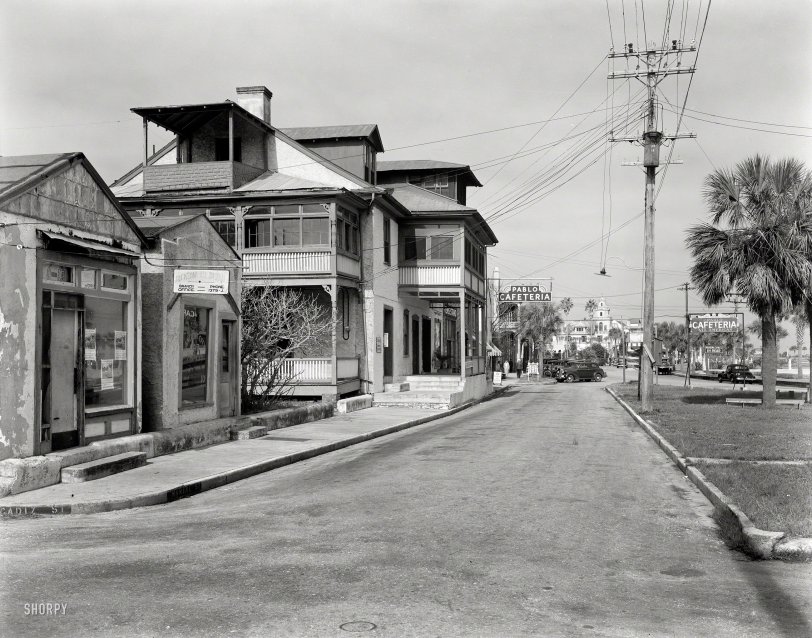
St. Johns County, Florida, circa 1936. "Street Scenes, St. Augustine." 8x10 inch acetate negative by Frances Benjamin Johnston. View full size.
Jacksonville Journal
A branch office for one of the newspapers out of the nearest "big city" to the north. The Journal was the afternoon paper, competing with the morning edition, The Florida Times-Union. Both papers began publishing in the late 1800s. Always the weaker paper, The Journal was bought by their morning rival in 1959. Alas, the afternoon edition Journal finally folded in 1988 due to competition from evening newscasts and falling circulation. The Times-Union is still published but readership is nowhere near its peak. The T-U is transitioning itself today to become an electronic-first edition with the possibility of eventually fazing out their paper edition altogether. The parent company of the Times-Union also owns the small local daily, The St. Augustine Record.

A Better View
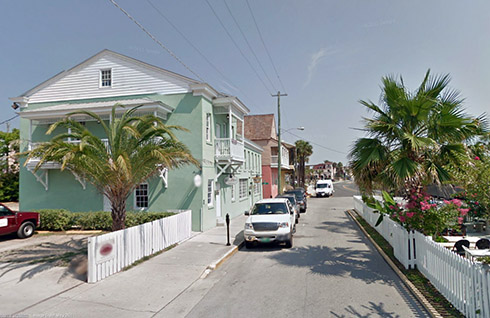
The Pablo Cafeteria building still stands at 16 Marine St. on the left. It has been altered substantially but it still is recognizable. The buildings housing the cab company and the newspaper office are gone.
All American
cafeteria, as opposed to All Latvian?
[As opposed to Spanish. - Dave]
It looks like this is the spot
The junction of Marine and Avenida Menendez looking north. The Spanish style building in the distance seems to still be there, though the tower is shortened.
Saying what they mean
Love the name on one of the tired-looking buildings -- "Ancient City Cab." They called 'em as they saw 'em back then, during the Depression, here in one of America's oldest cities.
 Shorpy.com is a vintage photography site featuring thousands of high-definition images. The site is named after Shorpy Higginbotham, a teenage coal miner who lived 100 years ago. Contact us | Privacy policy | Accessibility Statement | Site © 2024 Shorpy Inc.
On Shorpy:
Today’s Top 5