



Framed or unframed, desk size to sofa size, printed by us in Arizona and Alabama since 2007. Explore now.
Shorpy is funded by you. Patreon contributors get an ad-free experience.
Learn more.



- Baldwin 62303
- Baldwin VO-1000
- Cold
- No expense spared
- Tough Guys
- Lost in Toyland
- And without gloves
- If I were a blindfolded time traveler
- Smoke Consumer Also Cooks
- Oh that stove!
- Possibly still there?
- What?!?
- $100 Reward
- Freeze Frame
- Texas Flyer wanted
- Just a Year Too Soon
- WWII -- Replacing men with women at the railroad crossing.
- Yes, Icing
- You kids drive me nuts!
- NOT An Easy Job
- I wonder
- Just add window boxes
- Icing Platform?
- Indiana Harbor Belt abides
- Freezing haze
- Corrections (for those who care)
- C&NW at Nelson
- Fallen Flags
- A dangerous job made worse
- Water Stop

Photos submitted by Shorpy members!
Print Emporium



Low Noon: 1936
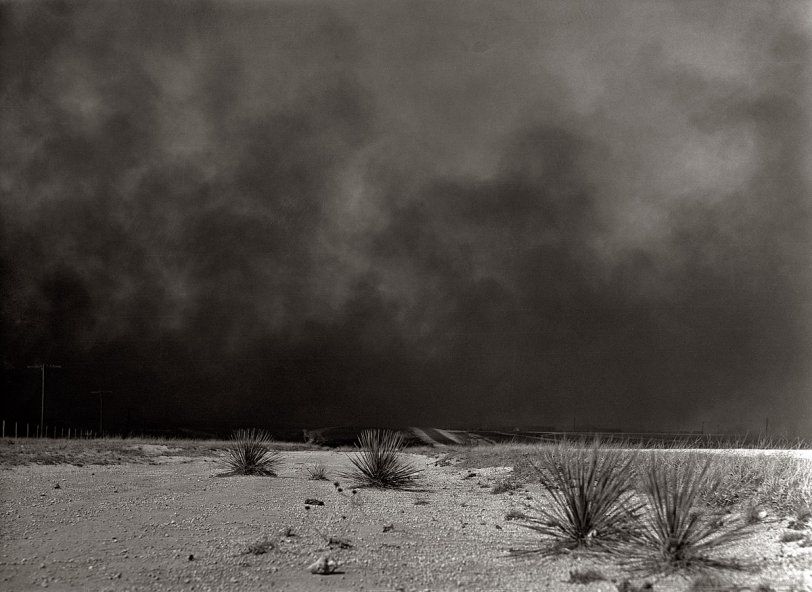
March 1936. "Heavy black clouds of dust rising over the Texas Panhandle." 35mm nitrate negative by Arthur Rothstein for the FSA. View full size.
Dust Bowl
We lived in Arkansas on the river across from Oklahoma and even though Texas and Oklahoma were the worst hit, my folks got plenty of the dust. It certainly gave us backbone for years to come. This generation shouldn't wonder why great and great-great grandparents died so young. They worked themselves to death way too early. It would be hard to visualize today's teenager cleaning up the mess with a straw broom, bar of lye soap, and old rags.

Dust Storms
This photo brings back memories. Our schoolhouse in Tulia, Texas, had no electric lights (or indoor plumbing), so we were dismissed when a duster rolled into town and made everything as dark as night. To avoid breathing the dust, we tied handkerchiefs over our noses while walking home from school. The storms left a coating of dust about a quarter of an inch deep on everything inside our closed-up houses. The cleanup afterward was quite a chore. Gene Howe, a writer for the Amarillo Globe News, claimed that the dust storms were healthy and invigorating and maybe he was right. The dust storms and the effects of the Depression left us with backbone to spare. I don't recall anybody in those days complaining about how tough times were as opposed to all the whining heard in today's America.
 Shorpy.com is a vintage photography site featuring thousands of high-definition images. The site is named after Shorpy Higginbotham, a teenage coal miner who lived 100 years ago. Contact us | Privacy policy | Accessibility Statement | Site © 2024 Shorpy Inc.

On Shorpy:
Today’s Top 5