


Framed or unframed, desk size to sofa size, printed by us in Arizona and Alabama since 2007. Explore now.
Shorpy is funded by you. Patreon contributors get an ad-free experience.
Learn more.



- Baldwin 62303
- Baldwin VO-1000
- Cold
- No expense spared
- Tough Guys
- Lost in Toyland
- And without gloves
- If I were a blindfolded time traveler
- Smoke Consumer Also Cooks
- Oh that stove!
- Possibly still there?
- What?!?
- $100 Reward
- Freeze Frame
- Texas Flyer wanted
- Just a Year Too Soon
- WWII -- Replacing men with women at the railroad crossing.
- Yes, Icing
- You kids drive me nuts!
- NOT An Easy Job
- I wonder
- Just add window boxes
- Icing Platform?
- Indiana Harbor Belt abides
- Freezing haze
- Corrections (for those who care)
- C&NW at Nelson
- Fallen Flags
- A dangerous job made worse
- Water Stop
Photos submitted by Shorpy members!
Print Emporium
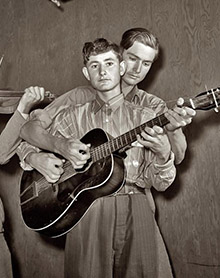

Mr. Goodwrench: 1943
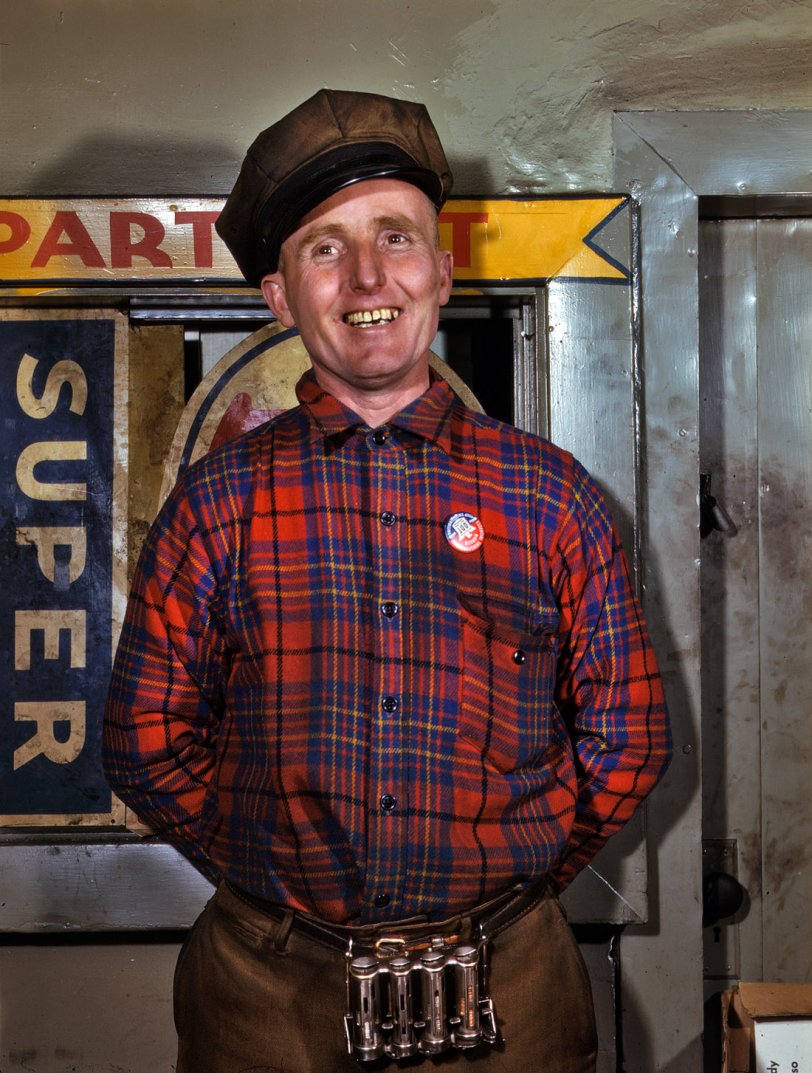
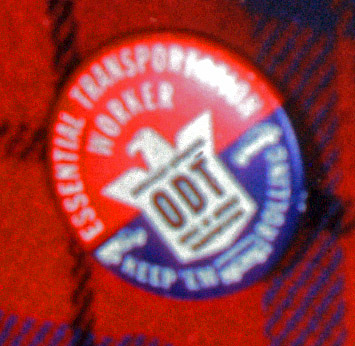
Garage mechanic near Newark, N.J., with Office of Defense Transportation badge. December 1943. Kodachrome transparency by Marjory Collins. View full size.
If it ain't broke
I used one of those coin dispensers on my newspaper route in the fifties. Cost me a dollar fifty, but was a source of pride and a symbol of professionalism to a young man. My big brother got in a fight with another paperboy wearing a belt changer and, quite by accident, got his leg badly sliced by one of the levers. The Doc was able to sew him up and all was well, but all that blood gave us quite a scare.

Mr. Goodwrench has taken its last turn
Ms. Goodwrench started in 1974 to give a common identity to service for all its dealers and brands. It started out as a friendly looking mechanic in a crisp light-blue shirt and evolved into a drawing of a brawny man in a striped work shirt hoisting the brand's blue G-shaped logo. General Motors is pulling the plug on the manufacturer Mr. Goodwrench. General Motors isn't canceling all dealership and brand service stations though. Instead, the names are just being changed. Service stations will be manufacturer specific. Mr. Goodwrench, launched in the 1970s, was changed to Goodwrench Service Plus in the 1990s. The brand is being dropped to accommodate the new GM advertising strategies.
Hot Button
ESSENTIAL TRANSPORTATION WORKER
ODT
Office of Defense Transportation
KEEP 'EM ROLLING
(My secret? One is for sale on EBay.)
I had one of those!
I had a paper route from 1945 to 1949 and had one of those money changers which was a prized possession. Had to go "collect" for the weeks paper already delivered that week every Saturday, then walk the bridge to Ironton Ohio where I paid my bill to the newspaper and kept 1 cent per day per paper delivered. There were no credit cards in those days and almost everything was on a cash basis.
Why would a mechanic need to make change?
He probably pumped gas as well... Why go to a register to make change when you can do it on the spot?
 Shorpy.com is a vintage photography site featuring thousands of high-definition images. The site is named after Shorpy Higginbotham, a teenage coal miner who lived 100 years ago. Contact us | Privacy policy | Accessibility Statement | Site © 2024 Shorpy Inc.
On Shorpy:
Today’s Top 5