



Framed or unframed, desk size to sofa size, printed by us in Arizona and Alabama since 2007. Explore now.
Shorpy is funded by you. Patreon contributors get an ad-free experience.
Learn more.




- Baldwin 62303
- Baldwin VO-1000
- Cold
- No expense spared
- Tough Guys
- Lost in Toyland
- And without gloves
- If I were a blindfolded time traveler
- Smoke Consumer Also Cooks
- Oh that stove!
- Possibly still there?
- What?!?
- $100 Reward
- Freeze Frame
- Texas Flyer wanted
- Just a Year Too Soon
- WWII -- Replacing men with women at the railroad crossing.
- Yes, Icing
- You kids drive me nuts!
- NOT An Easy Job
- I wonder
- Just add window boxes
- Icing Platform?
- Indiana Harbor Belt abides
- Freezing haze
- Corrections (for those who care)
- C&NW at Nelson
- Fallen Flags
- A dangerous job made worse
- Water Stop

Photos submitted by Shorpy members!
Print Emporium







Trashscape: 1912
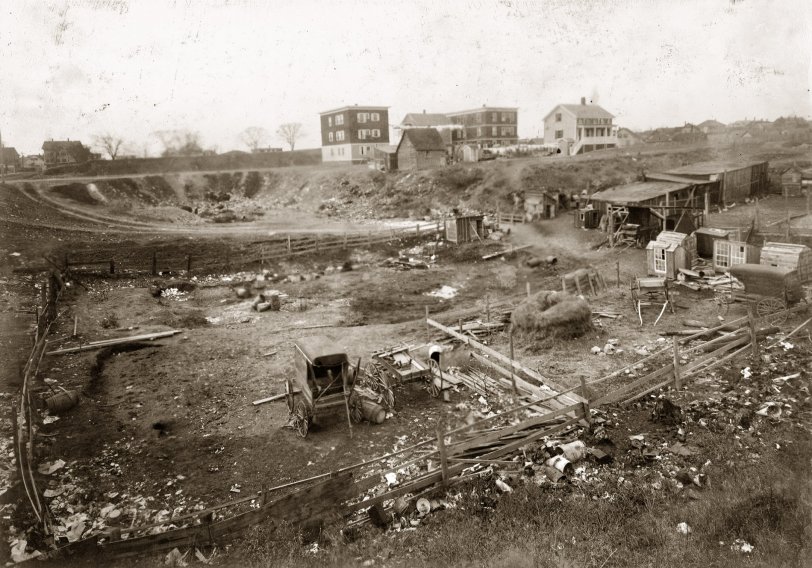
November 1912. "For Child Welfare Exhibit 1912-13. Whitman Street dump, Pawtucket, Rhode Island." Photograph by Lewis Wickes Hine. View full size.
Whitman Street Today
Whitman Street is about six blocks long, mostly residential with an elementary school.

Recycled windows
My grandfather used old windows to make greenhouses, they always worked really well. The ultimate recycling.
Shedlets
I don't think those little buildings are for people to live in. With windows that extensive, they would have been very poor in either heat or cold. But I do find it odd that the colonial style windows are so nicely made in comparison to the shacks themselves. Wonder if they were used as greenhouses, or as some kind of chicken coop (although the windows kind of rule out the coop concept as well). They definitely look to be constructed for special use of one kind or another.
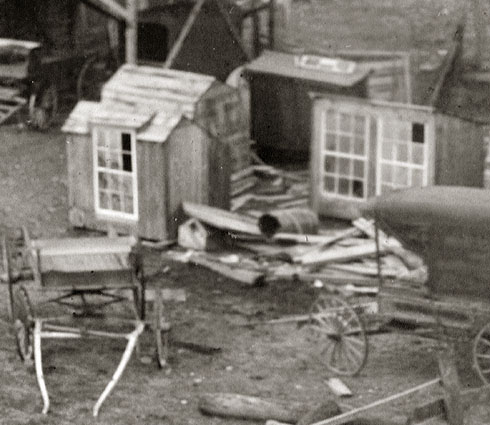
One thing you won't find in that dump:
Plastic. Plastic bags. Any variety of inorganic disposable crap.
[Chemically speaking, most plastics are organic, not inorganic. I say this as someone who labored through two years of organic chemistry. Circa 1912 plastics would include bakelite, celluloid, pyralin etc. - Dave]
Shantytown
Do you suppose there were people living in what appear to be shanties in the middle ground on the right?
Now?
You have to wonder what's sitting on top of that time capsule these days.
Slim Pickin's
Not much there, but I'd still love to go back in time and paw through the drifts of stuff.
 Shorpy.com is a vintage photography site featuring thousands of high-definition images. The site is named after Shorpy Higginbotham, a teenage coal miner who lived 100 years ago. Contact us | Privacy policy | Accessibility Statement | Site © 2024 Shorpy Inc.

On Shorpy:
Today’s Top 5