



Framed or unframed, desk size to sofa size, printed by us in Arizona and Alabama since 2007. Explore now.
Shorpy is funded by you. Patreon contributors get an ad-free experience.
Learn more.



- Baldwin 62303
- Baldwin VO-1000
- Cold
- No expense spared
- Tough Guys
- Lost in Toyland
- And without gloves
- If I were a blindfolded time traveler
- Smoke Consumer Also Cooks
- Oh that stove!
- Possibly still there?
- What?!?
- $100 Reward
- Freeze Frame
- Texas Flyer wanted
- Just a Year Too Soon
- WWII -- Replacing men with women at the railroad crossing.
- Yes, Icing
- You kids drive me nuts!
- NOT An Easy Job
- I wonder
- Just add window boxes
- Icing Platform?
- Indiana Harbor Belt abides
- Freezing haze
- Corrections (for those who care)
- C&NW at Nelson
- Fallen Flags
- A dangerous job made worse
- Water Stop

Photos submitted by Shorpy members!
Print Emporium



Carolina Huckster: 1905
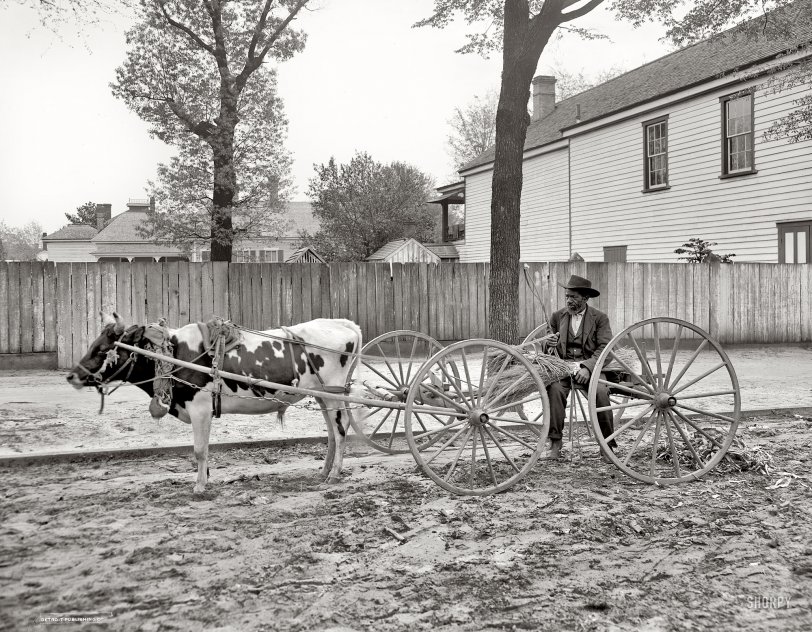
Aiken, South Carolina, circa 1905. "A South Carolina huckster." 8x10 inch dry plate glass negative, Detroit Publishing Company. View full size.
Finally!
The sheaf man is here! We were fresh out.

A curiosity
Minimal transportation what with a steer for power wearing a cloth collar pulling a minimally equipped wagon. Apparently being a huckster didn't appear to provide much more than subsistence living although he appears to care how he dresses. Being a huckster was not a shady profession, just one that worked on the fringes of local economies and provided goods and services to those even further down the socio-economic ladder by barter or tiny cash exchanges.
Outbuildings
I love houses in town that still had outbuildings. Behind the fence in the side yard of the house, the small structure on the left is perhaps a chicken coop, or was at least used for some purpose that didn't require tighter construction to keep out air, light or vermin. The building on the left is too small for a kitchen or an office; it is perhaps a wash house.
Mystery wares
Hmmmmmm. If he's a "huckster," what exactly is he peddling? The bundles in his wagon remind me of the seagrass used to make the hand-woven baskets that the Gullah ladies sell along the sides of the road around Charleston, S.C. But if he makes baskets, why doesn't he have any samples on display? And those types of baskets would take hours to produce, I'd think. Does he just repair baskets?
Great-Grandpappy's Oxcart
Equipped with power ... "steering"!
 Shorpy.com is a vintage photography site featuring thousands of high-definition images. The site is named after Shorpy Higginbotham, a teenage coal miner who lived 100 years ago. Contact us | Privacy policy | Accessibility Statement | Site © 2024 Shorpy Inc.
On Shorpy:
Today’s Top 5