



Framed or unframed, desk size to sofa size, printed by us in Arizona and Alabama since 2007. Explore now.
Shorpy is funded by you. Patreon contributors get an ad-free experience.
Learn more.



- Tough Guys
- Lost in Toyland
- And without gloves
- If I were a blindfolded time traveler
- Smoke Consumer Also Cooks
- Oh that stove!
- Possibly still there?
- What?!?
- $100 Reward
- Freeze Frame
- Texas Flyer wanted
- Just a Year Too Soon
- WWII -- Replacing men with women at the railroad crossing.
- Yes, Icing
- You kids drive me nuts!
- NOT An Easy Job
- I wonder
- Just add window boxes
- Icing Platform?
- Indiana Harbor Belt abides
- Freezing haze
- Corrections (for those who care)
- C&NW at Nelson
- Fallen Flags
- A dangerous job made worse
- Water Stop
- Passenger trains have right of way over freights?
- Coal
- Never ceases to amaze me.
- Still chuggin' (in model form)

Photos submitted by Shorpy members!
Print Emporium




Central Tobacco: 1906
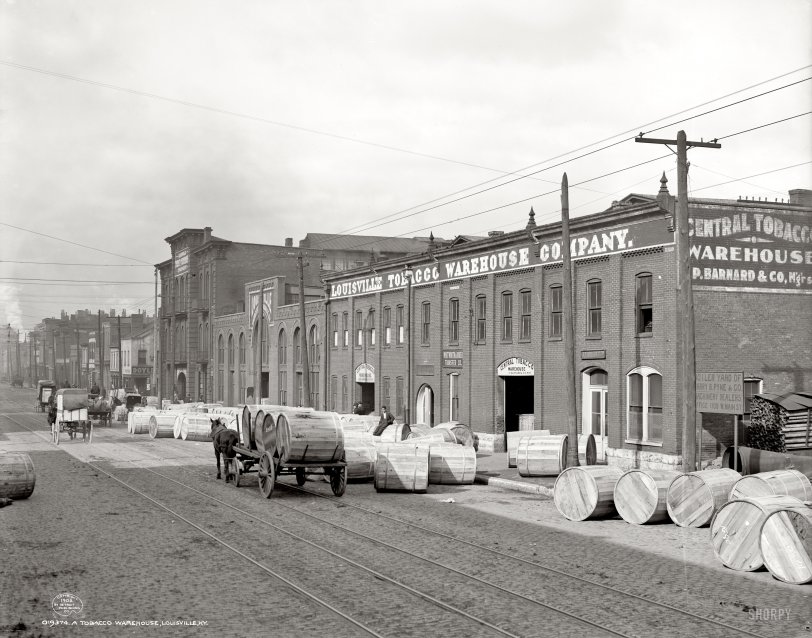
Louisville, Kentucky, circa 1906. "A tobacco warehouse." 8x10 inch dry plate glass negative, Detroit Publishing Company. View full size.
Love's labour lost?
The young fellow sitting high on the hog(shead), was probably a roller, making a few nickels by rolling the empties outside for pickup by the deliverymen for refill.

Worked there, almost
Winston Salem is my home town. The best summer jobs to be found were connected to the tobacco industry. I worked for RJ Reynolds for 3 summers. The smell was unforgettable. But, good times!
AHA!
This is what Central Tobacco looks like today! Man I had to do a lot of digging, but now I'm certain. This is Main Street between 10th and 11th. Woot!
Tobacco Road
I grew up in Burlington, NC, near Winston Salem (guess what's made there!), and this photo brings back the smell of the tobacco operations in the late 50's -- not offensive, just pervasive. We learned early on about hogsheads of tobacco and their importance to the economy in Colonial times and thereafter.
Those old markets
are still around in some Southern towns. By the mid 50s, most of them had been replaced by metal buildings, but some brick markets were in use until fairly recently. I can remember seeing trucks piled with those hogsheads pulling out from the markets when I was a child. The tobacco was left to age for, I believe, 5 years until broken open and processed. Although I personally detest smoking, until the gov't put the badmouth on it, tobacco was a major industry in the South.
Anystreet USA
Such a sign of the times for that era. Aren't those quite large hogshead barrels? WOW!
Hogsheads II
According to Wikipedia, each one of those hogsheads weighs about 1,000 pounds. A lot of hard work movings those hogsheads around. I wish I could think of another way to use the word hogshead.
 Shorpy.com is a vintage photography site featuring thousands of high-definition images. The site is named after Shorpy Higginbotham, a teenage coal miner who lived 100 years ago. Contact us | Privacy policy | Accessibility Statement | Site © 2024 Shorpy Inc.
On Shorpy:
Today’s Top 5