


Framed or unframed, desk size to sofa size, printed by us in Arizona and Alabama since 2007. Explore now.
Shorpy is funded by you. Patreon contributors get an ad-free experience.
Learn more.



- Freeze Frame
- Texas Flyer wanted
- Just a Year Too Soon
- WWII -- Replacing men with women at the railroad crossing.
- Yes, Icing
- You kids drive me nuts!
- NOT An Easy Job
- I wonder
- Just add window boxes
- Icing Platform?
- Indiana Harbor Belt abides
- Freezing haze
- Corrections (for those who care)
- C&NW at Nelson
- Fallen Flags
- A dangerous job made worse
- Water Stop
- Passenger trains have right of way over freights?
- Coal
- Never ceases to amaze me.
- Still chuggin' (in model form)
- Great shot
- Westerly Breeze
- For the men, a trapeze
- Tickled
- Sense of loneliness ...
- 2 cents
- Charm City
- What an Outrage
- Brighton Park
Photos submitted by Shorpy members!
Print Emporium

A Grand Day Out: 1910
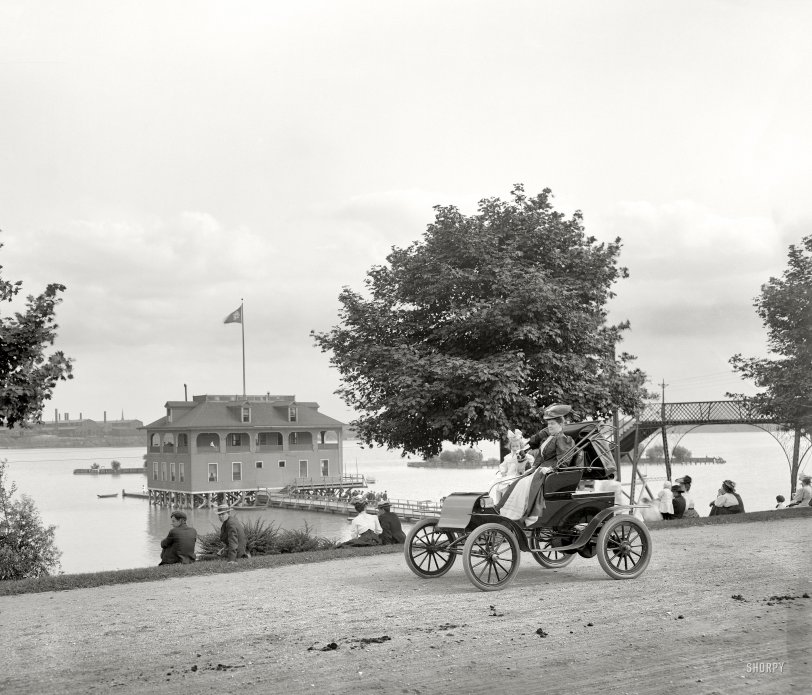
Toledo, Ohio, circa 1910. "Riverside Park and boat house." 8x10 inch dry plate glass negative, Detroit Publishing Company. View full size.
Target marketing
Electric cars were preferred by the gentler sex because they didn't need to be crank-started. A feature that, alas, is not mentioned the the advertising of modern electrics.

Designed Dog
The bank-presidentish dog between the girl and the woman seems art directed to pick up their clothing colors, white on the girl's side, black on grandmother's. All extremely elegant.
1910-2011
Electric cars in 1910 cost 2-3x a gas one and got 100 miles to the charge. Just like today's electric cars.
Progress.
[Well, yes. Top speed of these primitive electrics was around 20 mph. - Dave]
The Pretty Young Lady from Mannheim
In August of 1888 Bertha Benz got sick and tired of Carl always messing
with his Motorwagon and never doing anything about promoting it for
possible sales. So, she got the kids and swiped it to drive to mom's house
(wink-wink) about 60 miles away in Pforzheim. Along the way she made
the best out of getting all the attention possible. And she did! This distance
was unheard of. So, a lady driver put Carl Benz on the map, so to speak.
There is a Bertha Benz Memorial Route in Germany, and to this day, people
would like to own a "Benz."
Onward and Upward
As Vance Packard noted in 1959: "The primary function of the motor car in America is to carry its owner into a higher social stratum."
Little Old Lady from Pasadena
Somehow I never thought of women driving back then, but it looks like she was "shutting 'em down," ha. Don't know how you do all this great stuff, but I'm sure glad you do. Just love it!
 Shorpy.com is a vintage photography site featuring thousands of high-definition images. The site is named after Shorpy Higginbotham, a teenage coal miner who lived 100 years ago. Contact us | Privacy policy | Accessibility Statement | Site © 2024 Shorpy Inc.
On Shorpy:
Today’s Top 5