


Framed or unframed, desk size to sofa size, printed by us in Arizona and Alabama since 2007. Explore now.
Shorpy is funded by you. Patreon contributors get an ad-free experience.
Learn more.



- Baldwin 62303
- Baldwin VO-1000
- Cold
- No expense spared
- Tough Guys
- Lost in Toyland
- And without gloves
- If I were a blindfolded time traveler
- Smoke Consumer Also Cooks
- Oh that stove!
- Possibly still there?
- What?!?
- $100 Reward
- Freeze Frame
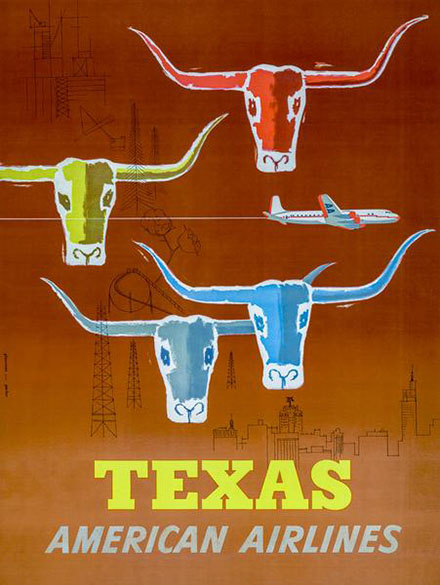
- Texas Flyer wanted
- Just a Year Too Soon
- WWII -- Replacing men with women at the railroad crossing.
- Yes, Icing
- You kids drive me nuts!
- NOT An Easy Job
- I wonder
- Just add window boxes
- Icing Platform?
- Indiana Harbor Belt abides
- Freezing haze
- Corrections (for those who care)
- C&NW at Nelson
- Fallen Flags
- A dangerous job made worse
- Water Stop
Photos submitted by Shorpy members!
Prints







- Panoramas
- Kodachromes (Color Photos)
- Animals
- Aviation
- Bathing Girls!
- Bizarre & Weird
- Cars & Trucks
- Cities
- Civil War
- Colorized Photos
- Factories
- Farked
- Florida History
- iPhone Wallpaper
- Kids
- Kitchens
- Member Photos
- Mining
- Pretty Girls
- Railroads
- Streetcars
- Service Stations
- Sports
- Technology (Antiquated)
- tterrace
- WPA Posters
- World War II
- WW2 Color Photos
- All Galleries
Vintage photos of:
- Atlanta
- Atlantic City
- Baltimore
- Birmingham AL
- Boston
- Buffalo NY
- Charleston SC
- Chicago
- Cincinnati
- Cleveland
- Coney Island
- Detroit
- Indianapolis
- Los Angeles
- Louisville
- Memphis
- Miami
- Milwaukee
- Minneapolis
- New Orleans
- New York City
- Oklahoma City
- Philadelphia
- Pittsburgh
- Richmond
- San Francisco
- Savannah
- St. Louis
- Syracuse
- Toledo
- Vicksburg
- Washington DC
- And many more!
Our holdings include hundreds of glass and film negatives/transparencies that we've scanned ourselves; in addition, many other photos on this site were extracted from reference images (high-resolution tiffs) in the Library of Congress research archive. (To query the database click here.) They are adjusted, restored and reworked by your webmaster in accordance with his aesthetic sensibilities before being downsized and turned into the jpegs you see here. All of these images (including "derivative works") are protected by copyright laws of the United States and other jurisdictions and may not be sold, reproduced or otherwise used for commercial purposes without permission.
© 2024 SHORPY INC.
[REV 25-NOV-2014]
Spar Deck Swabbies: 1898
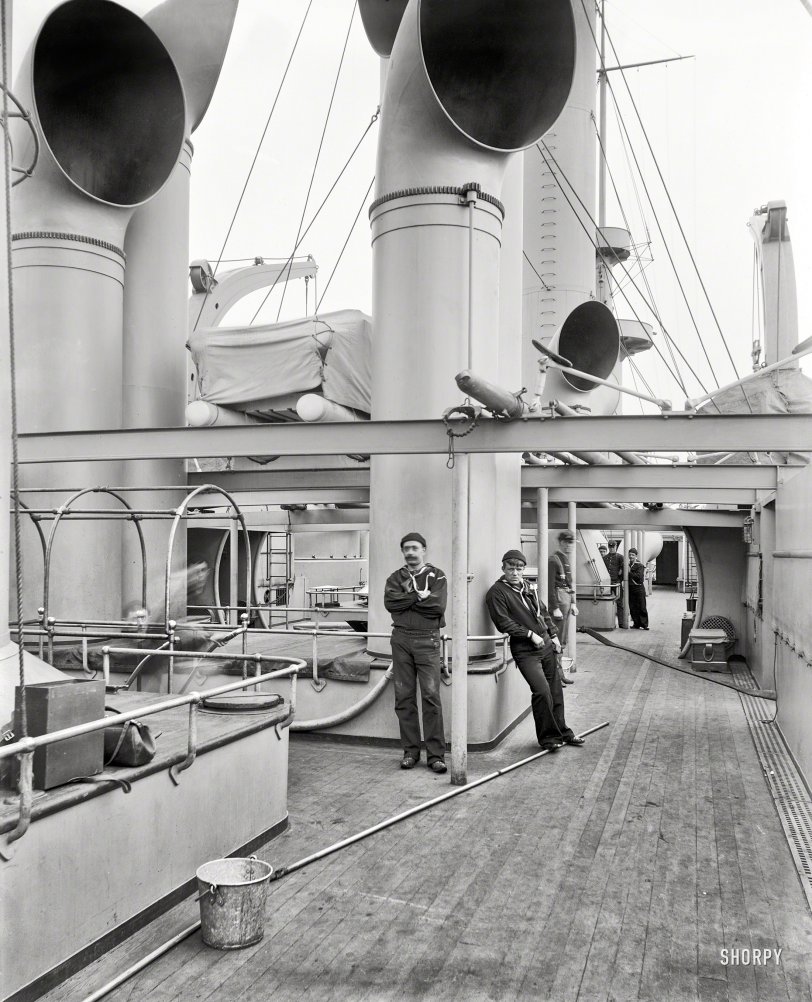
Circa 1898. "League Island Navy Yard, Philadelphia. U.S.S. Brooklyn spar deck." 8x10 inch glass negative, Detroit Publishing Company. View full size.
- 5 comments
- 14585 reads
Trailblazers: 1917
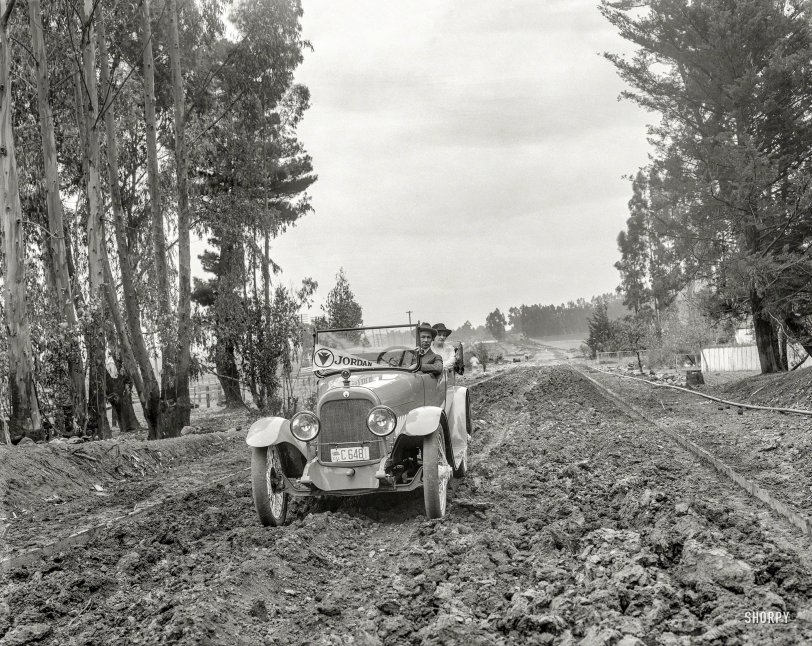
The Bay Area circa 1917. "Jordan touring car." Our second look at this intrepid couple, motoring along a freshly plowed highway in their "Seven-Passenger Luxury Car." From the Wyland Stanley collection of San Francisciana. View full size.
- 5 comments
- 10448 reads
Pumpkin-Hound: 1923
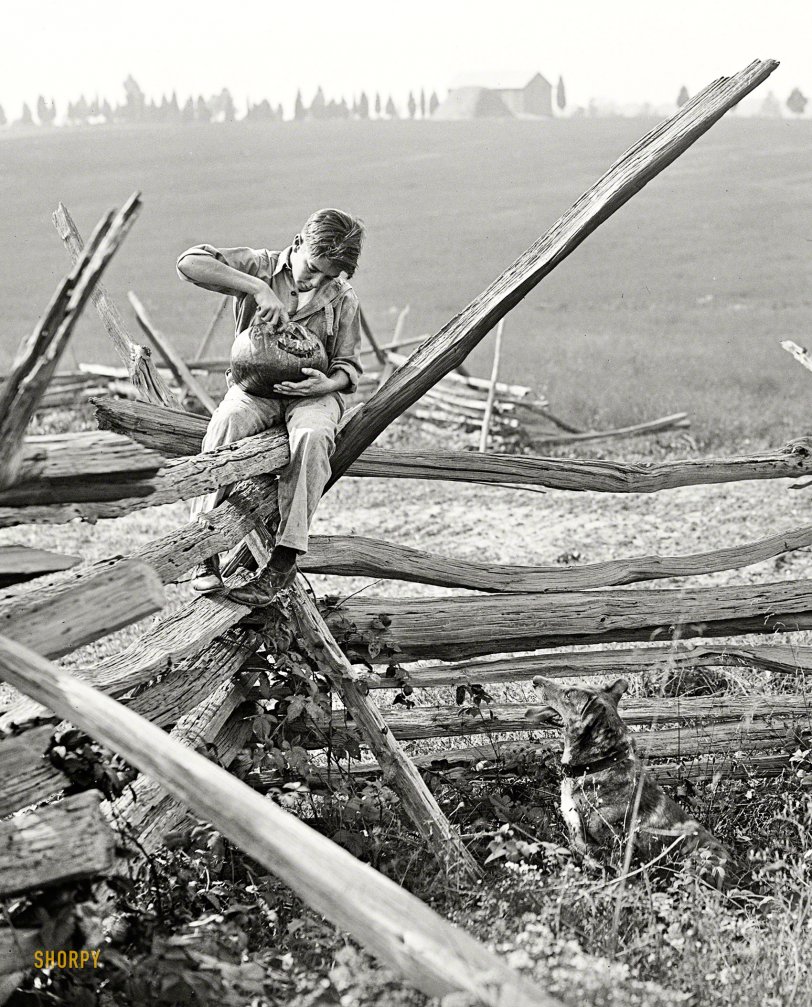
Washington, D.C., or vicinity, 1923. "Getting ready for Halloween, and it's nobody's business where he got the pumpkin." Jack-o-lantern carving in the field with a boy and his dog. Harris & Ewing glass negative. View full size.
- 3 comments
- 10272 reads
Seven Skulls: 1927
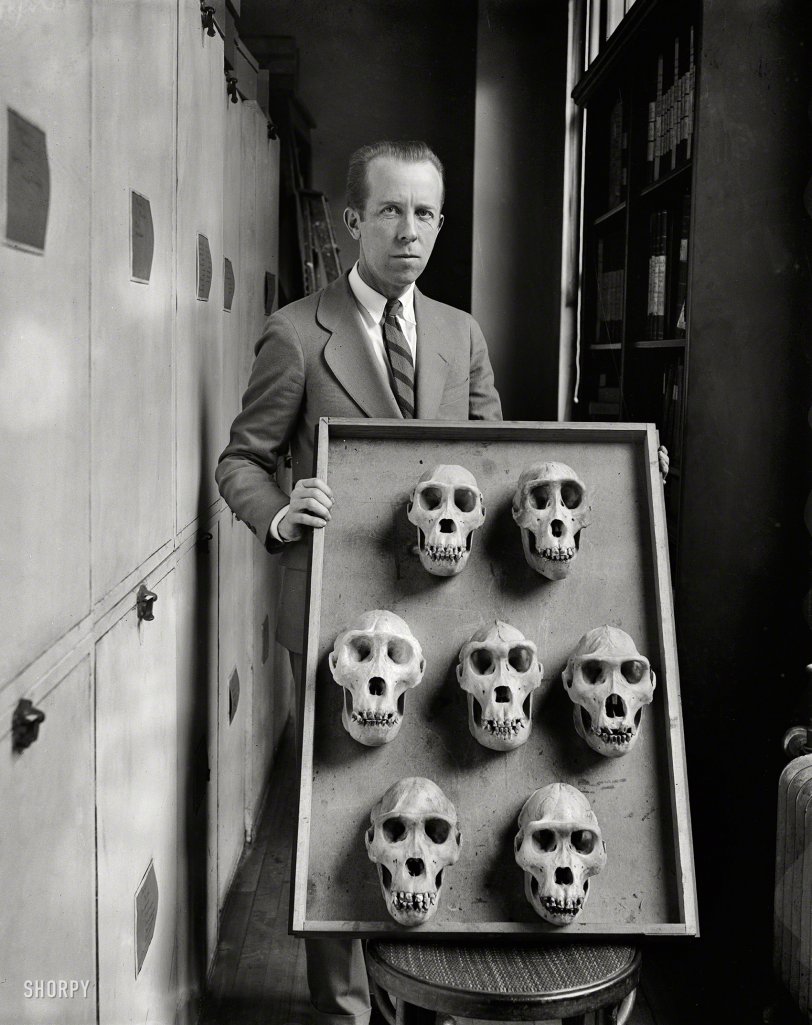
Washington, D.C., circa 1927. "NO CAPTION (man with skull display)." Friends of the family, no doubt. Harris & Ewing Collection glass negative. View full size.
- 5 comments
- 11432 reads
Candid Kitchen: 1910
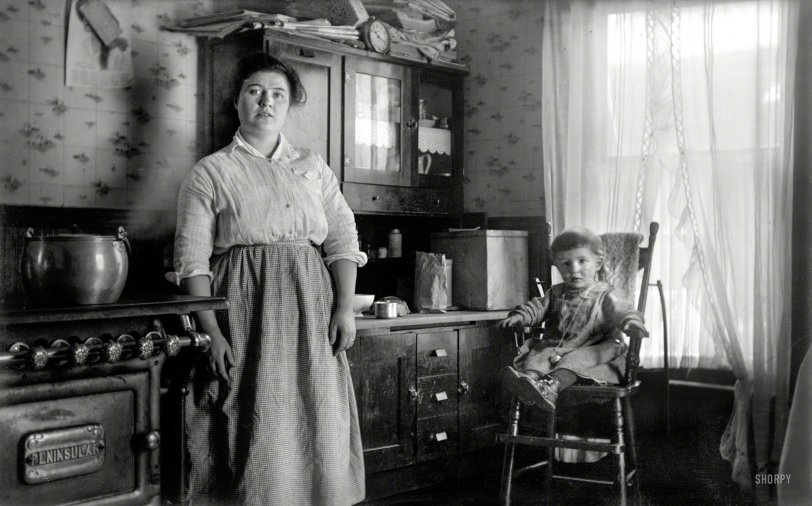
From around 1910 comes this glass plate that Shorpy got years ago on eBay. Two people just minding their business who find themselves staring into the ravenous maw of the Internet. Names, location, photographer unknown. View full size.
- 8 comments
- 21569 reads
Parlor Musicale: 1905
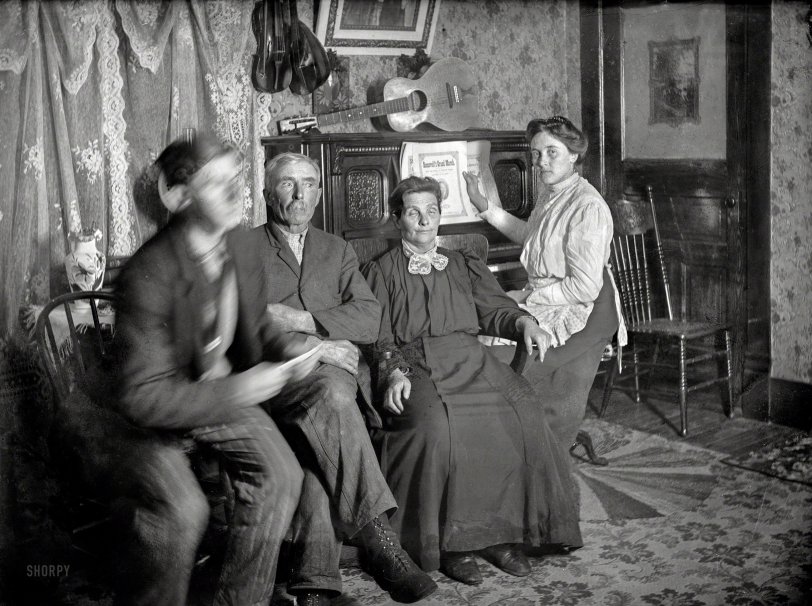
From around 1905 comes this grimy 5x7 glass negative that Shorpy bought years ago but never got around to scanning till today. On the piano: That old toe-tapper "Roosevelt's Grand March." Photographer mercifully unknown. View full size.
- 4 comments
- 9312 reads
Inside Information: 1954
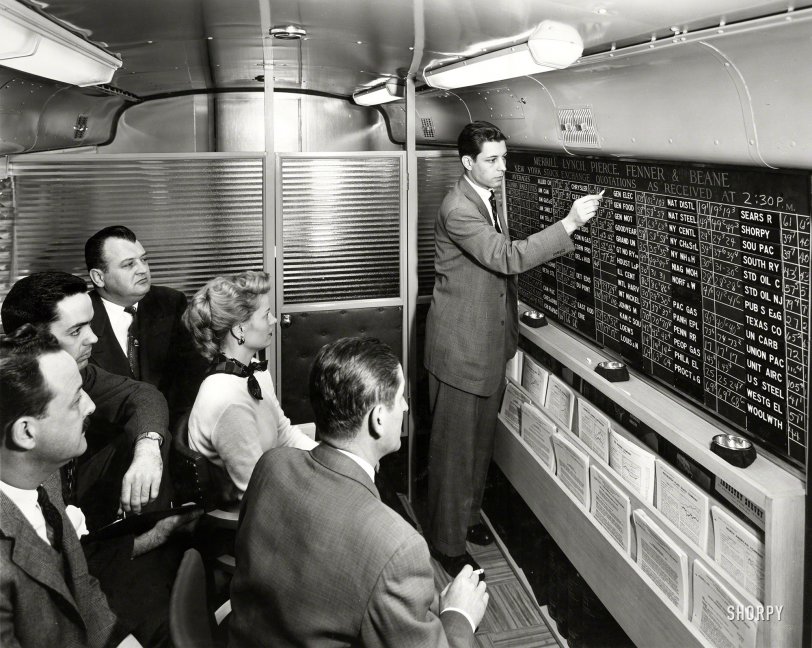
So how does the account exec know what the prices are?
1954. "Merrill Lynch account executive chalks up current stock prices on quotation board in firm's new mobile office." One of the earlier mobile apps. View full size.
- 8 comments
- 12270 reads
Bathing Beauty Parade: 1927
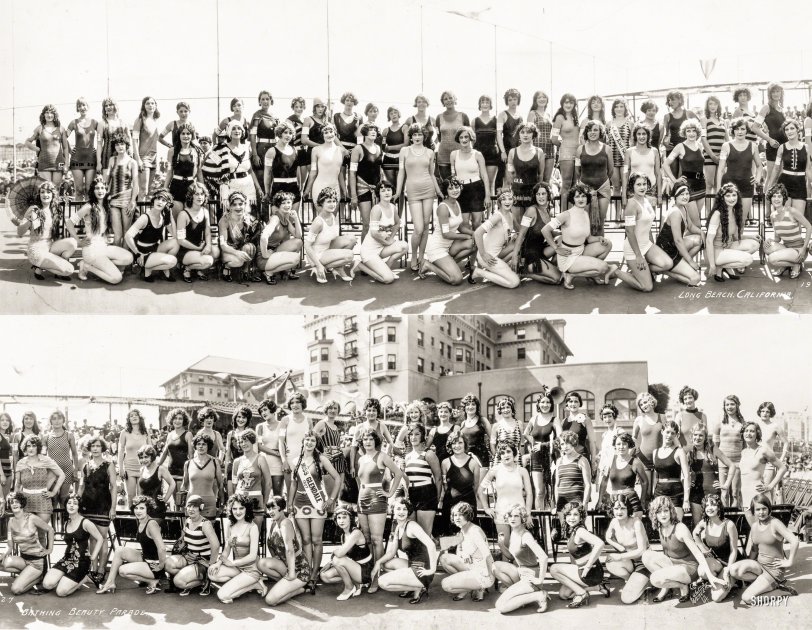
"Long Beach, California, Bathing Beauty Parade -- 1927." Panorama by Weaver, Los Angeles, rearranged into two tiers of Jazz Age pulchritude. View full size.
- 14 comments
- 29122 reads
Timeless Depot: 1906
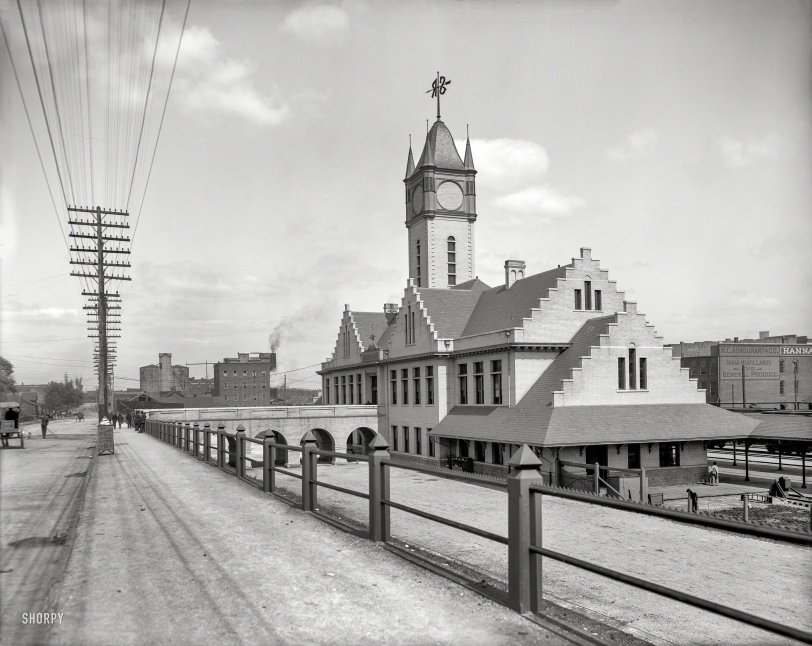
Circa 1906. "Southern Railway station, Knoxville, Tenn." What has four faces but no hands? 8x10 inch glass negative, Detroit Publishing Company. View full size.
- 10 comments
- 15204 reads
Luxury Car: 1917
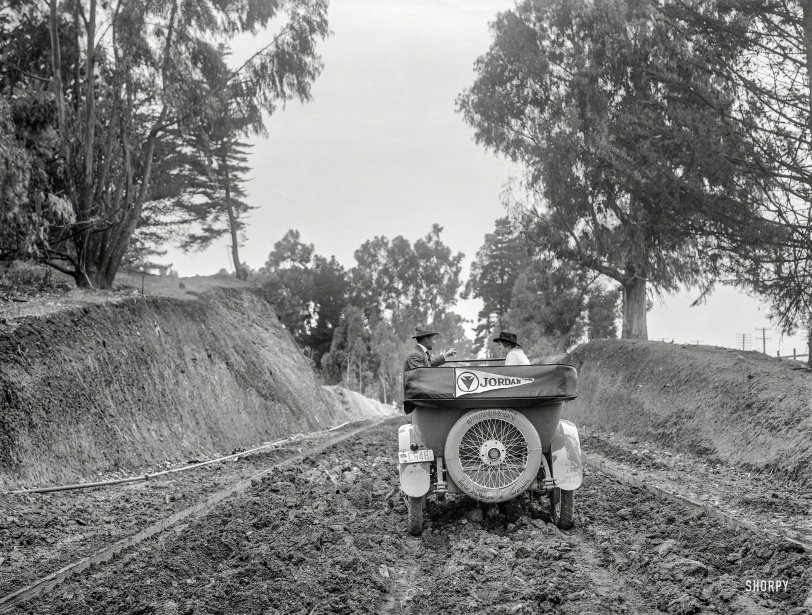
The Bay Area circa 1917. "Jordan touring car." The tot-laden vehicle seen here yesterday, a Jordan advertised as the "Seven-Passenger Luxury Car," with the same driver but minus the kids. Note the literal NON-SKID tire tread. Glass negative from the Wyland Stanley collection of San Francisciana. View full size.
- 4 comments
- 11658 reads
Romance of a People: 1942
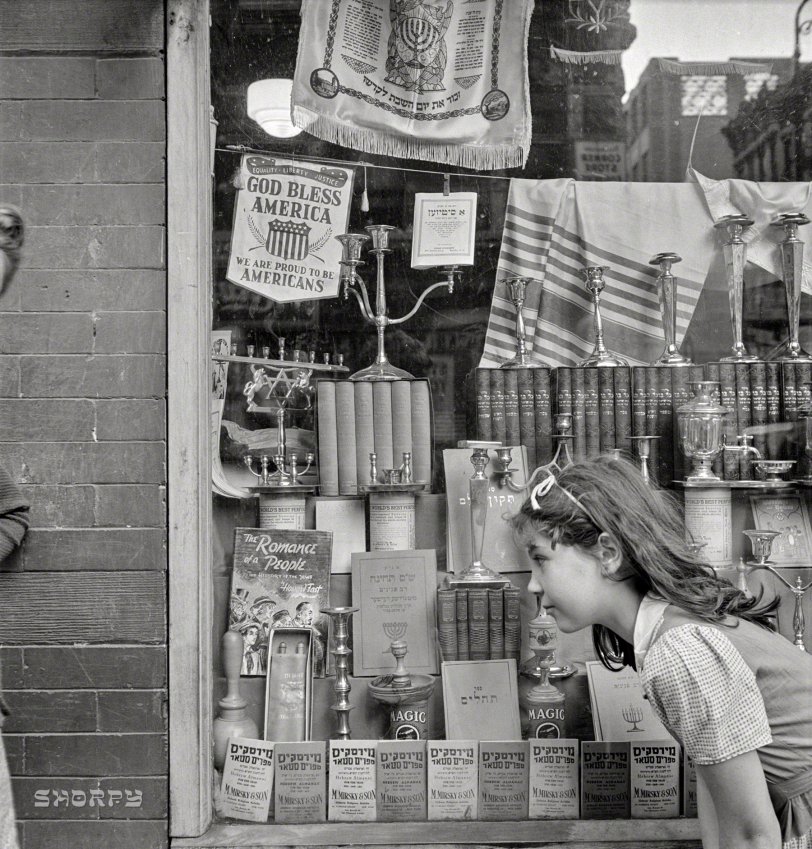
August 1942. "New York. Window of a Jewish religious shop on Broome Street." Photo by Marjory Collins for the Office of War Information. View full size.
- 16 comments
- 16594 reads
Four of a Kind: 1939
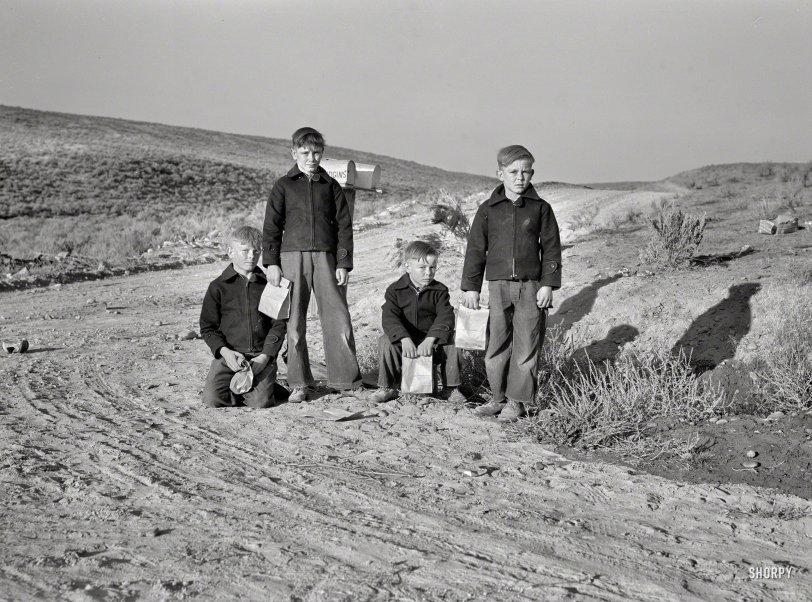
October 1939. "Boys from Dead Ox Flat waiting for the school bus in the morning. Malheur County, Oregon." So who is this lady with the camera? Medium format negative by Dorothea Lange for the Resettlement Administration. View full size.
- 13 comments
- 16504 reads
Fall Color: 1952
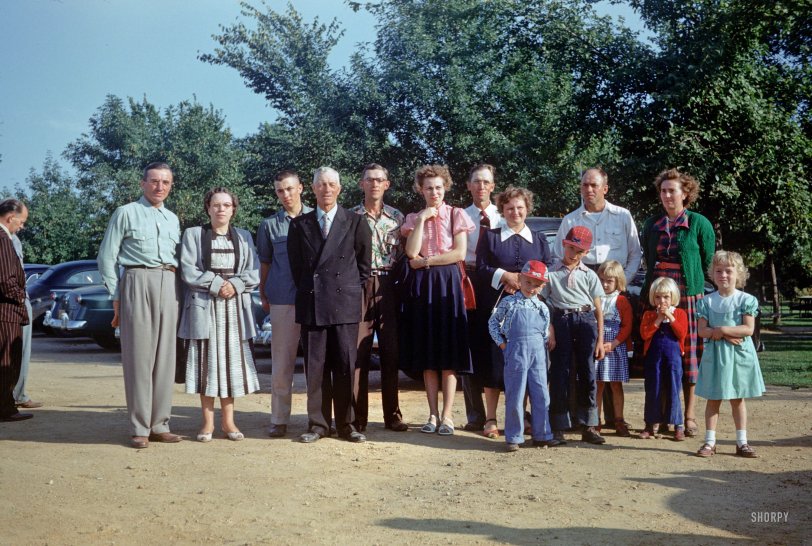
"Picnic at Austin, Minn. -- 7 Sept. 1952." Although the trees are still green and it's technically still summer, the native fauna's coats are thickening, ready to blend in when autumn arrives. Kodachrome slide by Hubert Tuttle. View full size.
- 2 comments
- 10067 reads
Glass Wrangler: 1920
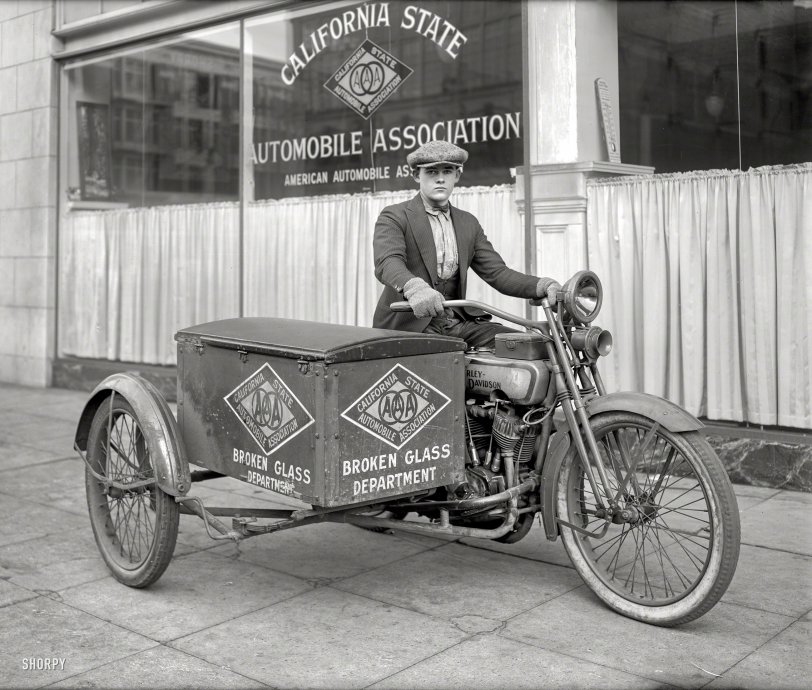
Young Tom started out in Nails & Tacks and worked his way up.
San Francisco ca. 1920s. "Young man on Harley-Davidson motorcycle -- California State Automobile Association 'Broken Glass Department' patrol." 6.5x8.5 glass negative originally from the Wyland Stanley collection. View full size.
- 7 comments
- 14453 reads
Bring the Kids: 1917
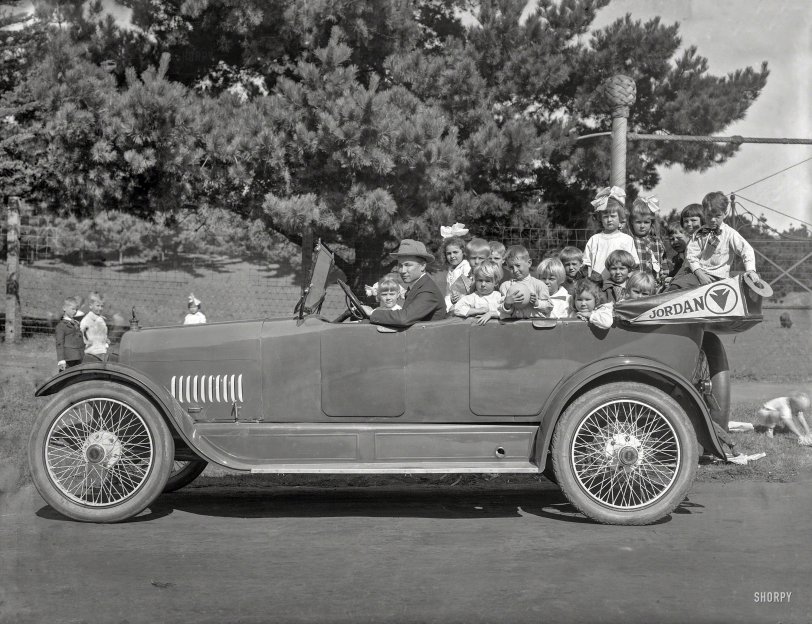
San Francisco circa 1917. "Jordan touring car with children." Did we lose a few back there when we hit that bump? Better do a head count. 6.5x8.5 inch glass negative originally from the Wyland Stanley collection. View full size.
- 11 comments
- 11425 reads

 Shorpy.com is a vintage photography site featuring thousands of high-definition images. The site is named after Shorpy Higginbotham, a teenage coal miner who lived 100 years ago. Contact us | Privacy policy | Accessibility Statement | Site © 2024 Shorpy Inc.