


Framed or unframed, desk size to sofa size, printed by us in Arizona and Alabama since 2007. Explore now.
Shorpy is funded by you. Patreon contributors get an ad-free experience.
Learn more.



- Baldwin 62303
- Baldwin VO-1000
- Cold
- No expense spared
- Tough Guys
- Lost in Toyland
- And without gloves
- If I were a blindfolded time traveler
- Smoke Consumer Also Cooks
- Oh that stove!
- Possibly still there?
- What?!?
- $100 Reward
- Freeze Frame
- Texas Flyer wanted
- Just a Year Too Soon
- WWII -- Replacing men with women at the railroad crossing.
- Yes, Icing
- You kids drive me nuts!
- NOT An Easy Job
- I wonder
- Just add window boxes
- Icing Platform?
- Indiana Harbor Belt abides
- Freezing haze
- Corrections (for those who care)
- C&NW at Nelson
- Fallen Flags
- A dangerous job made worse
- Water Stop
Photos submitted by Shorpy members!
Print Emporium

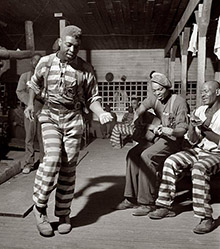

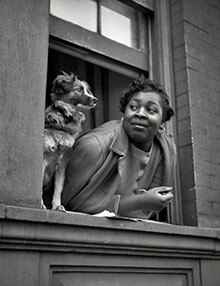
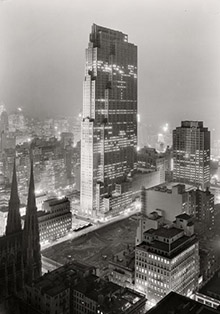
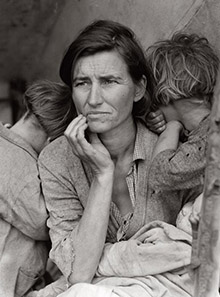
Information Retrieval: 1942
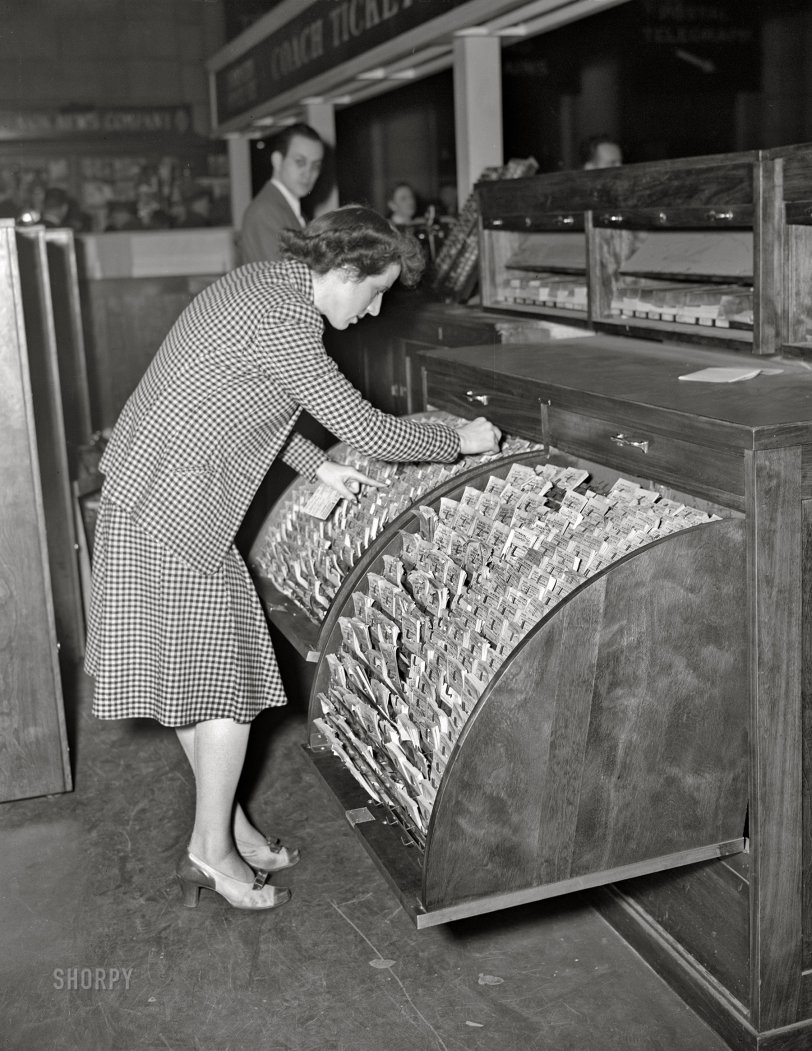
November 1942. "Washington, D.C. Clerk and ticket seller searching for reservations at the Union Station." Acetate negative by Gordon Parks, Office of War Information. View full size.
- 4 comments
- 8201 reads
The Hump Master: 1942
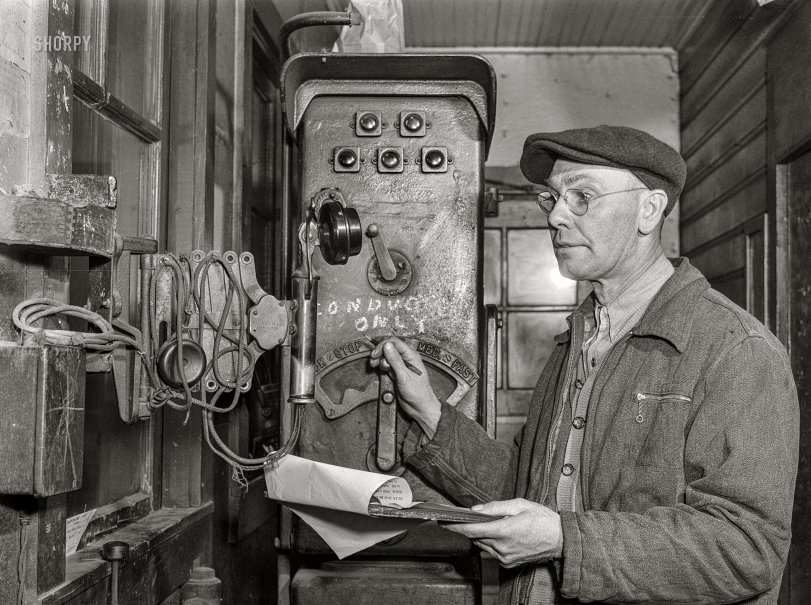
December 1942. "Chicago, Illinois. Hump master in a Chicago and North Western Railroad yard operating a signal switch system which extends the length of the hump track. He is thus able to control movements of locomotives pushing the train over the hump from his post at the hump office." Acetate negative by Jack Delano for the Office of War Information. View full size.
- 6 comments
- 8877 reads
PneuTube: 1942
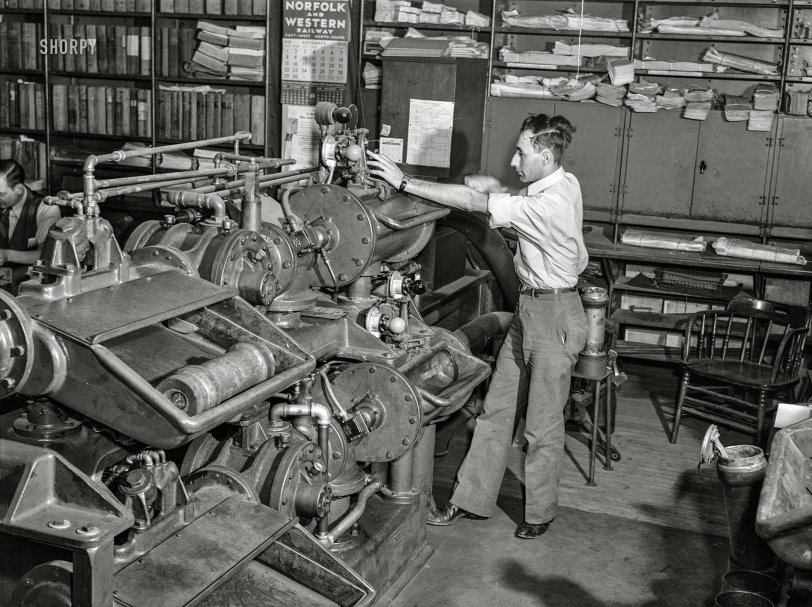
November 1942. "Chicago, Illinois. A pneumatic tube system connects the main yard office with yardmaster offices throughout the Illinois Central railyard. Switch lists and other communications are quickly sent in this way." Medium format acetate negative by Jack Delano for the Office of War Information. View full size.
- 12 comments
- 8766 reads
Photoengraving Dept.: 1942
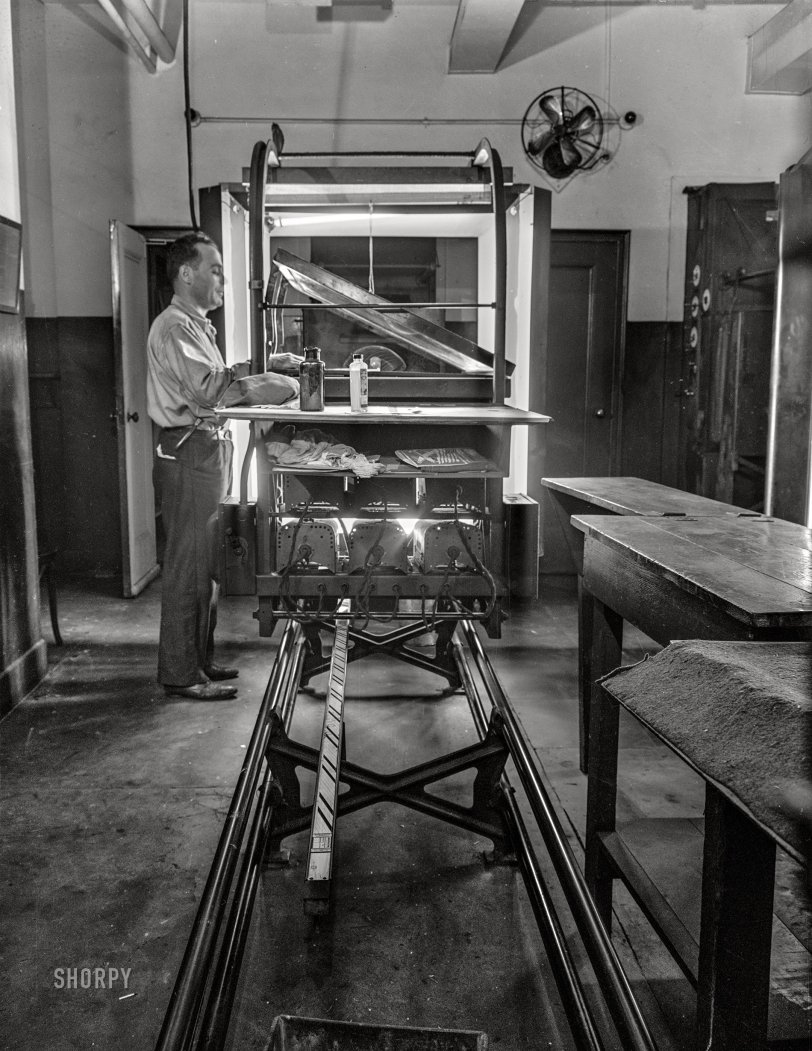
September 1942. New York. "Photo engraving department of the New York Times newspaper. This camera photographs a photographic print through a screen and produces a strip negative." Acetate negative by Marjory Collins for the Office of War Information. View full size.
- 4 comments
- 8090 reads
The Wire Room: 1942
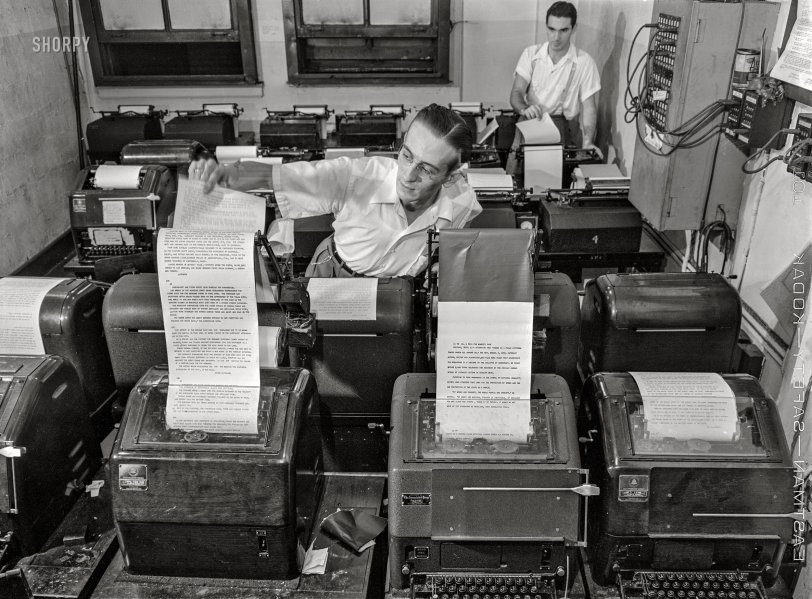
September 3, 1942. "New York, New York. Wire room of the New York Times newspaper. Copy boy about to tear off dispatch from the Associated Press wire." Medium format acetate negative by Marjory Collins for the Office of War Information. View full size.
- 6 comments
- 13669 reads
NYT Radio Room: 1942
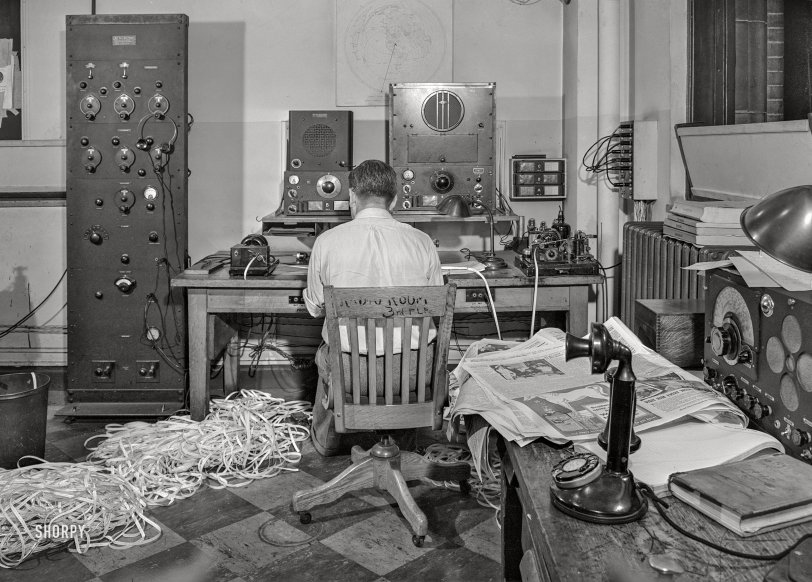
September 3, 1942. "New York, New York. Radio room of the New York Times newspaper. The Times listening post, between 10 pm and midnight, between first and second editions. The operator is listening to Axis news (propaganda) broadcast. Paper in foreground has been examined to see what has already been covered in last edition of paper. Operator reports and gives new angles to city editor. Messages are recorded on paper tape in international Morse code." Acetate negative by Marjory Collins for the Office of War Information. View full size.
- 8 comments
- 14859 reads
Live Wires: 1942
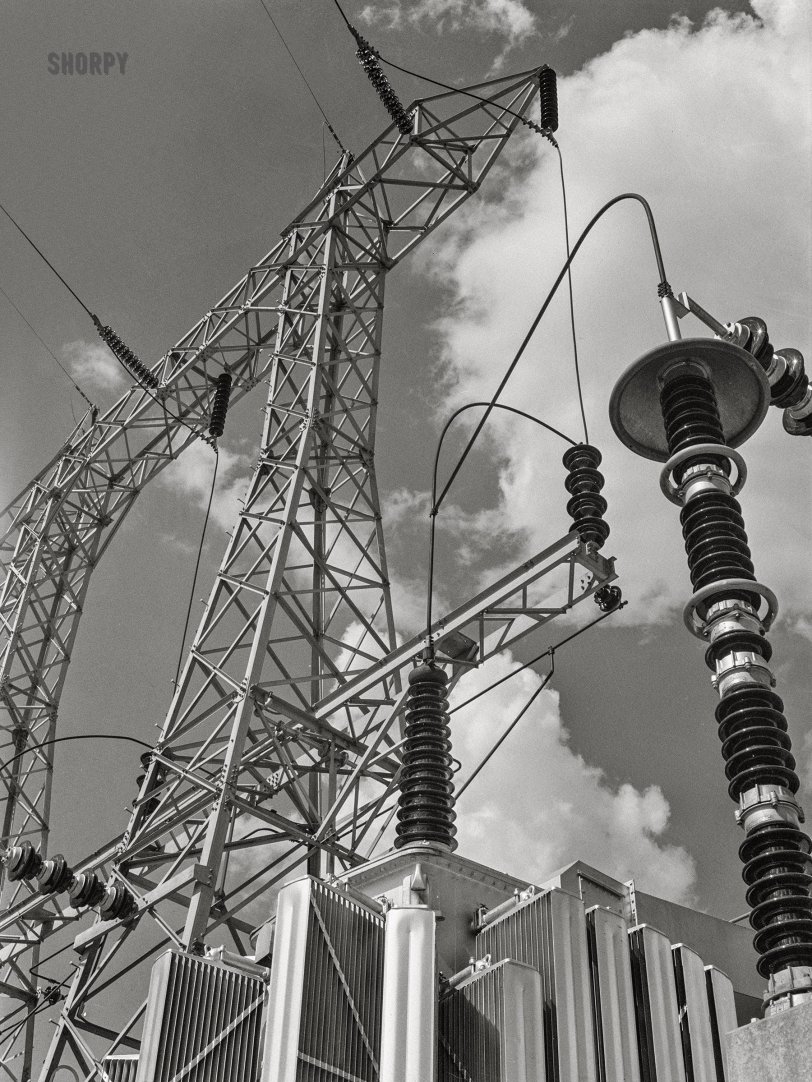
June 1942. "Wheeler Dam, Alabama (Tennessee Valley Authority). Substation." Acetate negative by Arthur Rothstein for the U.S. Foreign Information Service. View full size.
Power Ranger: 1942
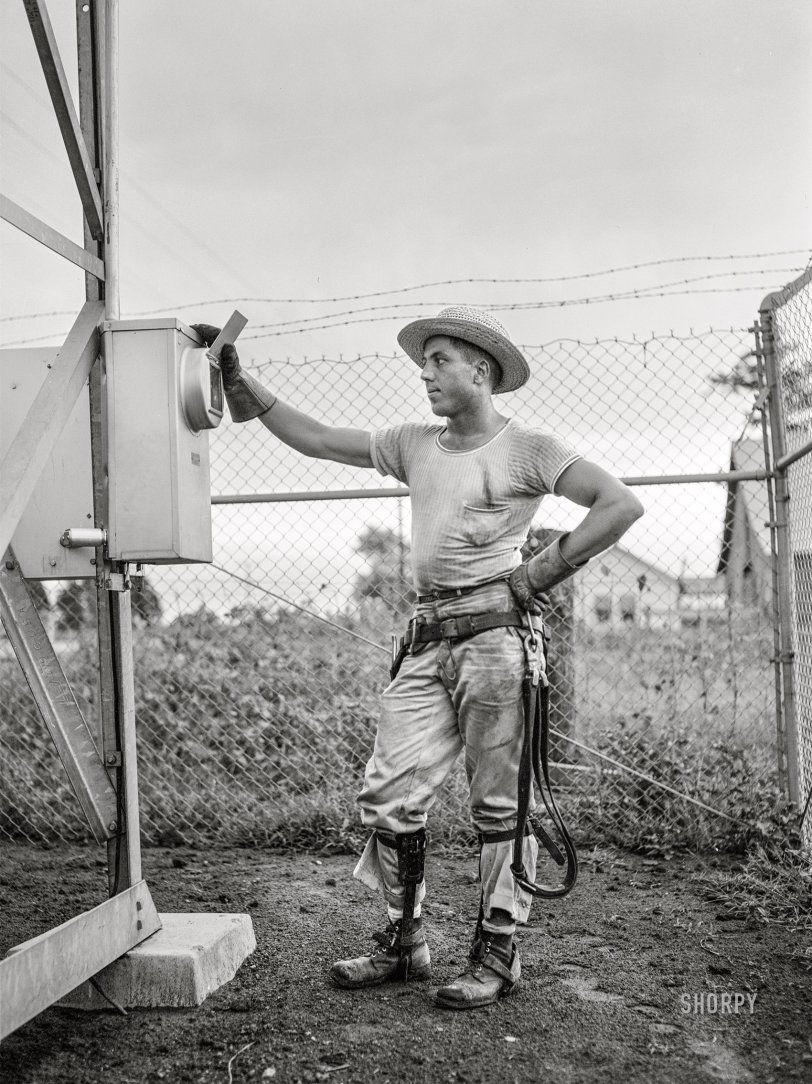
July 1942. "Hayti, Missouri. Rural Electrification Administration lineman inspecting a meter at a substation." Photo by Arthur Rothstein for the U.S. Foreign Information Service. View full size.
- 1 comment
- 9115 reads
Transformers: 1942
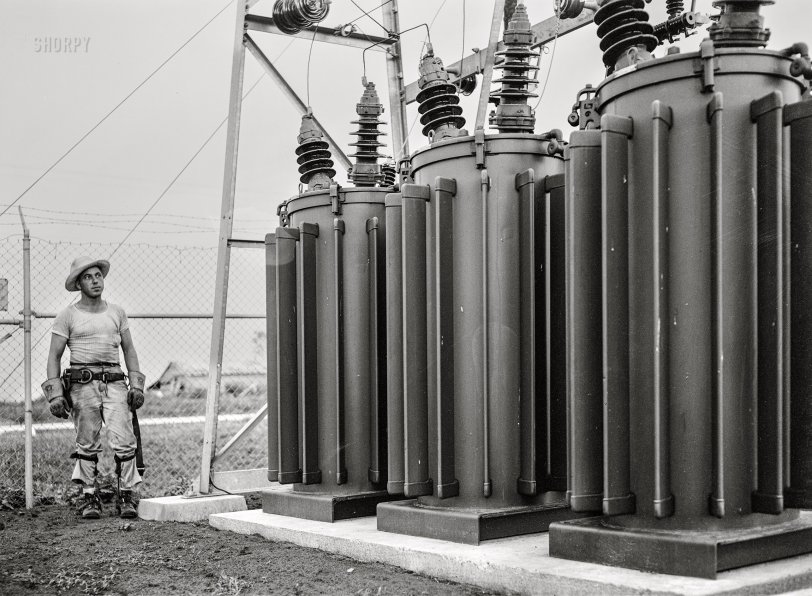
July 1942. "Hayti, Missouri. U.S. Rural Electrification Administration (REA) lineman examining transformers of a substation." Acetate negative by Arthur Rothstein for the OWI. View full size.
- 2 comments
- 8470 reads
High Voltage: 1942
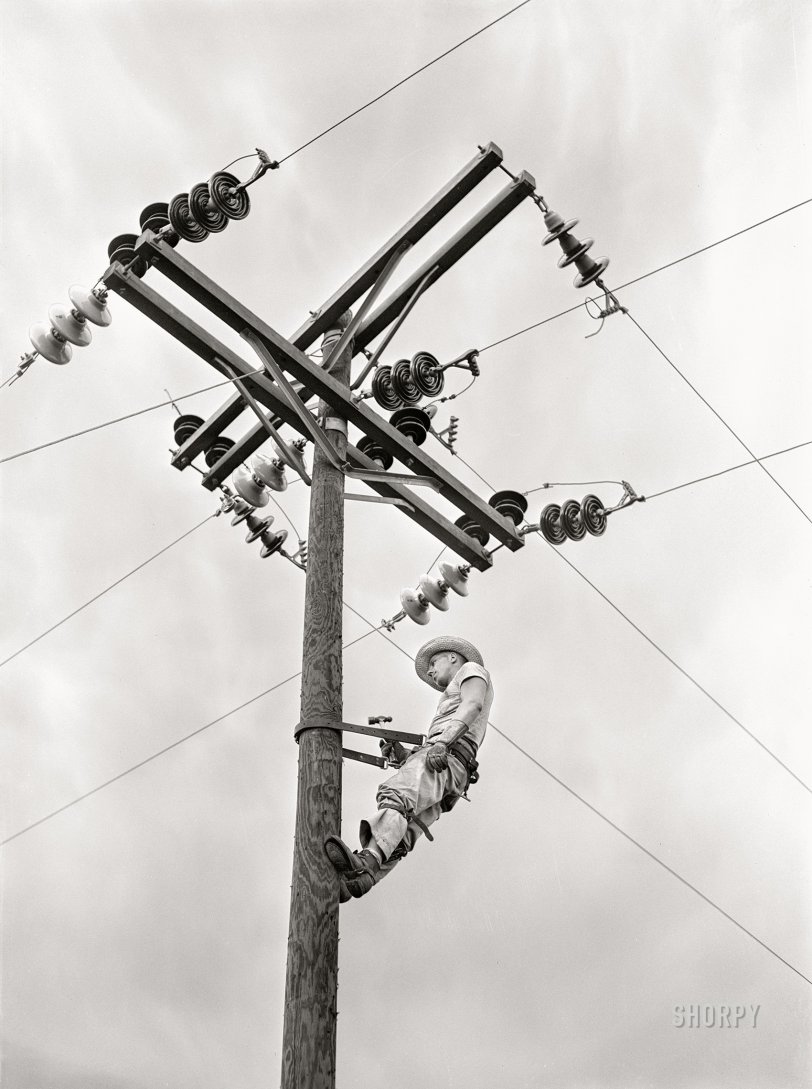
July 1942. "Hayti, Missouri. U.S. Rural Electrification Administration cooperative lineman." Acetate negative by Arthur Rothstein for the Office of War Information. View full size.
- 5 comments
- 7611 reads
Signal Corps: 1942
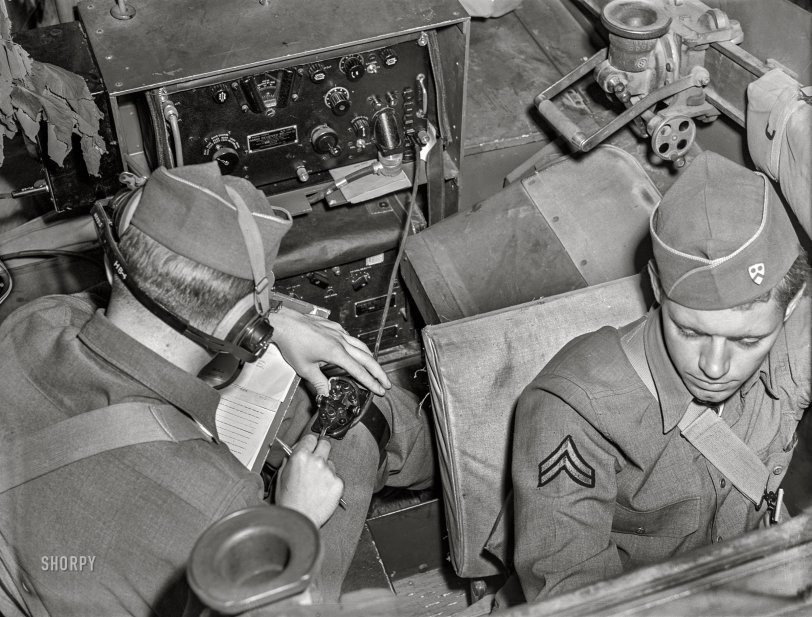
April 1942. "Fort Riley, Kansas. Signal Corps unit communicating by radio from a scout car during a field problem." Acetate negative by Jack Delano. View full size.
- 2 comments
- 8254 reads
High Voltage: 1942
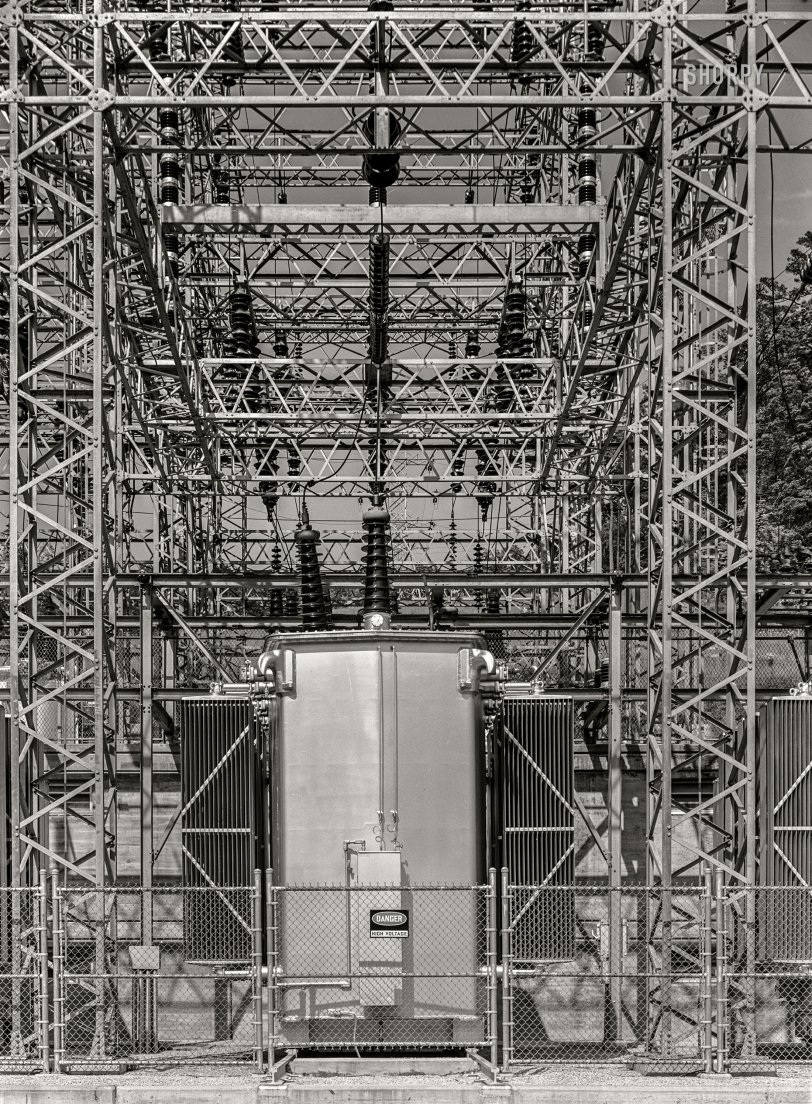
June 1942. "Norris Dam, Tennessee (Tennessee Valley Authority). Electric switchyard." Acetate negative by Arthur Rothstein for the U.S. Foreign Information Service. View full size.
- 6 comments
- 8993 reads
The Right Connections: 1942
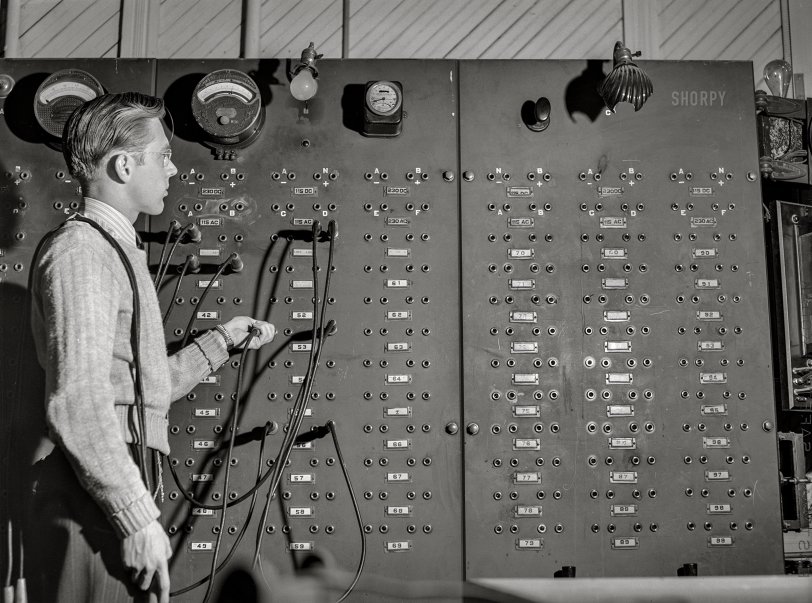
May 1942. "Jim Tillma, a senior in the engineering college, in the electrical engineering laboratory. University of Nebraska, Lincoln." Acetate negative by John Vachon. View full size.
- 3 comments
- 8693 reads
TVA Linemen: 1942
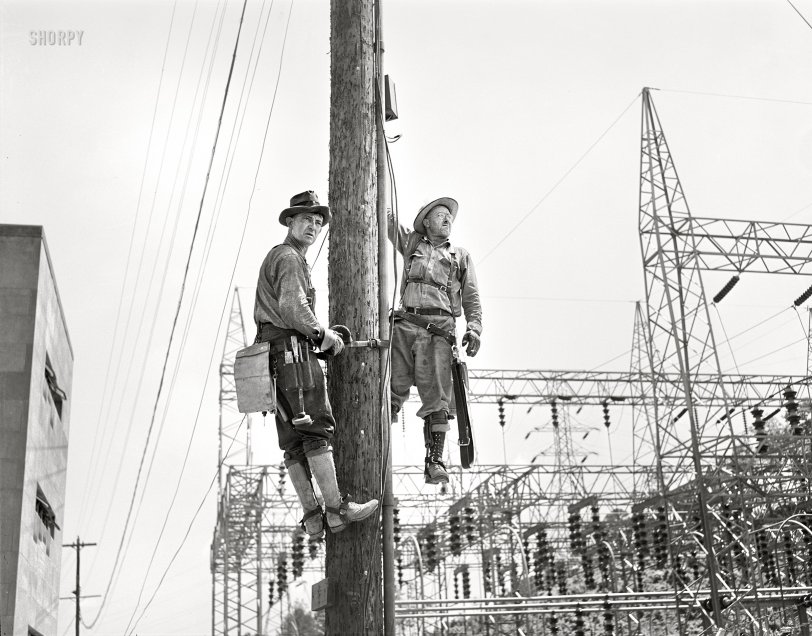
June 1942. "Watts Bar Dam, Tennessee. Tennessee Valley Authority linemen." Acetate negative by Arthur Rothstein for the U.S. Office of Coordinator of Information. View full size.
- 3 comments
- 10296 reads
The Control Room: 1942
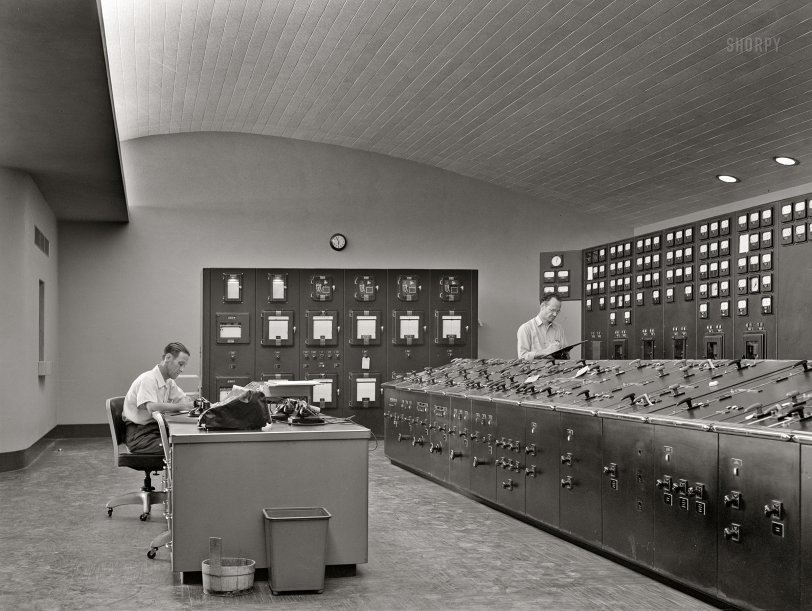
June 1942. "Watts Bar Dam, a Tennessee Valley Authority (TVA) project. Control room." Medium format acetate negative by Arthur Rothstein. View full size.
- 3 comments
- 11323 reads
 Shorpy.com is a vintage photography site featuring thousands of high-definition images. The site is named after Shorpy Higginbotham, a teenage coal miner who lived 100 years ago. Contact us | Privacy policy | Accessibility Statement | Site © 2024 Shorpy Inc.