


Framed or unframed, desk size to sofa size, printed by us in Arizona and Alabama since 2007. Explore now.
Shorpy is funded by you. Patreon contributors get an ad-free experience.
Learn more.



- Baldwin 62303
- Baldwin VO-1000
- Cold
- No expense spared
- Tough Guys
- Lost in Toyland
- And without gloves
- If I were a blindfolded time traveler
- Smoke Consumer Also Cooks
- Oh that stove!
- Possibly still there?
- What?!?
- $100 Reward
- Freeze Frame
- Texas Flyer wanted
- Just a Year Too Soon
- WWII -- Replacing men with women at the railroad crossing.
- Yes, Icing
- You kids drive me nuts!
- NOT An Easy Job
- I wonder
- Just add window boxes
- Icing Platform?
- Indiana Harbor Belt abides
- Freezing haze
- Corrections (for those who care)
- C&NW at Nelson
- Fallen Flags
- A dangerous job made worse
- Water Stop
Photos submitted by Shorpy members!
Print Emporium
Conspirator: 1865
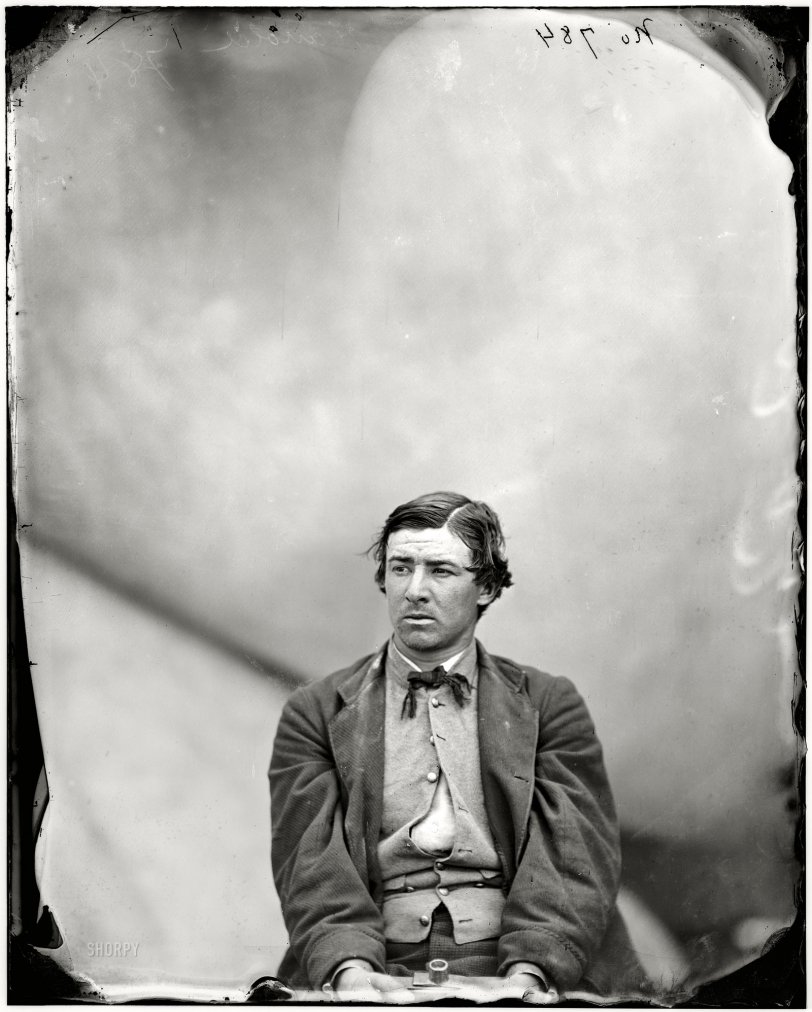
April 1865. "Washington Navy Yard, David E. Herold, Lincoln assassination conspirator." This 22-year-old accomplice of John Wilkes Booth was executed by hanging on July 7, 1865. Glass negative by Alexander Gardner. View full size.
Amazing
That is such an amazing and powerful photograph, I had to register and log in just to comment. The composition, background and border, along with his expression and razor sharp focus add up to one of the most compelling portraits I've seen here.

The Scout
David Herold was very familiar with DC and the Southern Maryland environs and was part of the planning for Booth's escape route. He was from the SE part of DC, near where the Navy Yard is today. This photo was taken right after Booth's capture and subsequent death. David looks none too happy here. He had been on the run for almost two weeks.
At peace with the world?
He doesn't look the least bit phased fazed knowing what surely awaits him.
Booth's companion almost to the end
After the assassination, Herold was waiting for Booth across the bridge into Virginia, and they stayed together for the next twelve days. Herold surrendered at the Garrett farm just before Booth was shot by a federal sergeant.
During the conspirators' trial, his lawyer argued that Herold was what today would be called mentally challenged. The argument didn't work, and I've never seen any documentary support for it.
Gore Vidal made Herold a main character in the novel "Lincoln," acknowledging that the historical man is almost a blank. Vidal gave him a "low" life, making him naive and manipulable but not feeble-minded.
Shackled
Look at those bad-ass handcuffs. Probably quite uncomfortable.
He's got the look!
The look of a man knowing his fate, and not liking it.
A look of Resignation
And despite the ragged and dirty appearance of his clothes, his hair is neatly combed and tattered tie neatly bowed.
If only he had known
If only those assassins could have realized how much more damage was done to their beloved South by killing Lincoln. Lincoln wanted a quick reuniting of the country, not the carpet bagging reconstruction that took place with him gone.
 Shorpy.com is a vintage photography site featuring thousands of high-definition images. The site is named after Shorpy Higginbotham, a teenage coal miner who lived 100 years ago. Contact us | Privacy policy | Accessibility Statement | Site © 2024 Shorpy Inc.

On Shorpy:
Today’s Top 5