


Framed or unframed, desk size to sofa size, printed by us in Arizona and Alabama since 2007. Explore now.
Shorpy is funded by you. Patreon contributors get an ad-free experience.
Learn more.



- Details, Details
- What's that building to the left of the tower?
- Coal Barges
- Bromo-Seltzer
- Inner harbor
- The Basin
- What a headache!
- Giant stepladder?
- Baldwin 62303
- Baldwin VO-1000
- Cold
- No expense spared
- Tough Guys
- Lost in Toyland
- And without gloves
- If I were a blindfolded time traveler
- Smoke Consumer Also Cooks
- Oh that stove!
- Possibly still there?
- What?!?
- $100 Reward
- Freeze Frame
- Texas Flyer wanted
- Just a Year Too Soon
- WWII -- Replacing men with women at the railroad crossing.
- Yes, Icing
- You kids drive me nuts!
- NOT An Easy Job
- I wonder
- Just add window boxes
Photos submitted by Shorpy members!
Print Emporium
Rockaway Bungalows: 1910
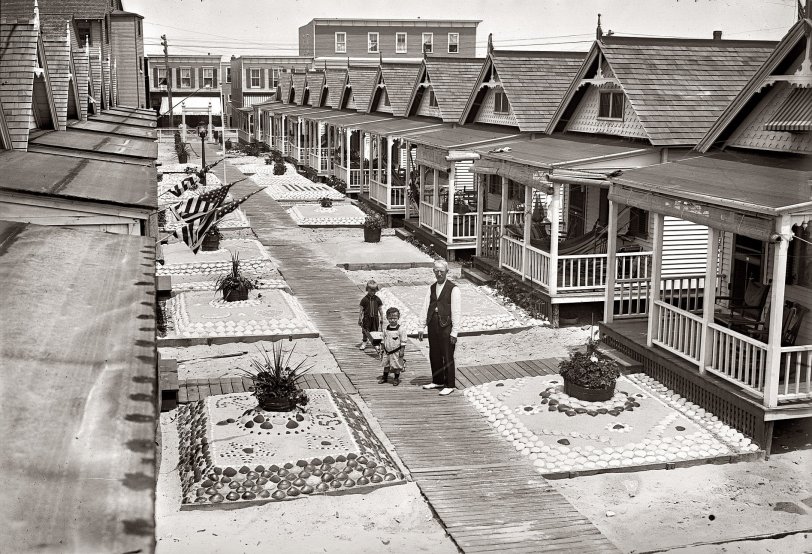
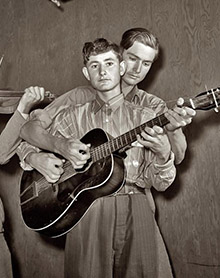
Vacation bungalow colony at Rockaway, Queens, c. 1910. View full size. George Grantham Bain Collection. Note "front yards" of sand decorated with seashells.
Beach 49th
My family and many of my relatives owned bungalows on Beach 49th and Beach 48th Street. We spent every summer there until the city condemned the properties. My father brought one of the first surfboards there in the early 60s. I have many fond memories of the beach and the friends I made.

Moe's Grocery Store on Beach 28th
Barbara posted a comment earlier about her dad owning a grocery store on Beach 28th Street. The name of the grocery store was Moe's, and they carried lots of things for a small store. I lived in bungalows on Beach 28th and Beach 29th Street. These were the most memorable times of my life. I only wish that I could go back and see and relive these wonderful times.
Beach 45th
Does anyone remember Scott Whitehill or Laird Whitehill? If so, please e-mail me at scott@scottwhitehill.com
The Jefferson 1950s
I stayed at the Jefferson in the 1950s. It was far far away from the Bronx.
Our father worked two, sometimes three jobs, so my brother and I could escape the Bronx and spend each summer --the whole summer-- in Rockaway. Dad took the train to work every day. We turned brown by July 4th; skinny brown kids always running, scheming, cunningly evading the watchful eyes of Jewish mothers.
We played softball in the parking lot by the beach in the early mornings before the cars showed up. We played kick the can in the street, ring-o-lerio (sp?), off the stoop. And then there were the long long days on the beach, hopping on hot sand from blanket to shore, waiting the magic 45 minutes to go in the water after eating lim and sandy salami sandwiches, early versions of body-surfing, acting like we couldn't hear our mothers calling that it was time to come in from the water. Crawling into the cool dark sand under the boardwalk.
Some kid named Howie always had a piece of fruit in hand, juice dribbling down his chin. And then there was a kid whose own family called him "Fat Jackie" -- at least that's how I remember it. Once in a while we were treated to Takee cups or lemon Italian ices, and chocolate egg creams. Always sneaking off with so much watermelon that your belly ached, and sand -- always sand -- in your bed.
Jumping off the wooden steps to the beach, higher and higher, until you dared to jump from the railings along the boardwalk. I think it was Friday nights we would go to the boardwalk to watch the fireworks display from Playland. Flying kites over the surf when the weather cooled, and sneaking out to the Boardwalk to watch, awestruck, huge summer storms -- was it hurricane Carol?
Evenings with men playing pinochle, women playing mah jongg. Ping Pong, hide & seek around the Jefferson. Costume parties with fat hairy men wearing grass skirts and coconut shell brassieres, and mothers with painted mustaches and sideburns, wearing huge hipster hats, chewing cold cigars.
Then, dreaded September, back to school and insanely diving under your desk to practice for the upcoming atomic war, or wondering whether you were one of the kids who got the fake Polio vaccine. But somehow, during those summers at the Jefferson, there was nothing to fear. Nothing at all.
Rockaway in 1958
My family spent the summer in Rockaway in 1958. Most of our friends were in the court, but we were outside it on the main street. I don't remember the street, but I suspect it was around Beach 45th, as the El was right on the corner.
We had a bungalow with a porch. I was climbing on the outside of it, fell when I saw a neighbor's dog that I wanted to play with, and broke my wrist on broken concrete. Today, one would sue the owner. Back then, we just made do.
Later that same summer, I ran across the street to get Italian ices from the local candy store, but looked the wrong way crossing the one-way street and almost got hit by a car. I didn't think that much of it, but the woman driving was hysterical.
I also remember a movie theatre on the Boardwalk. In those days, an 8-year-old (me) could feel safe walking the boardwalk without an adult present. The back of the theater opened up at night so you could sit outside. I saw "The Colossus of New York" there, an incredibly bad "monster" movie.
Most of the bungalows in the Rockaways were destroyed by Hurricane Donna in 1960. So-called "urban renewal" took care of the rest. Now some sections of the Rockaways, especially those facing the ocean, are filled with expensive new condos.
Beach at 37th street
What a trip to see all of the these comments. I grew up and lived year round on Beach 37th until 1950, when we moved to Bayside. Takee Cup was a treat as well as the movie theater on the boardwalk, Italian ices and of course the arcade. For a penny you could get great photos of famous cowboys and movie stars.
Belle Harbor Bungalows
I think the two rows of Belle Harbor bungalows on Beach 129th to which another person referred were probably the Ocean Promenade Apartments. I have very happy memories of living there in the mid-i950s in the winter.
The Jefferson, Beach 30th
I stayed with Grandma and Grandpa every summer for years in a small room at ground level. Grandpa would take me to the beach in the morning, then off to the stores on 24th Street. The back patio was for dancing on Saturday night and the concession inside had bingo. The porch! As I grew up to teenager, I met Ronnie Schenkman and family on the second or third floor (used the back staircase). I don't remember where Eleanor stayed. Crazy Eddie and his songs. Hal and his girl of the night. Warm nights and days. Very sexy!
As a working girl I still took the RR to Far Rockaway, then the bus to Edgemere. Took my children to visit Grandma when it was becoming sad looking. Then went to the area years later and found a burnt shell with a wicked fence surrounding it. Took pics and had a good cry. We are all lucky that we were able to experience the wonderful warm sun and sultry nights.
Some of the best days of our lives
were spent on Beach 25th. When I was 12 (1936) until I was 17, we stayed every summer at my grandmother's at Beach 66th Street. Those were glorious days on the beach. The boardwalk at night was wonderful, too. We played pinball, and games of skill for 5 cents to collect prizes. Bottled soda and ice cream were 5 cents then, too. We used to run up to the boardwalk to eat the delicious knishes. My summers at Far Rockaway were the most unforgettable of my growing up. Tuna fish and bologna sandwiches on a roll never tasted as good as it did at the waterfront.
In 1961, when I was married with children, we rented a bungalow on Beach 25th and loved it! It was a rainy summer and we spent a lot of time in Far Rockaway shopping, eating and going to the movies. Every sunny day, however, we quickly rushed to the beach to enjoy it with family and friends.
Sands of Time
I spent every summer in the Rockaway bungalows from the fifties until the mid eighties when we were forced to leave because of the deteriorating situation. I was a child on Beach 49th and remember George's candy store where you could get a walkaway sundae for 50 cents.
Sue, I remember the Fulton brothers, who were lifeguards. Handsome devils, had a crush on Tom when I was 14. Times were safe. There were a thousand kids to play with. We went from 49th, 40th 39th, 38th, 26th and finally 25th Street with my own kids trying to hold on to that wonderful way of life. Unfortunately it disappeared.
Mom's Riviera
My mother loved Rockaway so much that we called it "Mother's Riviera." She couldn't have cared less about the beautiful beaches across the ocean in France or Italy, for Rockaway Beach was her greatest joy. We spent many summers in a bungalow court on 109th Street and my grandmother and her sisters also spent their youthful summer days in Rockaway Beach. So our family goes back generations loving Rockaway.
Every Memorial Day the court always had a party to celebrate the beginning of summer and the courtyard inhabitants were usually Irish. The courtyard came alive with Irish songs and jigs and reels. Of course, the people of the courtyard always chipped in for a big keg of beer. It was repeated on Labor Day as we all said our goodbyes to our neighbors and to our beloved Rockaway Beach.
Saturday nights in Rockaway were spent at the closest Irish bar and some nights the local boys slept under the boardwalk after having a wild time. They always managed to get themselves together for Sunday Mass or otherwise they would get holy hell from their families.
Grandmother's bungalows
My grandmother owned 10 bungalows on the beach on 35th Street from the 1930s thru the 1950s. They were the ones nearest the water. I loved going to help her get them ready each spring and clean them up each fall. Playing on that wonderful empty beach at those times of year with no one else in sight.
We lived in Far Rockaway at 856 Central Ave., so going to the bungalows was not a long trip. Great memories.
Sally's Pizza and the Lemon & Orange Ice Stand
I spent the best summers of my life on Beach 28th Street. Coming from a Bronx apartment, it felt like our own private house. Our own family doctor came out to Rockaway every summer and stayed on Beach 24th Street. I now wonder what happened to his patients during July and August. How come nobody has mentioned Sally's pizza, on the boardwalk around 32nd Street? You couldn't forget Sally-- with her bleached blond hair, tight pants, and backless highheels. Near Sally's was the fresh lemon and orange ice stand with the fruit stacked against the wall. The ices even contained pits. No artificial coloring or corn syrup in those ices.
Elisa on B. 29th Street - the hotels
To Anonymous Tipster on Fri, 08/13/2010 - 3:15am - YES! My grandmother was Bessie. I do remember your family - your grandmother, parents and the little ones. Your mom wore glasses and had blonde hair. She always wore her hair pulled back and up on her head, curlers in the evening.
Also, Harry and Dottie lived in a large room in the corner of the basement of the hotel.
I have 3 brothers and one sister. My Aunt Rose and Uncle Leo used to come to the hotel as well to visit with Grandma Bessie.
Please e-mail me @ medmalnursing@msn.com
Rockaway Beach Bungalows on PBS
I received a message, last night, from my girlfriend who stated that "The Bungalows of Rockaway" was on PBS @ 8PM. I started watching at 8:30 and to my surprise I could not stop watching.
I was born at Rockaway Beach Hospital and I am a lifer. I never lived in a Bungalow but I have always wanted to purchase one. I was taken aback by the fact that there were at least 6,000 bungalows and now there are approximately 300 (big difference).
I also found out in this documentary that there is hope that the bungalows can be landmarked and I hope that it happens. The bungalows are a unique attraction to this area and I hope that the 300 remaining can be preserved.
Rockaway summers
I spent virtually every summer till the age of 22 in Rockaway. We stayed on Beach 49th till they knocked them down, then kept moving to the 20's.
Best time of my life. My family was unique -- Italians in the Jewish neighborhood and we came in from Jersey! My mom grew up in Brooklyn and her family started coming in the '40s!
Wish I could connect with friends from back then. If I sound familiar please let me know. You would be in your mid to late 50s now.
The Jefferson
My grandparents rented a place in the Jefferson for many years. I have great memories of the place, the back stair cases, the porch, and the beach just a short walk away. Does anyone have relatives who stayed there?
Palace Hotel
The last place my family stayed at for quite a few years was the Palace Hotel on Beach 30th Street right near the boardwalk. Those were the days my friend. All the arcades and food places on the boardwalk, Cinderella Playland for the little kiddies, the Good Humor man , Ralph was his name.
Life was simple. No internet, cell phones or video games yet we had great times and wonderful memories. We played board games and cards and rode our bikes. The guys played baseball in the parking lot adjacent to the Palace Hotel.
The team was a mix of every race and ethnicity and everyone managed to get along and looked forward to playing together the next Summer. The beach was the best. Dads could go to work and come back every day rather than only on weekends as they do in the Catskills. Such a shame that this no longer exists. The last summer I went there for a few weekends was in 1976.
Elisa on B 29th
Was your grandma named Bessie? I lived in the Claremar, one of the twin houses, and I remember her. Did you have a brother too? My sister, parents, grandmother and baby brother and I all lived in two rooms in the basement. I remember Crazy Eddie and his huge black book of songs. Tina and Elise ... Elliot ... Donna ... Jackie ... smiling in memory!
Cohen's Court
The picture above is very much how I remember the bungalow court where my parents rented in the summers of the early 1950s. I think my mom said it was Cohen's Court. Ours was at the end of the court on the left. I don't remember too much, I was really little. But I think there was a center row of garden where parents hid treats for us to hunt. I remember a corner candy store we kids could walk to and my mom confiscating a tube of plastic bubbles I bought. I guess she thought the fumes would get me high or something. There was a little girl across the court who would stand on her porch in a towel and flash us once in a while. And I have a memory of being on the beach with my parents, I in the sand and my mom in a beach chair, and my dad taking me into the water. I went back with my parents in the early 60s because they were thinking about renting it again. But it was so musty and dirty and ramshackle that they decided against it. I had a girl friend with me and I have to say I was embarrassed about the way the place looked and smelled. Too bad, that bungalow was a great summer getaway for a working class family from Brooklyn.
Rockaway, a kid's dream
I remember growing up in Rockaway. We had two boarding houses on Beach 114th Street. When my mom was a kid, Carroll O'Connor, his mom and brother Frank stayed with them. He returned to see my parents back in the mid-eighties and I received one of his last e-mails before he died. I worked my way bartending at Fitzgerald's on Beach 108th and Sullivan's on Beach 116th (1967-1970). You could leave the house at 7 years old, walk to the beach without crossing the street and never had to worry one bit. The neighbors looked out for everone's children. Great memories and thanks to Shorpy for an incredible site. Brilliant job!
Beach 48th Way, Rockaway
In the early 1960s there were two brothers that were lifeguards when my family was there, Dennis and Tom Fulton. Anyone remember them? Also there was a man named Warren who would feed pigeons at the end of the block every day. My parents would rent a bungalow in the summer months to get us out of Brooklyn for awhile. Great memories.
Edgemere memories
My family lived many places in the Edgemere section of Far Rockaway (I don't know the exact boundaries of Edgemere, if there were any), but my memories centered on Beach 48th Way and Beach 48th Street. Fantastic place to spend the summers and escape the hell of the South Bronx. I had wonderful Jewish friends and I worried that they would go to hell because they weren't Catholic. Now I laugh as such perverted theology, but back then it was serious stuff.
I loved the beach, the ocean, the starts, the jetties, playing every group game known to humans, going over the the "bay side" to play softball with the "project people" -- those who lived beyond the marshes and spent the winter there.
No doubt about it, the best part of my childhood was Rockaway. Too bad it was taken away from us and to my knowledge, still is just a bunch of sand with no houses where we used to live, right near the boardwalk.
Hugh McNulty Hotel, Rockaway Beach
I am trying to learn about Hugh McNulty's Hotel. I am not sure what street it was on, but there was also a bar in it. Hugh was my mum's uncle and her father came to stay with him and work for him. The time period may have been 1924-1930. I know the hotel was still in operation in 1953, as my grandmother visited him at that time. Any help is appreciated. libtech50@comcast.net
Best summers ever
I used to stay at my grandmother's bungalow on B 28th st. in the mid to late 60s. Those were the very best summers ever! Walking just a few yards to the boardwalk and beach, pizza from the store on the corner, hanging with Howie and the crowd there. Playing Fascination for a dime, huge french fries in those cone cups.
If anyone knows the whereabouts of Howie Young I'd love to get in touch with him. My email is belongtoyou@hotmail.com
At the Frontenac
My family spent summers at the Frontenac from the late 40s until 1957. When I describe it to my daughter, I have to confess it was really more like a boardinghouse. My mother, father and I shared a room that was also the kitchen. Bathroom on the floor, showers were out back for when you came back from the beach. It was great community. Juke box for dancing, card room for gin and mah jongg and the television on the porch.
I loved Jerry's cherry cheese knishes. I remember the movie theater on the boardwalk in the 30's (it could barely be called indoors)
I bought the News and Mirror off the delivery trucks for 2 or 3 cents and sold them for a nickel.
My parents would pay the guy who ran the first aid station under the boardwalk to hold our beach chairs overnight so we wouldn't have to "schlep" them back and forth.
We played softball on the blacktop parking lot on 29th street right off the boardwalk.
My wife, who I did not know then, stayed with a friend's family in a bungalow on 29th street. I think her best memory was playing Fascination.
Beach 25th Street
I grew up in Far Rockaway in the 1960s and 70s. We lived in the Bronx and rented every summer on Beach 32nd Street (now two big apartment buildings -- Seaview Towers). When I was 9 or 10, we moved to Beach 25th year-round. The summers were great -- we didn't wear shoes most of the time.
Every Friday night, "Bingo Al" held a game in the court behind the bungalows, between 25th and 26th. One summmer he had a "Chinese auction" and dressed up in an oriental robe and Fu Manchu mustache and beard.
Many of the residents got seltzer water delivered in bottles at their back porch. They would gather in the evenings out in front of the bungalows and talk and joke. I would lie in my bed, with my ear pressed against the window screen, trying to listen, and also trying to stay cool -- no air conditioning.
Sol "The Cantor" Gerb would play his little electric organ as people sipped their drinks, chatted or played cards. It was like a different world from the rest of New York.
I read where one commenter talked about the bungalows rented for the Russians. This was on Beach 24th Street. They worked at the United Nations and rented a block of bungalows. Every Monday morning passenger vans would show up to take them to work at the UN. We played with the Russian kids. They were a good bunch. I stayed over at one of their bungalows and we had crepes for breakfast. I had no idea what crepes were! I learned to play chess, as the Russians were crazy about it. I recall one time when members of the Jewish Defense League blew up a small BMW belonging to one of the Russians. The news came out and I was in the background, behind the reporter. A sad time for Far Rockaway.
One of the amazing things was the backgrounds of the bungalow residents -- former concentration camp prisoners, Russians, Irish, Jews, some Italians and Greeks, but we all got along so well. A great place to grow up!
Our 1940s summers
A group of Bronx families spent the summers of the early '40s in a few bungalows. Sundays the working fathers would appear for a community breakfast. We celebrated V-J Day with a parade on the boardwalk. Takee Cup was a part of our diet. A noodle cup to be eaten after the chow mein was devoured. The ultimate hand held food treat.
Rockaway native from Hammels
Born in Rockaway in 1941 at Rockway Beach Hospital. Went to PS 44, JHS 198, Class of '59 from Far Rock. Worked as a locker boy at Roche's Beach Club in Far Rockaway. For two summers I worked in Rockaway Playland. I lived on 90th, where my parents rented out the bungalow in the back of our house every summer. My father at the end of his years as a waiter worked in Weiss's dining room, and the Breakers restaurant on 116th Street.
I met my wife in 1965 at McNulty's on 108th Street. She was from Woodhaven and Breezy Point. We got married in '68. I am writing this on the back deck as we are still enjoying the summer weather here at Breezy. We both still have sand in our shoes.
The Bungalows
I was born in Far Rockaway in 1942. I lived there for 16 summers. My dad owned a small grocery on B 28th street. It was the best time of my life. Maple Court faced 28th. To me it was a very exotic place. The renters/owners vacationed there, my dad was a workman. We lived in roominghouses with a bath on the floor. One year I begged my dad to live in Maple Court and we got a small apartment in the back of a bungalow there. The bungalows were the BEST.
Anyone remember dogball?
My dad wrote about playing dogball on the beach at 110th Street on his blog at willhoppe.com.
I'm going to show him all of your comments later tonight.
Beach 28th Street & A B and C Courts
I too remember the pizzaria on the corner of Beach 28th street. I remember my friends Randy, Shmealy, Risa, Brenda and Jody. I don't remember Shmealy's given name, but I remember he was hyperactive and a lot of fun. Made up a song from the commercials of the time for Halo Shampoo. "Halo Sham-poo poo, Ha-a-lo! Jodi's mom didn't want me hanging around Jody because I blinked my eyes too much. Oh well. HEY: Jody from Beach 29th street who wrote a post here on 11/12/2007 - I wonder if you're the Jody I remember!? I hung around with Risa a lot. I still have a photo of us and my dog Suzie on the porch of my Bungalow. I once disappeared into the Courts of Beach 28th street while walking my dog. I ended up talking to a boy for 2 hours, not knowing my parents had called the police and had an all-out search for me. My father finally found me. I was the talk of the town that day! I hope someone remembers these people or IS one of these people, or remembers the lost girl incident and would like to contact me at orangechickens2@aol.com. It would be wonderful to hear from you!!
Sand in my shoes on Beach 107th
My mother's family went to Beach 107th in the summers of 1917 through 1929. After the Depression hit they couldn't afford it. I still have photos of that period.
In 1951 our family went down to the Rockaways and rented a bungalow for the season. The courts I remember were Almeida and Holmenhurst.
My dad came only for the weekends, arriving Friday evening. The first thing he did was put on his trunks and head for the beach with me. When he hit the ocean you could see all his cares and worries leave. At night the parents would gather on the porches and play cards, drink a Tom Collins or have a beer and just have a good time.
As a 10-year-old I wondered what was so much fun doing this every weekend. It occurred to me many years ago that boy, did they have it made. Sitting on a porch with a nice summer drink, a cool ocean breeze along with good friends to talk with and play cards with. Life was so laid-back and simple then.
Does anyone remember the doughnut shop Brindle's or the bakery Dudie's? What about Nat's Ice cream shop, where you could get a walk-away sundae. Bill's Deli had the best salads and cold cuts.
Wonderful summers that will always keep me warm in the winters of my aging mind.
Twin Houses
The houses with the bridge were known as "the twin houses", possibly the Claremore & Edgewater, both owned by the Hechts. I spent the happiest summers of my life there!
Like Cheri, I've wanted to return, but haven't as I know how sad it would be. Better to revisit in memory, sometimes in dreams.
I probably know Cheri (from Arnie & the Joey days) and Les rings a bell, as does singing Eddie...
Marcy
My two aunts
My father's two aunts had a bungalow in Rockaway Beach in the late 50's early 60's. It had flowered wallpaper and a musty smell, but it was the most interesting home I have ever been in. I was allowed to leave and explore without my mother's glare. I cannot tell you what food we ate there. I have no memory of meals which is odd. I do remember being bitten by my aunt's dog, which scared me for a long time. I think their names were Bernice and Ruth Cohan. If you have any thing to share please do.
thanks, Mary Donaldson
neversynvr@aol.com
Far Rockaway
My sister directed me to this site. We stayed in the Jefferson Hotel, right between Beach 29th and 30th, next to the Frontenac. My good friend Faye's grandparents, the Kratkas, owned the Embassy and both Faye and I worked the concession stand which her parents ran.
The memories of the boardwalk are still strong. Not only did we have the luxury of a fantastic beach at our doorstep, we also had nighttime fun. Cruising up and down the boardwalk -- eating pizza at Sally & Larry's, or Takee Cup (originally called Tuckee Cup until the owners got disgusted of painting out the alternate name it always received over the winter months) and listening to Eddie, with his ever-present songbook, sing requests. All added up to good, clean fun.
I left in 1968, went back from time to time, but haven't been back in years. Unfortunately, you can see enough from Google Earth.
Memories of Far Rockaway
Yes, this website is truly wonderful for allowing us to stroll down memory lane and recall the sights, smells and feel of Far Rockaway... and what an extra treat for me to find someone who actually knew my grandparents. Thank you Shorpy's for allowing us this exchange of information and memories... and thank you Peter for your kindness and your very sharp memory!
Carolyn! What a great happening!
Hi Carolyn,
Glad you found me on Facebook. Your ability to put me together with my earlier Shorpy post was remarkable, so I am posting this for the benefit of "Shorpy page readers."
Your recollections and mine from the 1960's certainly attest to how great having the internet and pages like Shorpy's are. (Shorpy..thank you!) The fact that I remembered your grandparents is somewhat unique cause I can't remember anyone else's grandparents from way back then, other then mine. I must have really liked them and was destined to cross your path again. I remember sitting and talking with them on porch of the Manor in one of those green rocking chairs. They were "grandparent" types, had a European accent like most grandparents back then, and easy to be comfortable with.
Just to put things into focus, I am now 63. That was back when I was 16 or 17 and younger, but your grandparents returned to the Manor for quite a few summers in the 1960s. How could I have remembered your grandparents' name? I too am amazed and flabbergasted.
The Manor
Wow... your parents owned the Manor! What an interesting and exciting experience that must have been. If I recall correctly, there were an eccentric bunch of characters staying there.
The Embassy
Cheri, I can understand your crying. I went back many years ago and was also upset to see the area so demolished. At that time, it seemed the only bungalow left standing belonged to a lady we were all so afraid of on Maple court. She seemed to hate kids (probably we just annoyed her mercilessly!). But going back as an adult, I saw her situation quite differently. The bungalow was all she had, and so she stayed there while everything around her seemed to be destroyed.
Maple Court Bungalow
Lillian, we must have known each other since we were there at the same time, and we were around the same age. I was in the first bungalow on the right, facing the main street. You might remember the pile of junk in front of the house (left by the owner, which we were waiting for them to take away!) Where in the court were you? I remember a girl named Elena, and a boy everybody had a crush on named Eddie.
Fruit Store
Peter, you have an incredible memory! My grandparents were the Leibowitzes. That's such a specific memory. Did you know them personally? I would love to hear about any memories you have of them or the store. Were you a child at the time?
Far Rockaway
I also have childhood reminiscences of Far Rockaway. My family lived in a small bungalow rented for a group of Russians in 1970s (yep, I am Russian, living in Moscow now). I was 3 or 4 years old at that time, so I do not remember much. What I know is that these are one of the brightest memories of my early childhood. My pa said the house was really small. I do not know what street it was on, or if it still exists.
What matters are the snapshots of my memory: me sitting on a porch on a rocking chair, and the arches of the porches, of the same form and shape, go all the way down to the ocean. Me playing in sand, building garages for toy trucks, with other children running from waves that seemed - wow - so really huge. And above all and around all, the salty smell of Atlantic, which is different from any other seaside smell.
Great pity the place is devastated today. Hope that everyone who has ever had good times in Far Rock keeps his own memory snapshots of the place, where it looks as it really should.
The Embassy
My family had a bungalow on B29th Street on "the ramp" from the 1950s until around 1970.
I got thrown out of the Embassy by the owner because we didn't live there. I bought ice cream at the candy store under the porch of the hotel.
I saw the school, it was a bummer. I remember Lenny's, skee ball, Jerry's knishes, Sally & Larry's pizza, movies on the boardwalk, Dugan the baker, softball games, basketball in the parking lot. I used to sell lemonade to the ball players on hot days. Memories ...
I remember a girl named Cherie or Sherry. She had a boyfriend, Arnie. I used to hang out with Arnie's brother Marvin.
Fruit store
Carolyn, if memory serves (pretty fuzzy by now), your grandparents were the Lebowitzes. The fruit store was on Edgemere Avenue just off Beach 24 next to Willy's Market.
If I am right, I am amazed.
Who were your grandparents?
Carolyn, my parents owned the Manor at 2400 Seagirt Blvd (beach 24st). My last summer on Rockaway Beach was 1967 just before I entered the Army. My parents and I moved to South Florida shortly there after. I was 6 miles from the DMZ in Vietnam when we landed on the moon.
The Embassy
We stayed in the Embassy on 29th Street (right next to the ramp to the beach). Many of my friends were in the bungalow courts between 28th and 29th. We stopped going in 1967 but those were the best times -- those summers were magical. My husband and I went back in 1998. There is a school where the Embassy used to be and nothing much else. I went down to the beach and I cried.
Maple Court bungalow
My family purchased a bungalow at 29 Maple Court in 1969 when I was 9 years old. I too had the greatest memories there. We took so much for granted thinking everyone lived as we did. Now I realize how lucky we were back then. Being able to stroll down the street to the boardwalk, watching the fireworks Wednesday nights, and winning prizes at the arcade games are fond memories. Do you remember the pizza shop on the corner? Because the bungalows were so small and cozy, to this day I prefer smaller spaces. Thanks for letting me relive those memories for just a short time.
Maple Court, Beach 28th st.
I've been searching for info on Far Rockaway. I've been strolling down memory lane thinking about my wonderful summers there. My family rented, and we stayed for a total of five summers. The last two were in Maple Court, which, I believe, was on beach 26th or 28th Street. Before that we were in B Court and A Court on 28th. I agree with the posters who spoke of these summers as paradise! I felt truly free there. And yes, nothing was locked up. There was no schedule to keep. Just pure fun. My last summer there was in 1969. I remember this because of the moon landing. We returned home from the fireworks display on the beach and watched it on TV. My grandparents owned a fruit store on the main street, and they stayed at a wonderful hotel called the Manor. My happiest memories from my childhood are from Far Rockaway.
Belle Harbor's Bungalows
I was searching for a picture of Weiss's Restaurant and stumbled across this site. I found one taken before the war, but was hoping to find one more recently, like late 1950s or early 60s. Looking at the group of bungalows, there were similar ones along the beach 2 rows deep at B129th Street in Belle Harbor, Rockaway. They looked very similar to the ones in the pics if memory serves. I was there last year and although they still occupy the same footprint, most have either been completely reconstructed or torn down and replaced with more modern ones. I recall every summer going to the beach and seeking out the "city" kids here for a few weeks. We made lots of new friends every summer. Then there were the bungalows out on RockyPoint/BreezyPoint.
My mother spent her childhood summers, probably right there in that picture. Her parents owned their own bungalow. I have a picture of it from around 1941. Mom's 83 and I'll have to print this off and show it to her.
 Shorpy.com is a vintage photography site featuring thousands of high-definition images. The site is named after Shorpy Higginbotham, a teenage coal miner who lived 100 years ago. Contact us | Privacy policy | Accessibility Statement | Site © 2024 Shorpy Inc.
On Shorpy:
Today’s Top 5