


Framed or unframed, desk size to sofa size, printed by us in Arizona and Alabama since 2007. Explore now.
Shorpy is funded by you. Patreon contributors get an ad-free experience.
Learn more.



- Baldwin 62303
- Baldwin VO-1000
- Cold
- No expense spared
- Tough Guys
- Lost in Toyland
- And without gloves
- If I were a blindfolded time traveler
- Smoke Consumer Also Cooks
- Oh that stove!
- Possibly still there?
- What?!?
- $100 Reward
- Freeze Frame
- Texas Flyer wanted
- Just a Year Too Soon
- WWII -- Replacing men with women at the railroad crossing.
- Yes, Icing
- You kids drive me nuts!
- NOT An Easy Job
- I wonder
- Just add window boxes
- Icing Platform?
- Indiana Harbor Belt abides
- Freezing haze
- Corrections (for those who care)
- C&NW at Nelson
- Fallen Flags
- A dangerous job made worse
- Water Stop

Photos submitted by Shorpy members!
Print Emporium





Waterfront Property: 1935
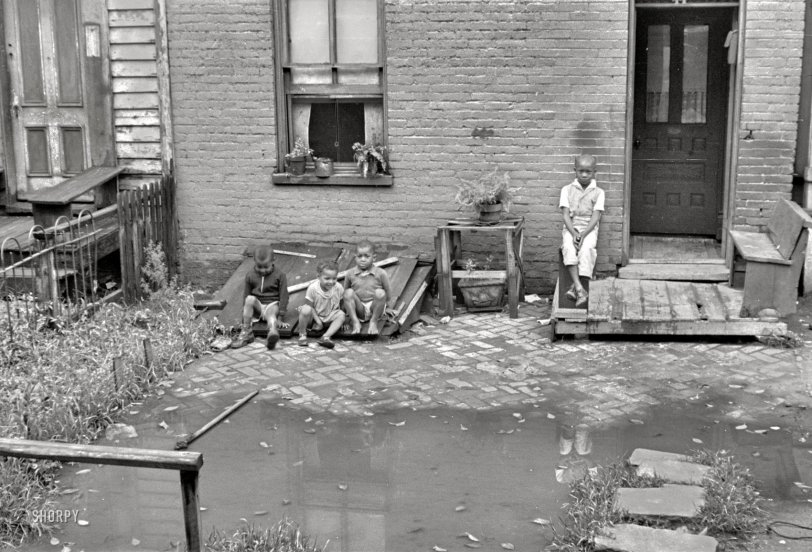
September 1935. A closeup of the Washington, D.C., row house seen here over the weekend. "Front of old brick structure in section near Union Station. Land is low here and water collects in front and backyard after a rain and remains for many days. Entrances to privies are usually under water. Interior of homes similar in shabbiness to exterior." 35mm nitrate negative by Carl Mydans for the Resettlement Administration. View full size.
Well Disciplined
My kids would have been wet already.

Swampoodle
This part of town historically was called Swampoodle and got that name because of the large puddles that would form after rains. A tributary of Tiber Creek flowed south through here to meet up with the city canal, and it was very prone to flooding.
Indoor Pool too?
Surely the four children on the left are sitting on a cellar door? And if the yard is as poorly drained as this, that cellar is doubtless more or less flooded much of the time. The interior of the entire house must be moldy and damp in the hot, humid environment of the District's summer.
The caption implies no indoor plumbing -- I wonder if they have central heat? We tend to forget what a hard life people lived even a realtively short time ago.
Definition of Temptation
Four lively kids trying to be good, but there is nothing to play with. Although the boys look determined to stay clean and dry, I believe the little girl has already decided to go ahead and succumb to her inspired plans and will get the ball rolling, as she is already on her way.
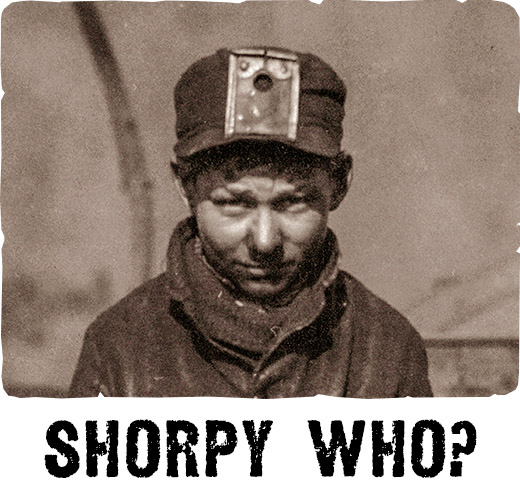
 Shorpy.com is a vintage photography site featuring thousands of high-definition images. The site is named after Shorpy Higginbotham, a teenage coal miner who lived 100 years ago. Contact us | Privacy policy | Accessibility Statement | Site © 2024 Shorpy Inc.

On Shorpy:
Today’s Top 5