



Framed or unframed, desk size to sofa size, printed by us in Arizona and Alabama since 2007. Explore now.
Shorpy is funded by you. Patreon contributors get an ad-free experience.
Learn more.




- Baldwin 62303
- Baldwin VO-1000
- Cold
- No expense spared
- Tough Guys
- Lost in Toyland
- And without gloves
- If I were a blindfolded time traveler
- Smoke Consumer Also Cooks
- Oh that stove!
- Possibly still there?
- What?!?
- $100 Reward
- Freeze Frame
- Texas Flyer wanted
- Just a Year Too Soon
- WWII -- Replacing men with women at the railroad crossing.
- Yes, Icing
- You kids drive me nuts!
- NOT An Easy Job
- I wonder
- Just add window boxes
- Icing Platform?
- Indiana Harbor Belt abides
- Freezing haze
- Corrections (for those who care)
- C&NW at Nelson
- Fallen Flags
- A dangerous job made worse
- Water Stop

Photos submitted by Shorpy members!
Print Emporium






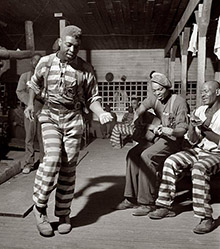






Texting: 1917
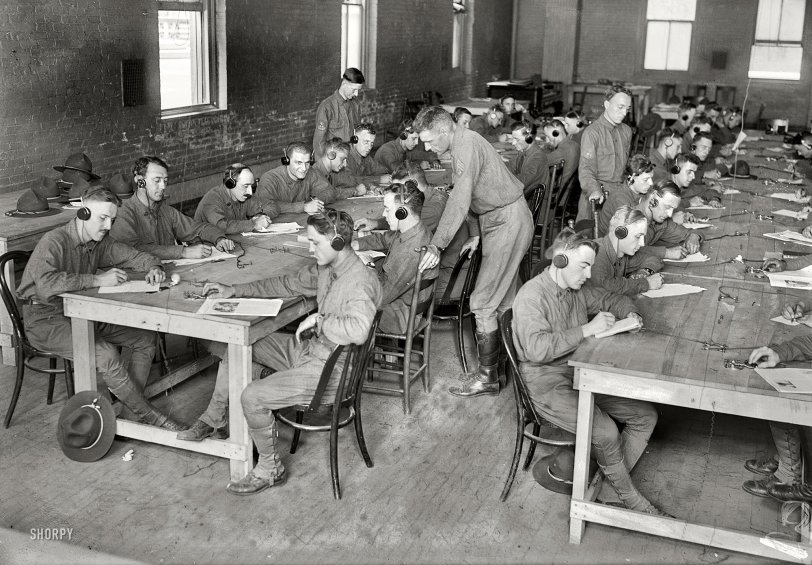
New York, August 1917. "Wireless instruction -- Pratt Institute." 5x7 glass negative, George Grantham Bain Collection. View full size.
Hats
It must have taken them a minute or two to get the right hat with the right head!
There are some really good-looking young men here! The one on the far left side of the left table, fourth from the end, is real cute, and the one standing looks pretty good, too. That's just to name a few!
I hope they all survived that horrible war!

Not a speed key in sight
Like jdowling23, my dad was a ham radio operator, and an ex-Navy signalman, so thumb and forefinger were all I ever saw. By the early 1950s, he was sending 70-80 wpm using a speedkey with side-to-side action. The old Navy thumb and forefinger made speed really easy, or so he said. Best I could ever do was a piddling 10.
Thanks, landtuna
My dad was a ham, and I always thought the thumb-and-forefinger method was the only correct way to use a telegraph key. But then, Dad was ex-Navy. Now when I see those guys in movies tapping the key, I'll know they aren't doing it wrong.
I used to do 25 WPM
but only until I passed the Amateur Extra code exam way back in 1976. I hated operating Morse, and I was never comfortable with it. I admired those who could copy 15 or 20 wpm in their heads!
I'll bet these guys could really fly with it, and under some stress, too!
 Shorpy.com is a vintage photography site featuring thousands of high-definition images. The site is named after Shorpy Higginbotham, a teenage coal miner who lived 100 years ago. Contact us | Privacy policy | Accessibility Statement | Site © 2024 Shorpy Inc.

On Shorpy:
Today’s Top 5