


Framed or unframed, desk size to sofa size, printed by us in Arizona and Alabama since 2007. Explore now.
Shorpy is funded by you. Patreon contributors get an ad-free experience.
Learn more.



- Baldwin 62303
- Baldwin VO-1000
- Cold
- No expense spared
- Tough Guys
- Lost in Toyland
- And without gloves
- If I were a blindfolded time traveler
- Smoke Consumer Also Cooks
- Oh that stove!
- Possibly still there?
- What?!?
- $100 Reward
- Freeze Frame
- Texas Flyer wanted
- Just a Year Too Soon
- WWII -- Replacing men with women at the railroad crossing.
- Yes, Icing
- You kids drive me nuts!
- NOT An Easy Job
- I wonder
- Just add window boxes
- Icing Platform?
- Indiana Harbor Belt abides
- Freezing haze
- Corrections (for those who care)
- C&NW at Nelson
- Fallen Flags
- A dangerous job made worse
- Water Stop

Photos submitted by Shorpy members!
Print Emporium




Karnak: 1858
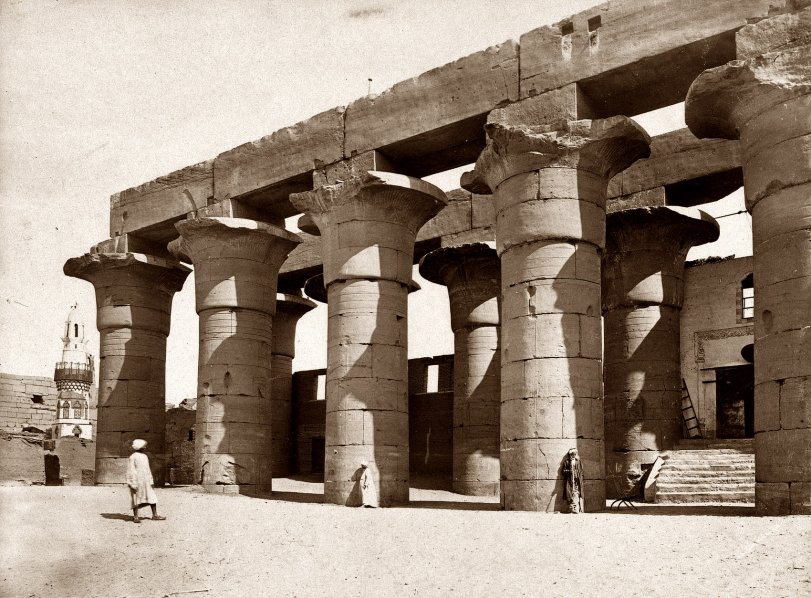
Portico at ruins of Hypostyle Hall, Temple of Karnak at Luxor, Egypt, circa 1858. View full size. Albumen print by Francis Frith.

Wow.
Over the last 150 years they've really dug those columns out! If you match up the chips/marks in the some of them, you can see that almost half of the current height was underground in 1858. Cool.
and at night more than 100 years later
Scanning For Years
There are five books, each has about 100 photographs, so I'll be done in a few years. I will start looking for "Shorpy worthy" photos tomorrow.
scan 'em!
well, get scanning, friend! (i know how time consuming to get the parameters you would want, so that's somewhat a tongue-in-cheek remark :)
Egyptian Photographs
I have multiple albums of photographs from the late 1870's of a trip taken to Egypt and the surrounding areas, never have been scanned, I ought to do so, some of the pictures are amazing. All are large photographs....
A Century & A Half Ago!
1858!? Holy cow, this could just as easily have been taken in 1958! I wonder just how many pre-civil war photographs actually exist. There couldn't possibly have been very many cameras in existence at the time.
[At the very least, many thousands of photographs from the era survive as daguerreotypes, prints and glass negatives. Photography had been around for a quarter of a century in 1858. - Dave]
Size!
Large negative images of Egypt are the best -- you can feel the texture of the stone.
Wrong!
The picture is not of Karnak - it's the Colonnade in Luxor Temple, with the mosque of Abu el Haggag in the background - but otherwise it's a wonderful picture.
so good, so old a pic!
wow. really fantastic! way to document! what's so fascinating is the dress of the people. reminds me of that old silent movie Grass. really great image.
 Shorpy.com is a vintage photography site featuring thousands of high-definition images. The site is named after Shorpy Higginbotham, a teenage coal miner who lived 100 years ago. Contact us | Privacy policy | Accessibility Statement | Site © 2024 Shorpy Inc.


On Shorpy:
Today’s Top 5