


Framed or unframed, desk size to sofa size, printed by us in Arizona and Alabama since 2007. Explore now.
Shorpy is funded by you. Patreon contributors get an ad-free experience.
Learn more.



- Baldwin 62303
- Baldwin VO-1000
- Cold
- No expense spared
- Tough Guys
- Lost in Toyland
- And without gloves
- If I were a blindfolded time traveler
- Smoke Consumer Also Cooks
- Oh that stove!
- Possibly still there?
- What?!?
- $100 Reward
- Freeze Frame
- Texas Flyer wanted
- Just a Year Too Soon
- WWII -- Replacing men with women at the railroad crossing.
- Yes, Icing
- You kids drive me nuts!
- NOT An Easy Job
- I wonder
- Just add window boxes
- Icing Platform?
- Indiana Harbor Belt abides
- Freezing haze
- Corrections (for those who care)
- C&NW at Nelson
- Fallen Flags
- A dangerous job made worse
- Water Stop
Photos submitted by Shorpy members!
Print Emporium
Airplane # 14 and crew
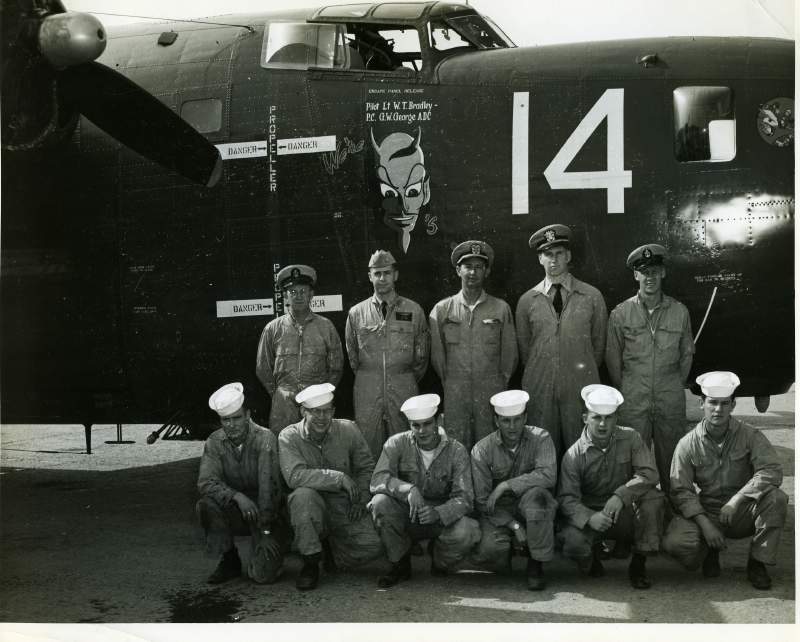
PB4Y-1P Liberator
Note squadron insignia on far right side of nose. (Link)
This insignia was used by a different squadron prior to its approval for use by VP-61. It continued in use following VP-61’s redesignation to VJ-61, VAP-61 and then VCP-61.
The squadron’s first insignia was approved by CNO on 2 October 1951. This insignia had been used by VC-61 before being approved for use by VP-61. Colors for the insignia were: a blue background; a gray and white goose with a pink foot, green eyes, yellow bill, and a red tongue; the pilot and gunner’s uniforms were olive green with yellow life jackets, pink faces, brown gloves, boots were olive green and brown, red nose and green eyes; black and white pilot’s helmet and red gunner’s helmet; black gun with white highlights and a brown stock; gray camera with white sides, a black and white lens with a blue and white sight; the globe had blue water, yellow and white land areas and black longitude and latitude lines.

Consolidated PB4Y-2
Those men are wearing sailors' hats, and the aircraft is in dark (probably blue) paint, so evidently this is a Navy aircraft. The cockpit design is obviously a Liberator (B-24) variant. The Navy flew a few C-87 Liberator Express transports in WWII, but I bet this is the patrol version, built specifically for the Navy, the PB4Y-2 'Privateer'.
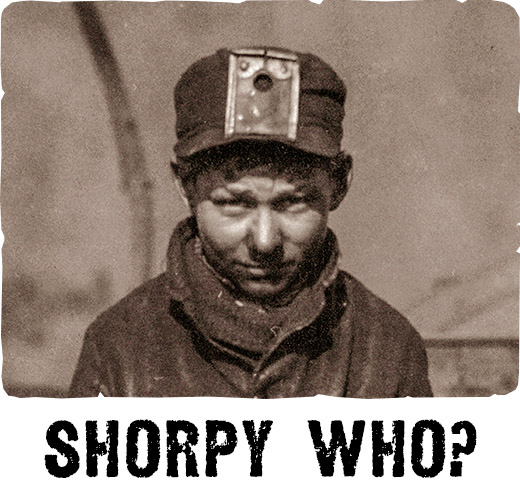
 Shorpy.com is a vintage photography site featuring thousands of high-definition images. The site is named after Shorpy Higginbotham, a teenage coal miner who lived 100 years ago. Contact us | Privacy policy | Accessibility Statement | Site © 2024 Shorpy Inc.
On Shorpy:
Today’s Top 5