


Framed or unframed, desk size to sofa size, printed by us in Arizona and Alabama since 2007. Explore now.
Shorpy is funded by you. Patreon contributors get an ad-free experience.
Learn more.



- Complicated then, forgotten now
- Bryan-Stevenson
- Skinny is as skinny does
- How do you rest in peace
- Riding the footboards
- Alas, hidden from view
- Baldwin Diesels
- Exclusive pump
- Bananas, Oysters and Smokey Joe
- Details, Details
- What's that building to the left of the tower?
- Coal Barges
- Bromo-Seltzer
- Inner harbor
- The Basin
- What a headache!
- Giant stepladder?
- Yeah, it was cold
- Love those coats
- Link & Pin Days Remnant
- Baldwin 62303
- Baldwin VO-1000
- Cold
- No expense spared
- Tough Guys
- What's your hurry, where's your hat?
- Sheriff's Signature
- Relocated in the Eighties
- Lost in Toyland
- And without gloves
Photos submitted by Shorpy members!
Print Emporium

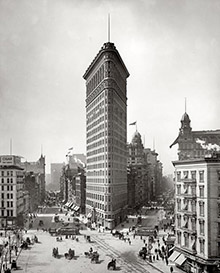
Little Italy: 1908
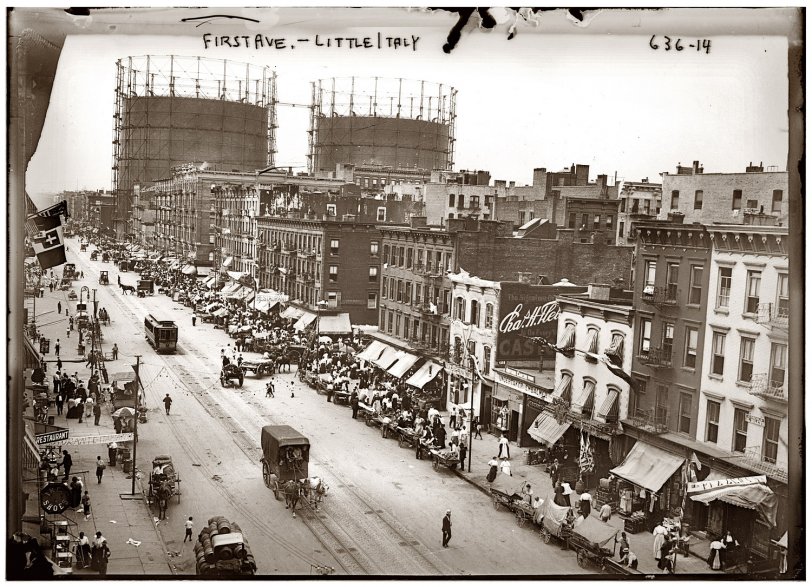
New York's First Avenue at East 29th Street during the annual Little Italy festa circa 1908. 5x7 glass negative, George Grantham Bain Collection. View full size.
I Agree with "Antietam NYC"
Yes. Antietam NYC, you are very correct! I am a historian of the neighborhood which was once known as "Italian Harlem." I have a website dedicated to the preservation of the memory of this Italian immigrant enclave. www.italianharlem.com
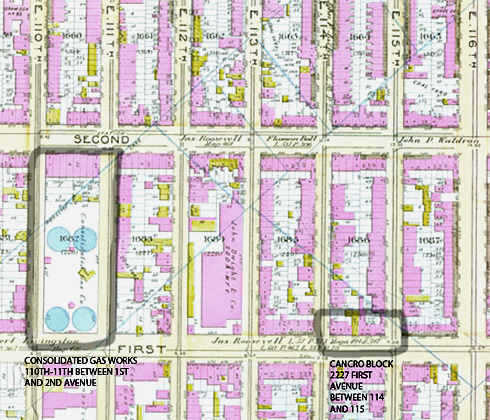
To get back on point, this photo depicts Italian East Harlem, circa 1908. Right on target with noticing the detail of the neighborhood, there was once an undertaker by the name "Cancro" in this area of First Avenue and 114th Street. To futher support antitam NYC's analysis, 2227 First Avenue is between 114th and 115th Street. The conundrum is solved. No reason to question the location of this photo. Well done, @ Antietam NYC!

Uptown Not Down
I strongly believe this is a view of First Avenue between 114th and 115th Streets. If you look closely at this photo you will see an undertaker, Antonio Cancro. In City Directories through the years surrounding 1908 he runs an undertaking business at 2227 First Avenue.
In the book, Rosa Ponselle: American Diva (Mary Jane Phillips-Matz, Northeastern, 1997) the following description: "Carmela [Rosa's sister] more correctly identifies the site of their tryout appearance as a theater at First Avenue and 110th Street. It occupied the lot at 2157 First Avenue, between 111th and 112th Streets Just a few feet to the south were two huge consolidated gas tanks, a lime shed and a coal yard belonging to the standard gas and light company."
Gas Holders.
The tank-type gas holders shown here were constructed in interlocking sections which rose as they were filled with Coal Gas from the Gas and Coking plant when gas demand was low, and fell when demand was higher than supply. This way, the Coal Gas and Coking plant could be run at a constant rate, retorting coal into coal gas, coke and other byproducts.
The tanks were constructed in sections, and telescoped together as they fell. The skeleton circular framework had vertical rails within which the tank sections slid in guides on each section of tank. With the large area of the tank top, it did not take that much coal gas pressure to lift the tank's sections by gas within, interlocking sections as they rose. Some of the tank bottoms were water-filled to prevent leakage. The weight of the tank provided gas pressure.
Gashouse District
The the danger of fire was not the greatest of the problems cause by living in close proximity to the gas tanks. Before the Second World War, New York (and many other cities) were not supplied with natural gas. They used manufactured gas, which was made by heating cheap grades of bituminous coal or bunker oil in a retort. This process produced several byproducts, including noxious, sulfurous fumes which permeated the air in the surrounding district. These tanks were located in very close proximity to several large gas manufacturing plants.
Gas tanks
What a fire and explosive hazard - gas tanks in a residential and commercial neighborhood. I guess there were no restrictions at that time.
Little Italy 1908
That would absolutely put it in the East Village, though in 1908 I think it would have been the Lower East Side.
Little Italy
First Avenue ends at Houston Street. Little Italy is south of that, around Mulberry and Grand Streets. This was probably another Italian neighborhood. The area around lower First Avenue is now called the East Village (as opposed to the West Village, which is really Greenwich Village). The East Village area is being gentrified with new restaurants and upscale condos. The photograph really belongs in a Godfather II scene, it is amazing.
[If we use the address number 489 as a clue, the first cross street in the photo would be East 29th. - Dave]
Re: Tanks
Those are two of the many huge natural-gas storage tanks along the East River waterfront that gave the Gashouse District its name.
Tanks
Does anyone know anything about those huge tanks in the background? I am guessing that this is somewhere just above Houston St.
 Shorpy.com is a vintage photography site featuring thousands of high-definition images. The site is named after Shorpy Higginbotham, a teenage coal miner who lived 100 years ago. Contact us | Privacy policy | Accessibility Statement | Site © 2024 Shorpy Inc.

On Shorpy:
Today’s Top 5