


Framed or unframed, desk size to sofa size, printed by us in Arizona and Alabama since 2007. Explore now.
Shorpy is funded by you. Patreon contributors get an ad-free experience.
Learn more.



- If You’re Like Me, Never
- U.S.A.
- S&P
- 1940 Zenith radio model 6G601
- Quality goes in before the name goes on!
- Snazzy skirt
- Carbon Arc Lamps
- Illuminate us
- I remember it well
- I can't prove it
- Complicated then, forgotten now
- Bryan-Stevenson
- Skinny is as skinny does
- How do you rest in peace
- Riding the footboards
- Alas, hidden from view
- Baldwin Diesels
- Exclusive pump
- Bananas, Oysters and Smokey Joe
- Details, Details
- What's that building to the left of the tower?
- Coal Barges
- Bromo-Seltzer
- Inner harbor
- The Basin
- What a headache!
- Giant stepladder?
- Yeah, it was cold
- Love those coats
- Link & Pin Days Remnant
Photos submitted by Shorpy members!
Print Emporium

The Shining: 1908
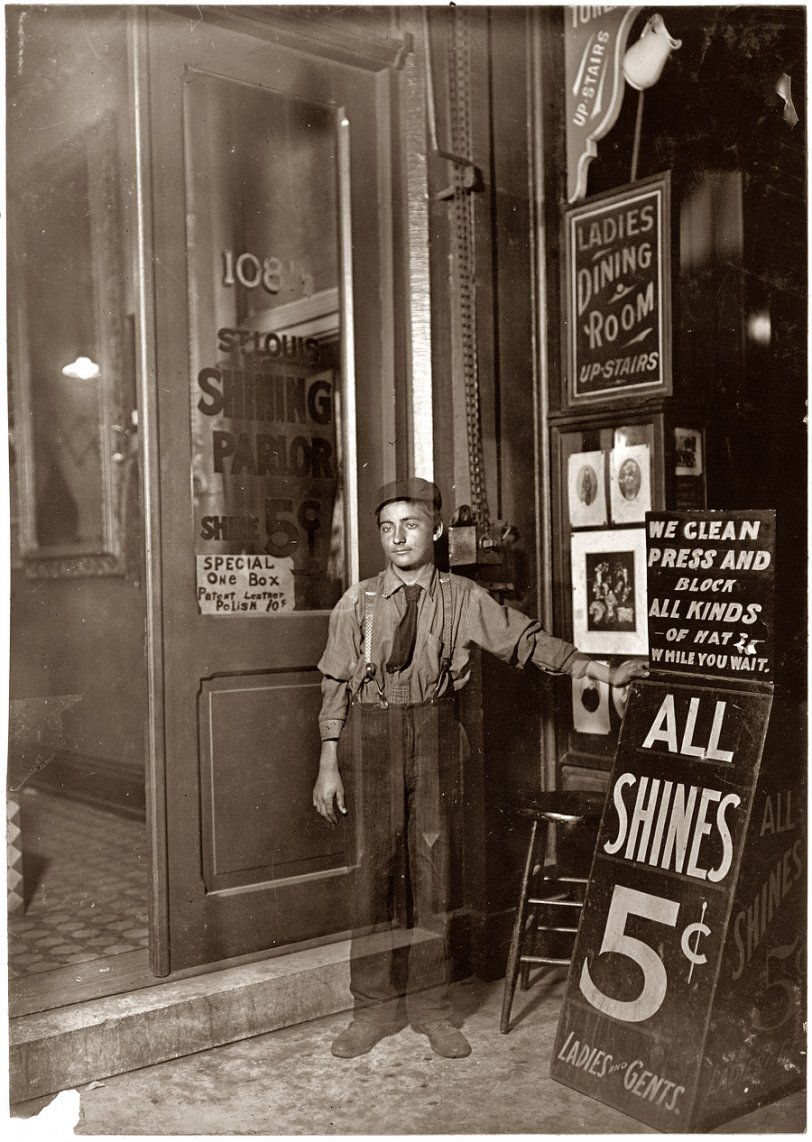
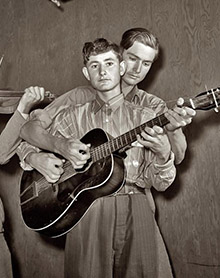
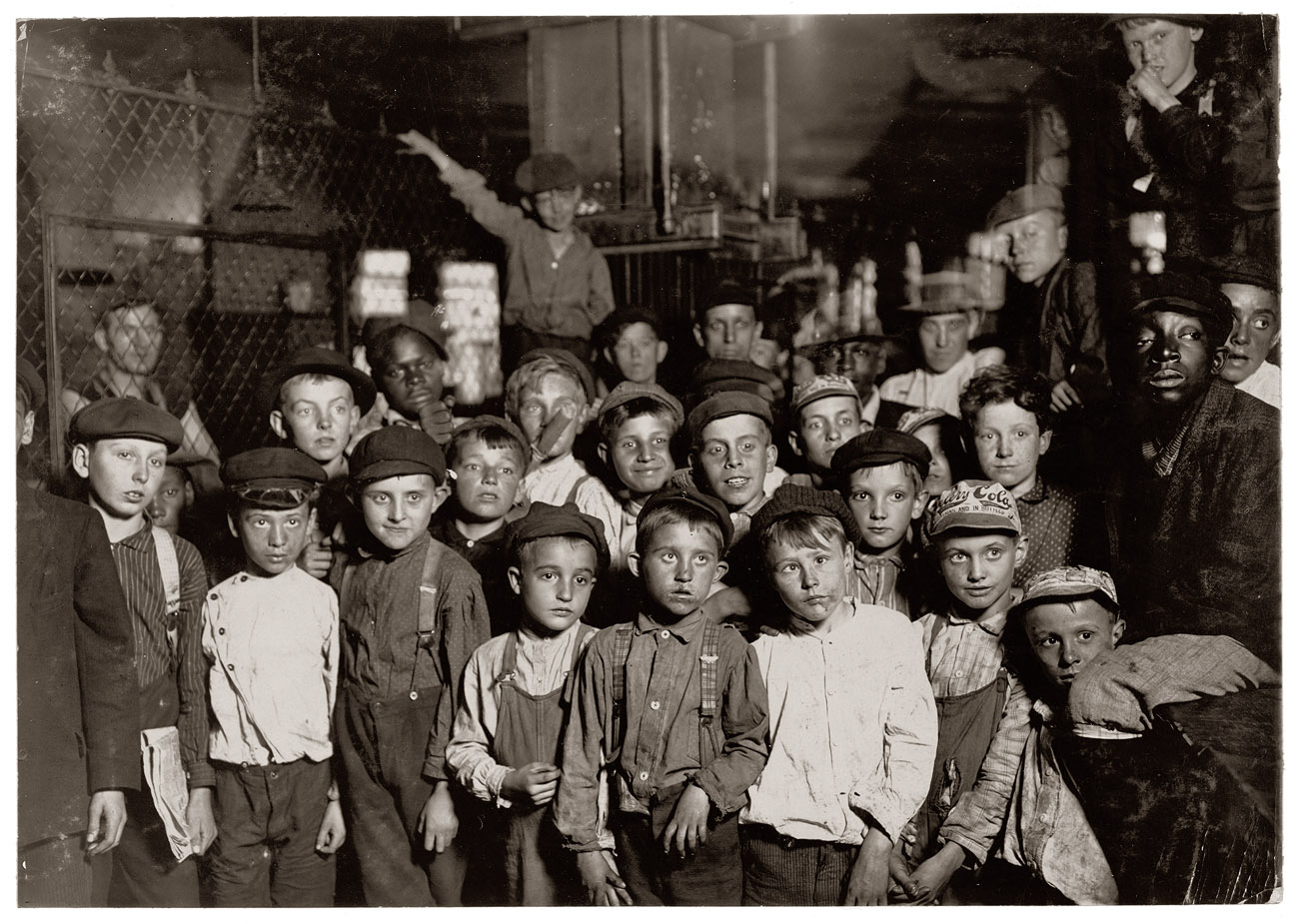
August 1908. "Greek bootblack in Indianapolis." An interesting example of a time exposure where the subject either enters the frame after the shutter opens or leaves it before it closes. View full size. Photograph by Lewis Wickes Hine.
Single exposure with flash
Here I've recreated the effect in my hotel room. This was a 5 second exposure with the flash firing at the start of the exposure. After the flash fired I immediately stepped into the bathroom.
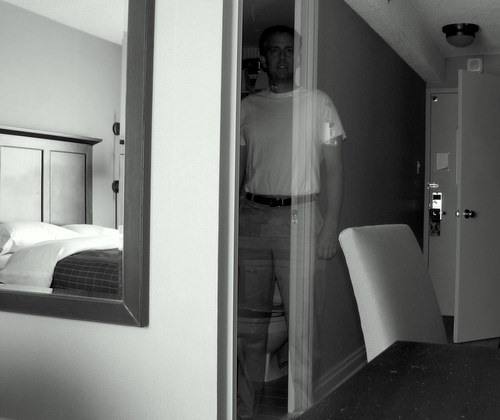

Single Exposure
I agree with Ken. The reason there's no blur is that a flash was used. With the shutter open, the kid takes his place, Hine sets off a charge of magnesium flash powder, then the glass plate is removed from the camera. This is how he seems to have taken most of his night shots. In this instance there was enough ambient light to register the background on the plate, an artifact we can see in other Hine photos taken at night.
I vote double
If the exposure time had been long enough for him to walk on or off he would have had to stay VERY still while he was posing to not be blurred. Since he looks quite sharp I think it was two fairly short exposures rather than one long one.
re: How about a double exposure?
It is more likely a very long exposure where the boy stood still through most of it and then walked off. You can try the same thing at your house with a long exposure. Simply sit still for most of the exposure and then get up and walk off. You won't see any streaks, just a ghost.
How about a double exposure?
....since there's no streaks to indicate the kid coming or going.
 Shorpy.com is a vintage photography site featuring thousands of high-definition images. The site is named after Shorpy Higginbotham, a teenage coal miner who lived 100 years ago. Contact us | Privacy policy | Accessibility Statement | Site © 2024 Shorpy Inc.

On Shorpy:
Today’s Top 5