


Framed or unframed, desk size to sofa size, printed by us in Arizona and Alabama since 2007. Explore now.
Shorpy is funded by you. Patreon contributors get an ad-free experience.
Learn more.



- Details, Details
- What's that building to the left of the tower?
- Coal Barges
- Bromo-Seltzer
- Inner harbor
- The Basin
- What a headache!
- Giant stepladder?
- Baldwin 62303
- Baldwin VO-1000
- Cold
- No expense spared
- Tough Guys
- Lost in Toyland
- And without gloves
- If I were a blindfolded time traveler
- Smoke Consumer Also Cooks
- Oh that stove!
- Possibly still there?
- What?!?
- $100 Reward
- Freeze Frame
- Texas Flyer wanted
- Just a Year Too Soon
- WWII -- Replacing men with women at the railroad crossing.
- Yes, Icing
- You kids drive me nuts!
- NOT An Easy Job
- I wonder
- Just add window boxes
Photos submitted by Shorpy members!
Print Emporium



Traffic These Days: 1917
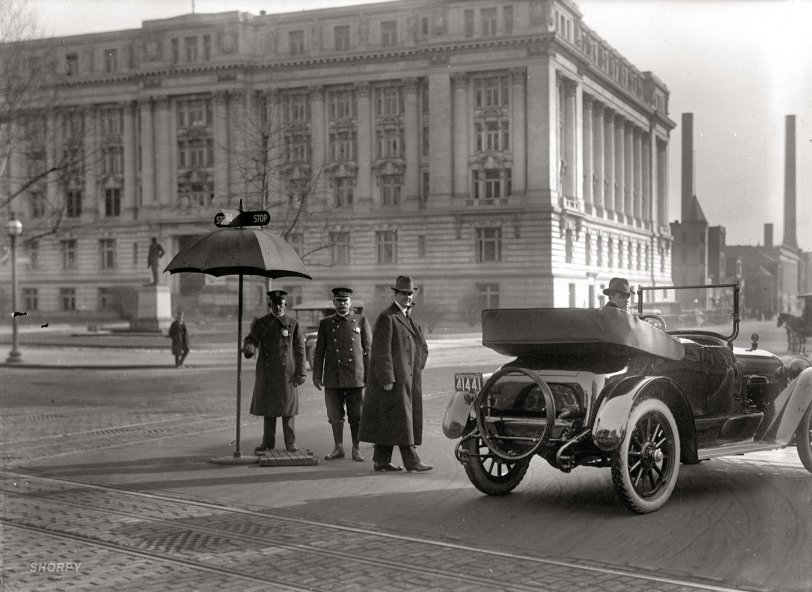
Washington circa 1917. This is, as far as we know, our final glimpse of the Haynes roadster before it motors on its way down 14th Street into eternity. If the darn umbrella ever changes. Harris & Ewing glass negative. View full size.
Boss Shepherd and the District Building
It's nice to know that the statue of Alexander "Boss" Shepherd has been returned to its rightful place of honor in front of the District Building.

Glass on your plate
Just saw a great documentary on the photographer Sally Mann. She was using a huge old field camera and shooting 8x10 inch glass plates, using a collodion wet plate process, with darkroom equipment in the back of her Suburban. She was shooting, amongst other things, old Civil War battlegrounds, and marveling at the flawlessness of old glass negatives from Brady and other Civil War era photographers. As we do here about twenty times a day...
It was great seeing how it's actually done.
I liked the notion of the Haynes roadster speeding off into Eternity, by the way. Very evocative.
Glass Plate/Negative difference?
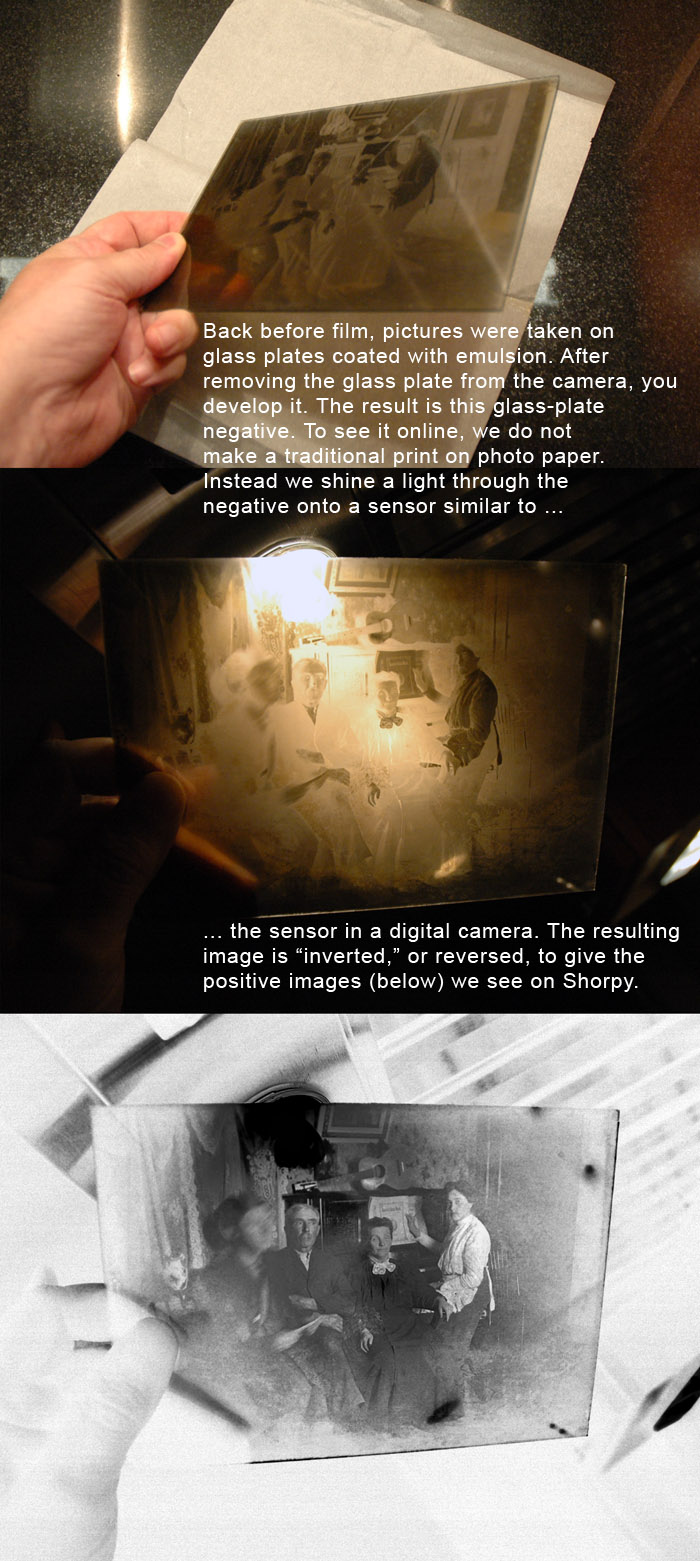
Is a glass plate a "positive" versus a glass "negative" of the photograph?
[They are the same thing -- the negative is a glass plate. "Plate" just means flat -- a flat sheet of glass, like windowpane. The negative is made by taking the glass plate out of the camera and dunking it in developing solution. Most of the images you see on Shorpy are made by shining a light through the negative onto an image sensor and then electronically reversing ("inverting") the result. Below are some pictures of an actual glass negative that I took in my kitchen. Click to enlarge. - Dave]
 Shorpy.com is a vintage photography site featuring thousands of high-definition images. The site is named after Shorpy Higginbotham, a teenage coal miner who lived 100 years ago. Contact us | Privacy policy | Accessibility Statement | Site © 2024 Shorpy Inc.

On Shorpy:
Today’s Top 5