


Framed or unframed, desk size to sofa size, printed by us in Arizona and Alabama since 2007. Explore now.
Shorpy is funded by you. Patreon contributors get an ad-free experience.
Learn more.



- Baldwin 62303
- Baldwin VO-1000
- Cold
- No expense spared
- Tough Guys
- Lost in Toyland
- And without gloves
- If I were a blindfolded time traveler
- Smoke Consumer Also Cooks
- Oh that stove!
- Possibly still there?
- What?!?
- $100 Reward
- Freeze Frame
- Texas Flyer wanted
- Just a Year Too Soon
- WWII -- Replacing men with women at the railroad crossing.
- Yes, Icing
- You kids drive me nuts!
- NOT An Easy Job
- I wonder
- Just add window boxes
- Icing Platform?
- Indiana Harbor Belt abides
- Freezing haze
- Corrections (for those who care)
- C&NW at Nelson
- Fallen Flags
- A dangerous job made worse
- Water Stop
Photos submitted by Shorpy members!
Print Emporium
Heywood-Wakefield: 1920
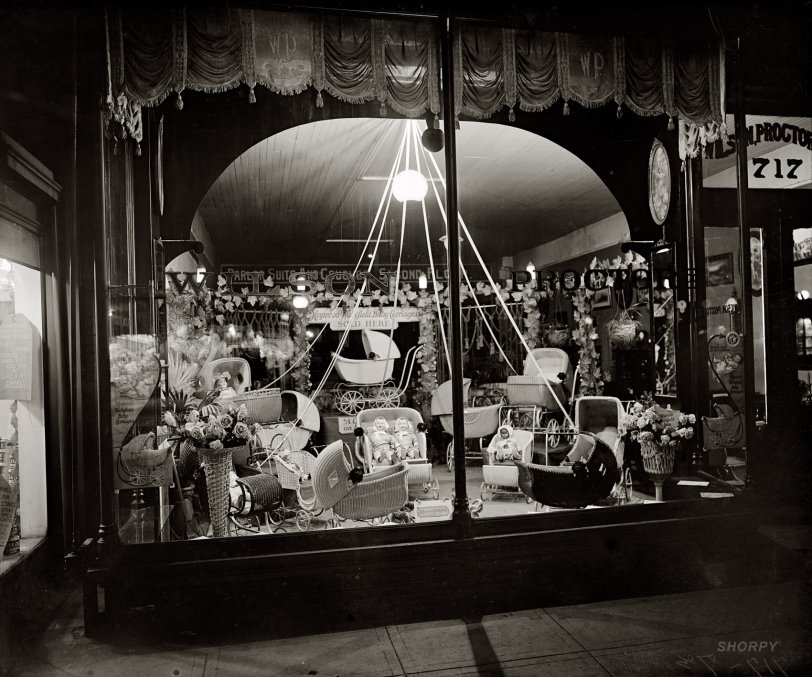
"Wilson Proctor Co. window." Continuing our survey of the spooky shop windows of Washington, we have this circa 1920 store display of Heywood-Wakefield baby carriages. National Photo Company Collection glass negative. View full size.
Heywood Wakefield
I wonder whether H-W baby carriages may have been seen as a status symbol for some reason. Image #4839 also shows them, with a banner identical to the one in the rear of this display.
Wilson Proctor was located at 717 7th Street NW.

Progressive thinking
A black doll in the 20s? Very progressive company for its day.
[Mammy dolls and other examples of the collectibles category known today Black Americana are pretty much the opposite of progressive thinking. - Dave]
Hey-Wake
I had no idea Heywood-Wakefield made baby carriages. They sure made gorgeous furniture from the 1930s through the '50s, though. I would love a Hey-Wake dining set with dogbone or stingray chairs, a china cabinet and a buffet. I'd take 'em in either wheat or champagne - I'm not picky! I'm not rich, either, so I'll probably never get them.
Parlor Suits
I'm intrigued by the sign on the back wall, partly obscured by the Wilson lettering. I think it says, "Parlor Suits and Couches, Second Floor".
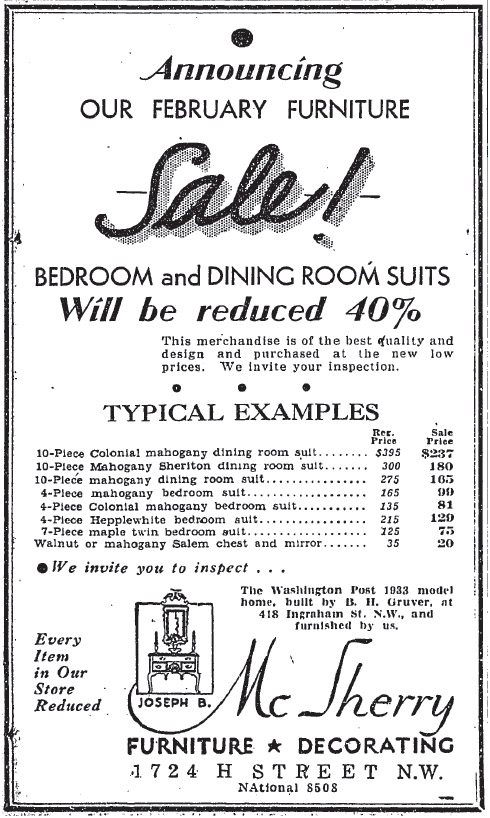
Until I moved to southern Illinois, I had never heard a grouping of furniture referred to as a "suit". Suite, yes - pronounced "sweet".
So do they have bedroom "suits" in Washington, too?
And do they spell it without the 'e'?
And if this sign isn't referring to furniture, just what is a parlor suit?
[The dictionary gives "suit" as a synonym for "suite." A search through the newspaper archive for "bedroom suit" gives thousands of hits. - Dave]
 Shorpy.com is a vintage photography site featuring thousands of high-definition images. The site is named after Shorpy Higginbotham, a teenage coal miner who lived 100 years ago. Contact us | Privacy policy | Accessibility Statement | Site © 2024 Shorpy Inc.

On Shorpy:
Today’s Top 5