


Framed or unframed, desk size to sofa size, printed by us in Arizona and Alabama since 2007. Explore now.
Shorpy is funded by you. Patreon contributors get an ad-free experience.
Learn more.



- Side Winder
- Air Quality?
- Sojourner Truth riot
- None were so blind(ed)
- The less famous sister
- Good ol' days?
- Rise and Fall
- Goo Goo Ga Joob
- Ticket Retention
- Not the only one
- Vagaries of War
- Killed by Amtrak
- Back to the Future
- Wanted --
- If you can't stand the light
- Centralized Traffic Control, I believe
- What's really happening
- Heckuva remote control!
- Sometimes — Things Go Bump!
- I SEE THE LIGHT
- Union Switch and Signal Company
- Get That Light Out Of My Eyes
- Eggs. Eggs. Eggs. The Egg Man is Here!
- Foreboding caption
- Famous Hollywood faces
- Not just S&P
- re: Those things in the jar
- Up In Smoke
- Medical Smoking
- Quick fix

Photos submitted by Shorpy members!
Print Emporium










Car Search: 1923
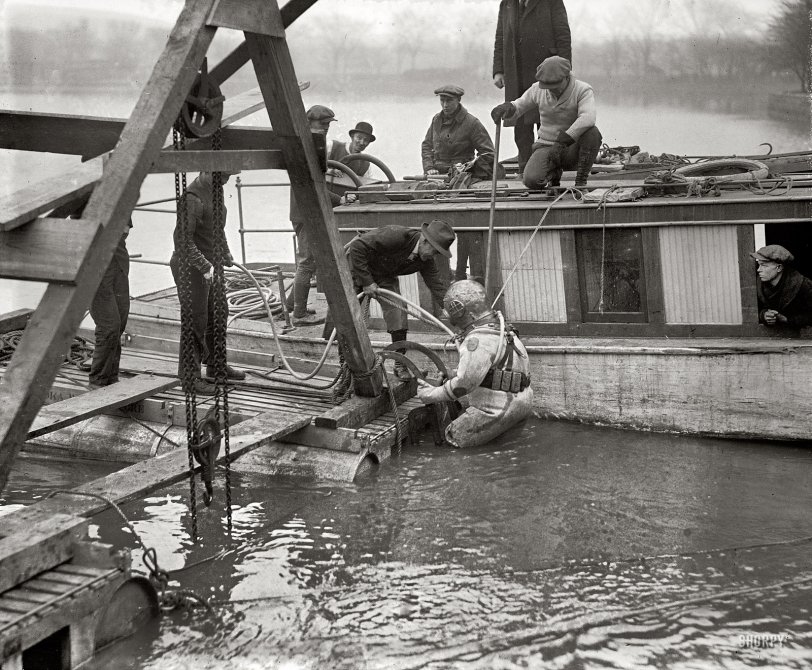
"Auto wreck. December 31, 1923." Looking for the car hauled up in the previous post. National Photo Company Collection glass negative. View full size.
The fellows on the bellows
With all that weight he'd have to be careful not to plummet down too fast or there would be compression issues. Note the two guys working the bellows almost immediately behind the chap helping the diver into the water. In England there exists a group of enthusiasts who still dive like this and offer public demonstrations of their hobby. I will see if I can locate a link to their website where there are many photos.

Diving Suit
This is a standard diving dress type suit, quite common before the development of scuba gear. It isn't designed to swim in - indeed the weight belt and metal boots were designed to take the diver to the bottom and allow him to walk about on the bottom. Agility ceases to be an issue in those circumstances.
Carnival of Souls
It's no good looking for the survivor; she already took that church organist job in Utah.
20,000 leagues under the sea
That Jules Verne diving getup looks extremely cumbersome and would make it nearly impossible to be agile at swimming, diving and searching. It does stir the imagination to visualize a giant man-eating octopus to be rearing his tentacles (I said tentacles) up out of the water very soon and devouring the poor diver who will probably never be seen again.
 Shorpy.com is a vintage photography site featuring thousands of high-definition images. The site is named after Shorpy Higginbotham, a teenage coal miner who lived 100 years ago. Contact us | Privacy policy | Accessibility Statement | Site © 2024 Shorpy Inc.

On Shorpy:
Today’s Top 5