


Framed or unframed, desk size to sofa size, printed by us in Arizona and Alabama since 2007. Explore now.
Shorpy is funded by you. Patreon contributors get an ad-free experience.
Learn more.



- S&P
- 1940 Zenith radio model 6G601
- Quality goes in before the name goes on!
- Snazzy skirt
- Carbon Arc Lamps
- Illuminate us
- I remember it well
- I can't prove it
- Complicated then, forgotten now
- Bryan-Stevenson
- Skinny is as skinny does
- How do you rest in peace
- Riding the footboards
- Alas, hidden from view
- Baldwin Diesels
- Exclusive pump
- Bananas, Oysters and Smokey Joe
- Details, Details
- What's that building to the left of the tower?
- Coal Barges
- Bromo-Seltzer
- Inner harbor
- The Basin
- What a headache!
- Giant stepladder?
- Yeah, it was cold
- Love those coats
- Link & Pin Days Remnant
- Baldwin 62303
- Baldwin VO-1000

Photos submitted by Shorpy members!
Print Emporium




War Kitchen: 1917
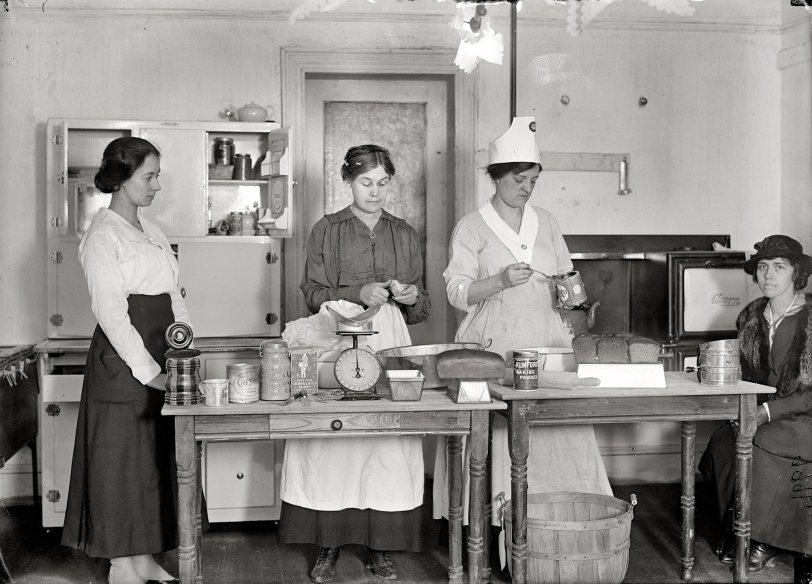
Washington, 1917. "U.S. Food Administration war kitchen." Harris & Ewing Collection glass negative, Library of Congress. View full size.
That jar on the table
is an Atlas EZ Seal. I have one just like it that I inherited from my grandmother!

Not a Crock
The striped container on the left is a wooden salt box. We had a very similar one, without the stripes. The doughnut shaped top is exactly like the one we had, but ours was light green, and natural color wood. Unfortunately it doesn't show in any of the photos my brother posted of the Salmon Kitchen. It hung between the side of the sink cabinet and the stove. Next to the rack with the pot lids.
She's Just Lazy
The chick on the left is thinking "I should've worn my fancy clothes and then I could've gotten out of work too!"
The stripes on that crock make it look like a jar of Goober Jelly. Good stuff.
Save France, Save Wheat
Use of alternatives to wheat flour on the home front was strongly encouraged in the US during the war, so the wheat flour could be sent to France.

Potato bread
My guess is they are making potato bread. Was flour rationed in WW1?
Product Placement
Crisco shortening, Jack Frost sugar, Ball jars, Rumford baking powder, Karo syrup, Acorn stoves and Hoosier cabinets. Good work, ladies.
 Shorpy.com is a vintage photography site featuring thousands of high-definition images. The site is named after Shorpy Higginbotham, a teenage coal miner who lived 100 years ago. Contact us | Privacy policy | Accessibility Statement | Site © 2024 Shorpy Inc.
On Shorpy:
Today’s Top 5