



Framed or unframed, desk size to sofa size, printed by us in Arizona and Alabama since 2007. Explore now.
Shorpy is funded by you. Patreon contributors get an ad-free experience.
Learn more.



- Side Winder
- Air Quality?
- Sojourner Truth riot
- None were so blind(ed)
- The less famous sister
- Good ol' days?
- Rise and Fall
- Goo Goo Ga Joob
- Ticket Retention
- Not the only one
- Vagaries of War
- Killed by Amtrak
- Back to the Future
- Wanted --
- If you can't stand the light
- Centralized Traffic Control, I believe
- What's really happening
- Heckuva remote control!
- Sometimes — Things Go Bump!
- I SEE THE LIGHT
- Union Switch and Signal Company
- Get That Light Out Of My Eyes
- Eggs. Eggs. Eggs. The Egg Man is Here!
- Foreboding caption
- Famous Hollywood faces
- Not just S&P
- re: Those things in the jar
- Up In Smoke
- Medical Smoking
- Quick fix

Photos submitted by Shorpy members!
Print Emporium




Brooklyn Bridge: 1900
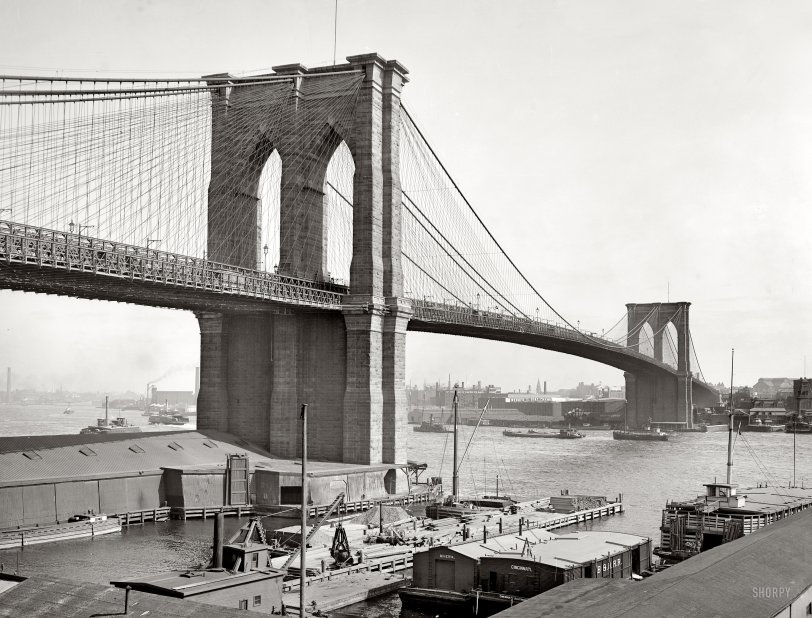
New York circa 1900. "Brooklyn Bridge, East River." 8x10 inch dry plate glass negative, Detroit Publishing Company. View full size.
Public and Private Transit
The development of the "ubiquitous gasoline engine", and the parallel development of petroleum, was the key required to unlock the door to personal vehicles. We could have conceivably gone with electric propulsion, but electricity didn't become widespread until the late 1800's and it was generally in an inconvenient form for recharging slow, heavy, and quick-to-run-down battery powered cars. The light, speedy, indefatigable, and ultimately cheap gas motor won the day. Throughout the 19th century, occasional experimenters demonstrated steam-powered carriages or "road locomotives" but the skills and attention required to manage a steam engine were unrealistic for a solo driver, and the roads were dreadful due to travel being diverted to railroads. Large bridges were built to carry railroads, street car lines, and a smattering of foot and horse traffic.
[Steam-powered automobiles (Dobie, Stanley etc.) attained a certain measure of popularity. In the final years of the 19th century, the Stanley brothers' steam-powered vehicle was America's top-selling motor car. The company they founded lasted a quarter of a century. - Dave]

Re: Best deal I ever made!
Cool, I'll give you a call once my Nigerian money comes through.
Best deal I ever made!
Only paid $500, and I've got the title to prove it.
Age of Steam and Horses
Each time a see a circa 1900 urban scene on Shorpy, I ponder how technology was so slow in developing the automobile in comparison to the other machines and structures in existence at the time. I am alway struck by the incongruity of large urban buildings surrounded by horse drawn wagons. This picture really drives the point home. Let us not forget that the unseen traffic crossing this magnificent bridge at its opening was mostly horse-drawn or pedestrian. The big boats in the water were steam powered. The age of the ubiquitous gasoline engine was yet to come.
 Shorpy.com is a vintage photography site featuring thousands of high-definition images. The site is named after Shorpy Higginbotham, a teenage coal miner who lived 100 years ago. Contact us | Privacy policy | Accessibility Statement | Site © 2024 Shorpy Inc.
On Shorpy:
Today’s Top 5