


Framed or unframed, desk size to sofa size, printed by us in Arizona and Alabama since 2007. Explore now.
Shorpy is funded by you. Patreon contributors get an ad-free experience.
Learn more.



- Complicated then, forgotten now
- Bryan-Stevenson
- Skinny is as skinny does
- How do you rest in peace
- Riding the footboards
- Alas, hidden from view
- Baldwin Diesels
- Exclusive pump
- Bananas, Oysters and Smokey Joe
- Details, Details
- What's that building to the left of the tower?
- Coal Barges
- Bromo-Seltzer
- Inner harbor
- The Basin
- What a headache!
- Giant stepladder?
- Yeah, it was cold
- Love those coats
- Link & Pin Days Remnant
- Baldwin 62303
- Baldwin VO-1000
- Cold
- No expense spared
- Tough Guys
- What's your hurry, where's your hat?
- Sheriff's Signature
- Relocated in the Eighties
- Lost in Toyland
- And without gloves

Photos submitted by Shorpy members!
Print Emporium








Ask a Teenager: 1922
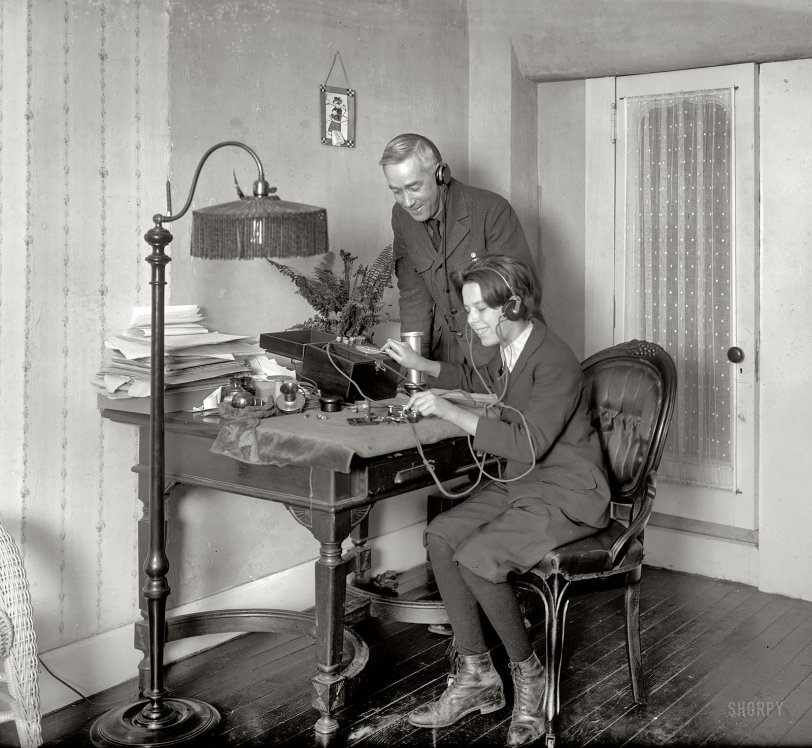
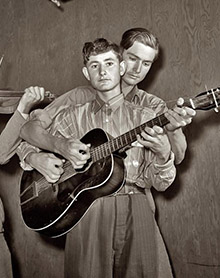
Washington, D.C., circa 1922. "William Armstrong Perry." A former editor of Boys Life and Scouting magazines, W.A. Perry authored a study called "Radio in Education." National Photo Company Collection glass negative. View full size.
Good question about those shoes.
I'm glad to see a photo of William Armstrong PERRY, who is my 1st cousin 3 times removed, here on your website. I'm informed that he was always quite interested in scouting; collecting coins; studying radio communications (fairly new at that time), traveling to the relatively unknown places of the world, and was a writer as well. He married a woman named Lulu MONTANYE who was a writer as well (articles for McCalls amongst others, and a few short stories). She was quite a 'liberated' woman for those times and remained quite interested in many of her husband's endeavors, including his radio hobby.
To me, the cut of those shoes, the cut of the hair, the petite hands, make me wonder if this is William's wife, and not a boy interested in radio as the information provided here implies. Do you have more information on who is pictured in the photo?
Also, if the photo was taken at William's home, then it would have been either at their home in Addison, New York, or their home in Westport, Connecticut.
William Armstrong Perry survived a plane crash and spending 15 days in the Venezuelan Jungle in May 1837. He died on July 5, 1938 at his Westport home of a heart attack. Some say the heart attack was a result of lingering injuries from the plane crash. Lulu lived until 1966. Both are buried near the home of their childhood at Canton, Bradford Co, PA.

Seizing Music Out of the Air
Although a bit optimistic concerning the speed of development, in 1921 Mr. Armstrong Perry accurately predicted the development of cell phones: "The demonstration ventured to prophesy that the day was at hand when by means of a simple pocket apparatus one could call up his home and talk without wire from almost any distance, and there was none dared call him a dreamer! "
Washington Post, Dec 18, 1921News of Boy Scouts
At the monthly meeting of the Scoutmasters club, held in Epiphany parish house last Tuesday evening, modern achievements in wireless held the center of the stage. Through the courtesy of Mr Armstrong Perry, the latest apparatus in telephonic communication without the use of wires was demonstrated. When a little equipment, most of which could be carried in a suitcase, was set up in the room, and after slight adjustment began reproducing a concert that was taking place in another part of the city, the effect was distinctly spooky. Even men used to transcontinental telephonic communication were abashed at this exhibition of seizing music out of the air and amplifying it until all in the room could enjoy it; without receivers to their ear, without even the outside wires running high over head, to which the radio operator is accustomed.
The demonstration ventured to prophesy that the day was at hand when by means of a simple pocket apparatus one could call up his home and talk without wire from almost any distance, and there was none dared call him a dreamer! So rapid have been the strides in the last few months in radio that no prophecy seems extravagant. Only a few weeks ago eighteen American amateur stations were heard across the Atlantic in the course of a single night.
Schooled by Radio
In the Canary Islands, where I live, a local, non-for-profit radio station (Radio ECCA for anyone curious enough) did a great job teaching to write and read, as well as finishing elementary and high school education to adults who never had the opportunity to get an education or were forced to leave school at an early time. It's still in operation, though now its focus has changed.
Crystal Radio
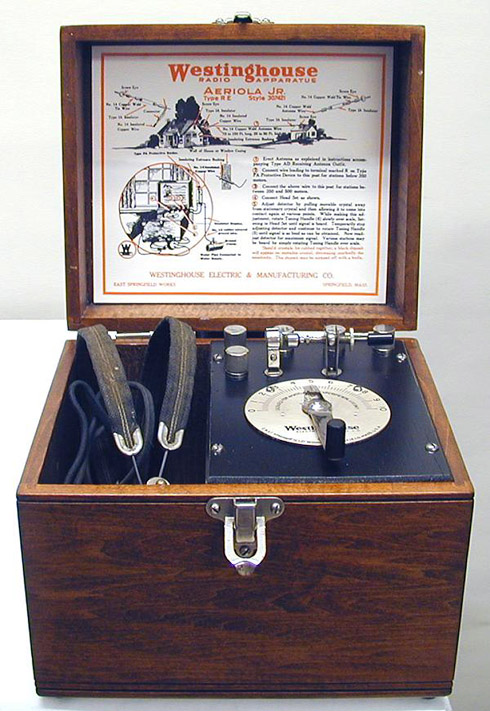
The radio is a crystal set receiver (not a transmitter), probably a Westinghouse Aeriola Jr. Model RE. Crystal sets, which preceded tube radios, operated without batteries or any other power source. They required a long wire antenna and an earth ground connection to receive AM broadcasts.
[What's the mouthpiece for? - Dave]
Worn or just poorly maintained?
A good cleaning and some polish and those shoes would look a whole lot better. Soles and heels don't look worn, although the angle is not the best.
A Question About Shoes
Looking at these images, I am always drawn to the shoes. How often these days do you ever see shoes that are this worn? I always wonder how many shoes a typical adult would have had in their wardrobe and how many siblings would wear the same pairs.
[Indeed. Feet and shoes seem to hold a certain fascination for the Shorpy commentariat. - Dave]
 Shorpy.com is a vintage photography site featuring thousands of high-definition images. The site is named after Shorpy Higginbotham, a teenage coal miner who lived 100 years ago. Contact us | Privacy policy | Accessibility Statement | Site © 2024 Shorpy Inc.
On Shorpy:
Today’s Top 5