



Framed or unframed, desk size to sofa size, printed by us in Arizona and Alabama since 2007. Explore now.
Shorpy is funded by you. Patreon contributors get an ad-free experience.
Learn more.




- Recent view
- Hudson’s Big Store
- Say what??
- Grapes?!
- A Beautiful Moment
- Such joy
- Bethune-Cookman University today...
- Yellow sky at morning
- Side Winder
- Air Quality?
- Sojourner Truth riot
- None were so blind(ed)
- The less famous sister
- Good ol' days?
- Rise and Fall
- Goo Goo Ga Joob
- Ticket Retention
- Not the only one
- Vagaries of War
- Killed by Amtrak
- Back to the Future
- Wanted --
- If you can't stand the light
- Centralized Traffic Control, I believe
- What's really happening
- Heckuva remote control!
- Sometimes — Things Go Bump!
- I SEE THE LIGHT
- Union Switch and Signal Company
- Get That Light Out Of My Eyes

Photos submitted by Shorpy members!
Print Emporium














It Pays to Flirt: 1918
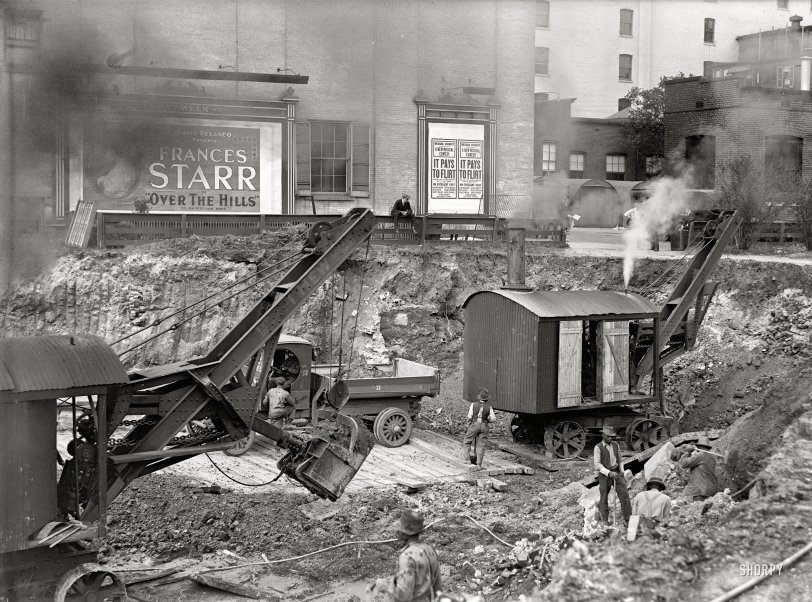
Washington, D.C., April 1918. "Downtown construction." Excavation with a theatrical backdrop. Harris & Ewing Collection glass negative. View full size.
Steam shovels and rollers
As one who also still calls those big pavement-flattening jobbers "steam" rollers, I find it indescribably gratifying to know that people salvage, restore, collect and exhibit such things. Thinking about the logistics involved in such a hobby is mind-boggling, though.

The truck
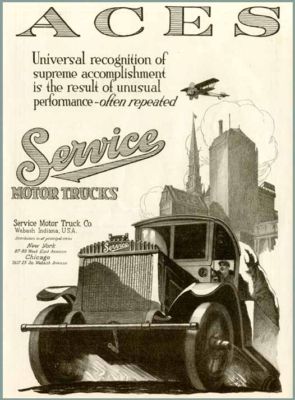
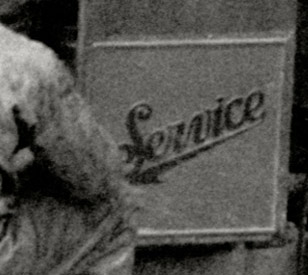
What kind is it?
[Service Motor Truck Co. of Wabash, Indiana. - Dave]
Sidewalk Superintendent
Progress never stops but men always do, like the one on the fence, to watch a construction project.
Thew in action
At least one Thew steam shovel survives and operates:
Clifton Webb
I was surprised to see Clifton Webb -- but it turns out he was already about 30 at this point.
Thew Shovel Co.
Founded in 1899 by Richard Thew, a Lake Erie freighter captain interested in the problems of handling iron ore and coal. He invented a new kind of shovel that revolved 360 degrees and could dig and deliver material from any position. More here.
Mary-Anne!
My four-year-old never gets tired of Mike Mullligan and his steam shovel Mary-Anne. I had never seen the real thing before. Thanks for posting this!
Cute shovels
They're straight out of Mike Mulligan. I suppose they only held one or two yards of dirt in those tiny buckets. Still, they were at least an order of magnitude faster than people with shovels.
 Shorpy.com is a vintage photography site featuring thousands of high-definition images. The site is named after Shorpy Higginbotham, a teenage coal miner who lived 100 years ago. Contact us | Privacy policy | Accessibility Statement | Site © 2024 Shorpy Inc.
On Shorpy:
Today’s Top 5