



Framed or unframed, desk size to sofa size, printed by us in Arizona and Alabama since 2007. Explore now.
Shorpy is funded by you. Patreon contributors get an ad-free experience.
Learn more.




- Complicated then, forgotten now
- Bryan-Stevenson
- Skinny is as skinny does
- How do you rest in peace
- Riding the footboards
- Alas, hidden from view
- Baldwin Diesels
- Exclusive pump
- Bananas, Oysters and Smokey Joe
- Details, Details
- What's that building to the left of the tower?
- Coal Barges
- Bromo-Seltzer
- Inner harbor
- The Basin
- What a headache!
- Giant stepladder?
- Yeah, it was cold
- Love those coats
- Link & Pin Days Remnant
- Baldwin 62303
- Baldwin VO-1000
- Cold
- No expense spared
- Tough Guys
- What's your hurry, where's your hat?
- Sheriff's Signature
- Relocated in the Eighties
- Lost in Toyland
- And without gloves

Photos submitted by Shorpy members!
Print Emporium







Shipshape: 1898
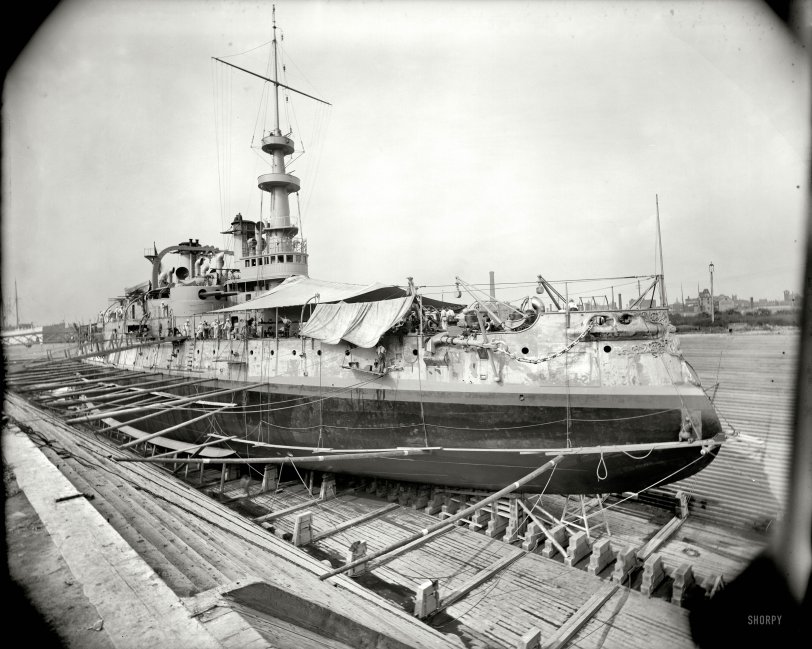
Circa 1898. "U.S.S. Massachusetts in dry dock." 8x10 inch dry plate glass negative by Edward H. Hart, Detroit Publishing Company. View full size.
Parked
Depending how long the ship in dry dock will dictate what's to be done with the crew. In the mid 1960s my ship was dry docked in Baltimore. Some of us were sent to Fleet schools and some stayed aboard.

High and Dry
They keep some men on board to do work that the shipyard workers would not do. Also if there were not billets for all the men some would be quartered aboard the ship.
I have a friend who spent the last 18 months of his four year enlistment aboard a submarine that was in dry-dock for refitting. There were still watches to stand and regular day to day activities that go on aboard ship. Someone has to push the papers around on the desk.
Scrollwork and swabbies
I love the scrollwork on the bow - you won't see that anachronism on a modern destroyer.
For those who are/were in the Navy - why would sailors be actively on a boat that's inactively in dry dock?
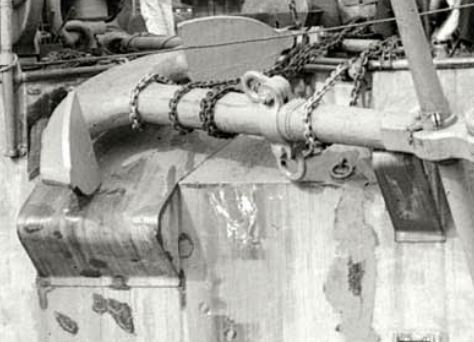
"Cat head"
Interesting that this ship retains the method of securing the anchor used by wooden sailing ships of previous centuries. Much more pronounced on the old sailing ships, but here it is in stubby form.
Propulsion
I see the drummer entering into the lower bow and, of course the oarsmen are already seated on their benches, dreading the coming order for "Ramming Speed!"
 Shorpy.com is a vintage photography site featuring thousands of high-definition images. The site is named after Shorpy Higginbotham, a teenage coal miner who lived 100 years ago. Contact us | Privacy policy | Accessibility Statement | Site © 2024 Shorpy Inc.
On Shorpy:
Today’s Top 5