



Framed or unframed, desk size to sofa size, printed by us in Arizona and Alabama since 2007. Explore now.
Shorpy is funded by you. Patreon contributors get an ad-free experience.
Learn more.



- Baldwin 62303
- Baldwin VO-1000
- Cold
- No expense spared
- Tough Guys
- Lost in Toyland
- And without gloves
- If I were a blindfolded time traveler
- Smoke Consumer Also Cooks
- Oh that stove!
- Possibly still there?
- What?!?
- $100 Reward
- Freeze Frame
- Texas Flyer wanted
- Just a Year Too Soon
- WWII -- Replacing men with women at the railroad crossing.
- Yes, Icing
- You kids drive me nuts!
- NOT An Easy Job
- I wonder
- Just add window boxes
- Icing Platform?
- Indiana Harbor Belt abides
- Freezing haze
- Corrections (for those who care)
- C&NW at Nelson
- Fallen Flags
- A dangerous job made worse
- Water Stop

Photos submitted by Shorpy members!
Prints
















- Panoramas
- Kodachromes (Color Photos)
- Animals
- Aviation
- Bathing Girls!
- Bizarre & Weird
- Cars & Trucks
- Cities
- Civil War
- Colorized Photos
- Factories
- Farked
- Florida History
- iPhone Wallpaper
- Kids
- Kitchens
- Member Photos
- Mining
- Pretty Girls
- Railroads
- Streetcars
- Service Stations
- Sports
- Technology (Antiquated)
- tterrace
- WPA Posters
- World War II
- WW2 Color Photos
- All Galleries
Vintage photos of:
- Atlanta
- Atlantic City
- Baltimore
- Birmingham AL
- Boston
- Buffalo NY
- Charleston SC
- Chicago
- Cincinnati
- Cleveland
- Coney Island
- Detroit
- Indianapolis
- Los Angeles
- Louisville
- Memphis
- Miami
- Milwaukee
- Minneapolis
- New Orleans
- New York City
- Oklahoma City
- Philadelphia
- Pittsburgh
- Richmond
- San Francisco
- Savannah
- St. Louis
- Syracuse
- Toledo
- Vicksburg
- Washington DC
- And many more!
Our holdings include hundreds of glass and film negatives/transparencies that we've scanned ourselves; in addition, many other photos on this site were extracted from reference images (high-resolution tiffs) in the Library of Congress research archive. (To query the database click here.) They are adjusted, restored and reworked by your webmaster in accordance with his aesthetic sensibilities before being downsized and turned into the jpegs you see here. All of these images (including "derivative works") are protected by copyright laws of the United States and other jurisdictions and may not be sold, reproduced or otherwise used for commercial purposes without permission.
© 2024 SHORPY INC.
[REV 25-NOV-2014]
Watch Your Fingers
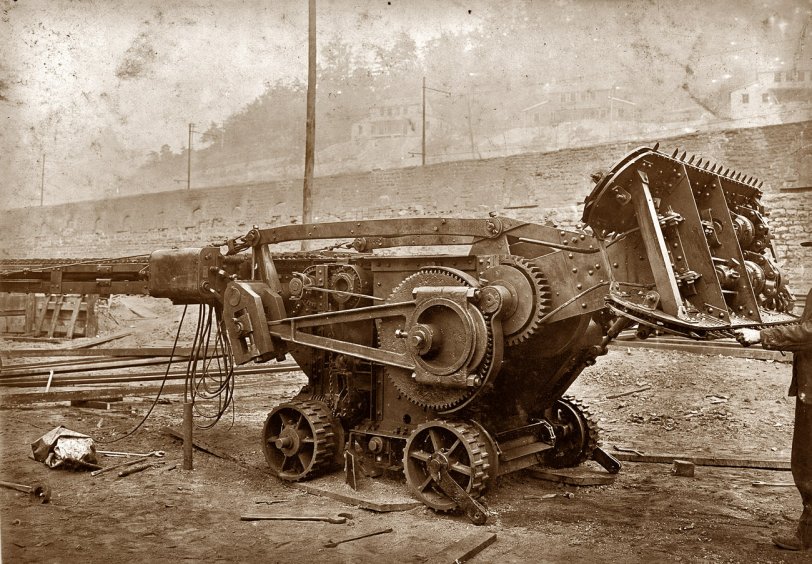
Machine used in mine that digs the coal and loads it on the car. With it three men can do the work of 50 in the old way. Yet they use boys to drive and trap. Gary, West Virginia. September 1908. View full size.
- 5 comments
- 38663 reads
Laura Mine: 1908
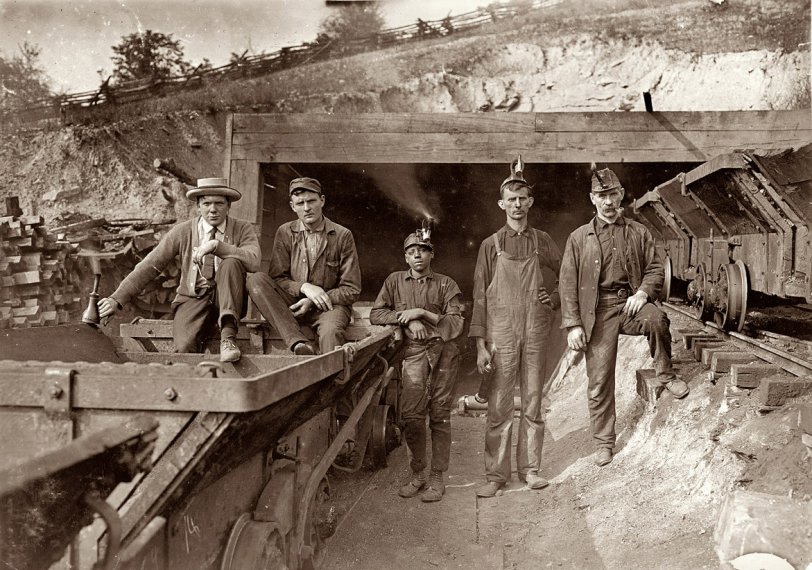
Bank Boss (on right), Brake Boy (in center). Laura Mine, Red Star, West Virginia. September 1908. View full size.
- 2 comments
- 35069 reads
In the Tunnel: 1908
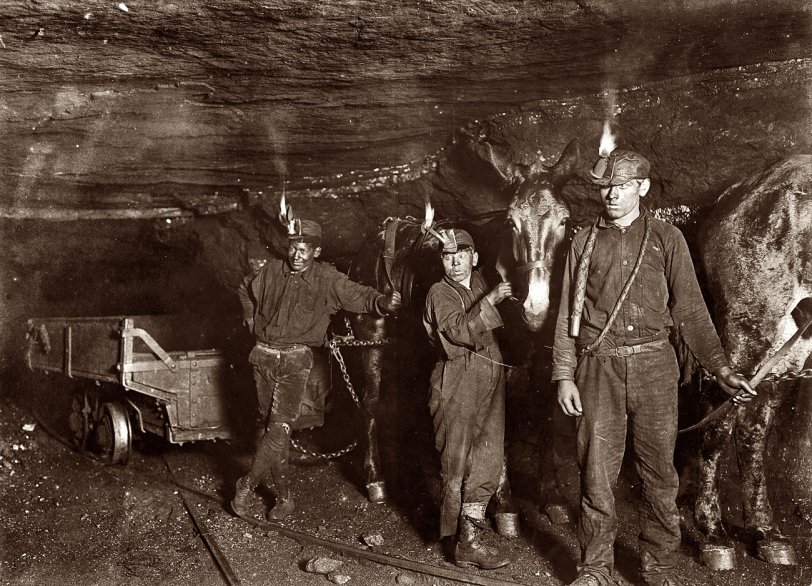
September 1908. Gary, West Virginia. "Drivers and Mules in a coal mine where much of the mining and carrying is done by machinery. Open flame on oil headlamps." View full size.
From the Web site of the Pennsylvania Historical and Museum Commission and the Museum of Anthracite Mining in Ashland:
- 6 comments
- Read more
- 52322 reads
Mobile Newsboy: 1914
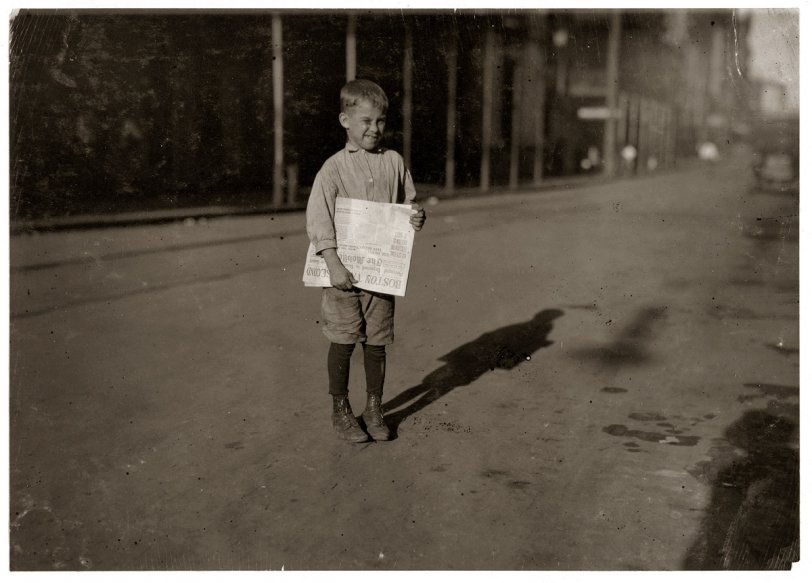
October 1914. Mobile, Alabama. "Young newsboy who begins work at daybreak." View full size. Photograph by Lewis Wickes Hine.
- 14 comments
- 46519 reads
Eugene Dalton: 1913
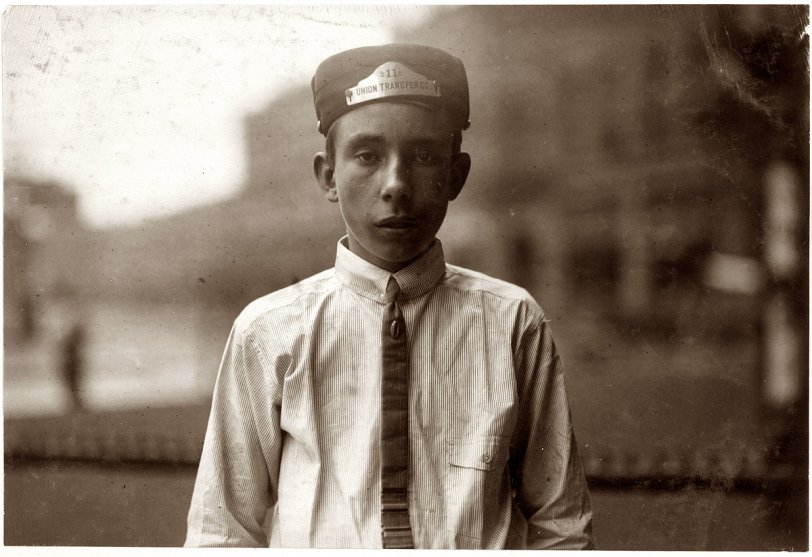
Eugene Dalton, November 1913, Fort Worth, Texas. Some results of messenger and newsboy work. For nine years this 16-year-old boy has been newsboy and messenger for drug stores and telegraph companies. He was recently brought before the Judge of the Juvenile Court for incorrigibility at home. Is now out on parole, and was working again for drug company when he got a job carrying grips in the Union Depot. He is on the job from 6 a.m. to 11 p.m. (17 hours a day) for seven days in the week. His mother and the judge think he uses cocaine, and yet they let him put in these long hours every day. He told me "There ain't a house in 'The Acre' (red-light district) that I ain't been in. At the drug store, all my deliveries were down there." Says he makes $15 to $18 a week. View full size.
- 17 comments
- 53062 reads
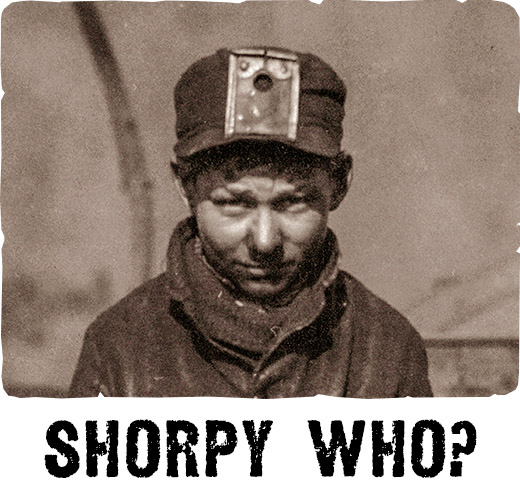
Shorpy Higginbotham: 1910
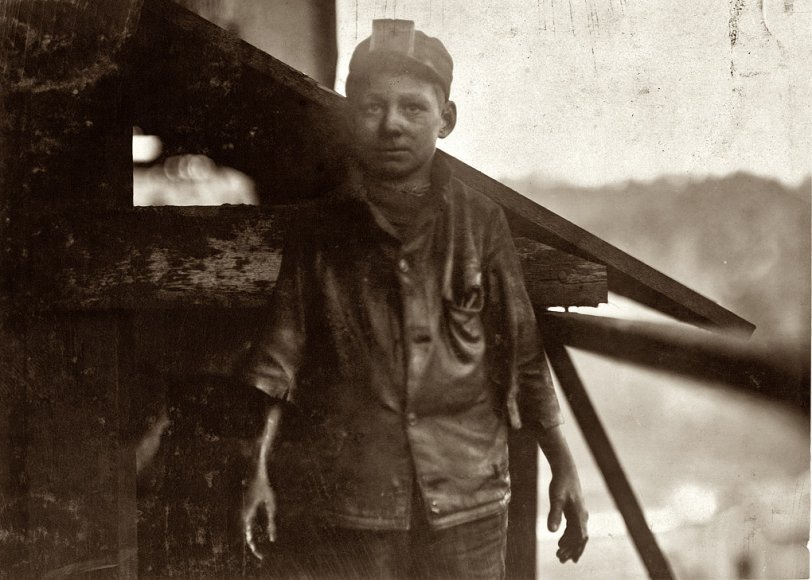
December 1910. "Shorpy Higginbotham, a 'greaser' on the tipple at Bessie Mine, of the Sloss-Sheffield Steel and Iron Co. in Alabama. Said he was 14 years old, but it is doubtful. Carries two heavy pails of grease, and is often in danger of being run over by the coal cars." Photograph and caption by Lewis Wickes Hine. View full size.
- 34 comments
- 146498 reads

 Shorpy.com is a vintage photography site featuring thousands of high-definition images. The site is named after Shorpy Higginbotham, a teenage coal miner who lived 100 years ago. Contact us | Privacy policy | Accessibility Statement | Site © 2024 Shorpy Inc.
