


Framed or unframed, desk size to sofa size, printed by us in Arizona and Alabama since 2007. Explore now.
Shorpy is funded by you. Patreon contributors get an ad-free experience.
Learn more.



- Recent view
- Hudson’s Big Store
- Say what??
- Grapes?!
- A Beautiful Moment
- Such joy
- Bethune-Cookman University today...
- Yellow sky at morning
- Side Winder
- Air Quality?
- Sojourner Truth riot
- None were so blind(ed)
- The less famous sister
- Good ol' days?
- Rise and Fall
- Goo Goo Ga Joob
- Ticket Retention
- Not the only one
- Vagaries of War
- Killed by Amtrak
- Back to the Future
- Wanted --
- If you can't stand the light
- Centralized Traffic Control, I believe
- What's really happening
- Heckuva remote control!
- Sometimes — Things Go Bump!
- I SEE THE LIGHT
- Union Switch and Signal Company
- Get That Light Out Of My Eyes
Photos submitted by Shorpy members!
Prints





- Panoramas
- Kodachromes (Color Photos)
- Animals
- Aviation
- Bathing Girls!
- Bizarre & Weird
- Cars & Trucks
- Cities
- Civil War
- Colorized Photos
- Factories
- Farked
- Florida History
- iPhone Wallpaper
- Kids
- Kitchens
- Member Photos
- Mining
- Pretty Girls
- Railroads
- Streetcars
- Service Stations
- Sports
- Technology (Antiquated)
- tterrace
- WPA Posters
- World War II
- WW2 Color Photos
- All Galleries
Vintage photos of:
- Atlanta
- Atlantic City
- Baltimore
- Birmingham AL
- Boston
- Buffalo NY
- Charleston SC
- Chicago
- Cincinnati
- Cleveland
- Coney Island
- Detroit
- Indianapolis
- Los Angeles
- Louisville
- Memphis
- Miami
- Milwaukee
- Minneapolis
- New Orleans
- New York City
- Oklahoma City
- Philadelphia
- Pittsburgh
- Richmond
- San Francisco
- Savannah
- St. Louis
- Syracuse
- Toledo
- Vicksburg
- Washington DC
- And many more!
Our holdings include hundreds of glass and film negatives/transparencies that we've scanned ourselves; in addition, many other photos on this site were extracted from reference images (high-resolution tiffs) in the Library of Congress research archive. (To query the database click here.) They are adjusted, restored and reworked by your webmaster in accordance with his aesthetic sensibilities before being downsized and turned into the jpegs you see here. All of these images (including "derivative works") are protected by copyright laws of the United States and other jurisdictions and may not be sold, reproduced or otherwise used for commercial purposes without permission.
© 2024 SHORPY INC.
[REV 25-NOV-2014]
Blond Ambition: 1946
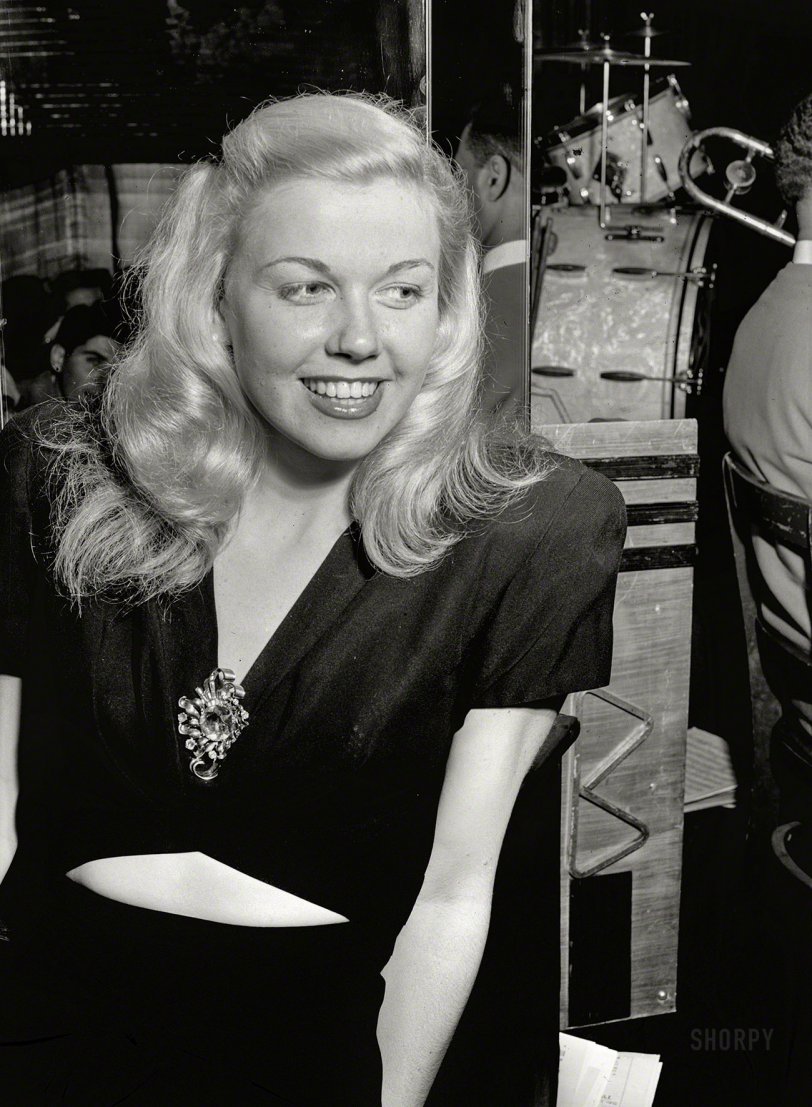
July 1946. New York. "Doris Day at the Aquarium, jazz club on Seventh Avenue." Medium format negative by William Gottlieb for Down Beat. View full size.
- 12 comments
- 12742 reads
River Traffic: 1898
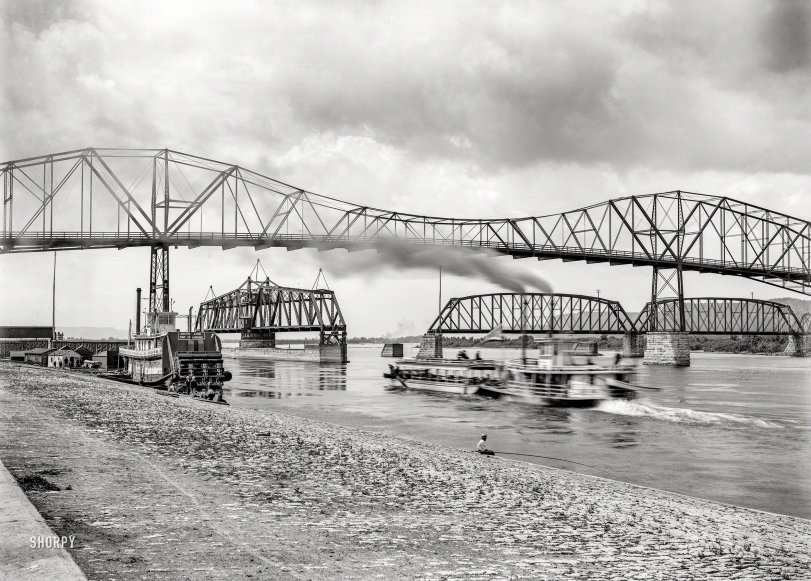
The Mississippi River circa 1898. "Winona, Minnesota. The levee below the bridge." At left, the sternwheeler Lafayette Lamb. 8x10 inch dry plate glass negative, Detroit Photgraphic Company. View full size.
- 5 comments
- 7570 reads
Dottie Reid: 1947
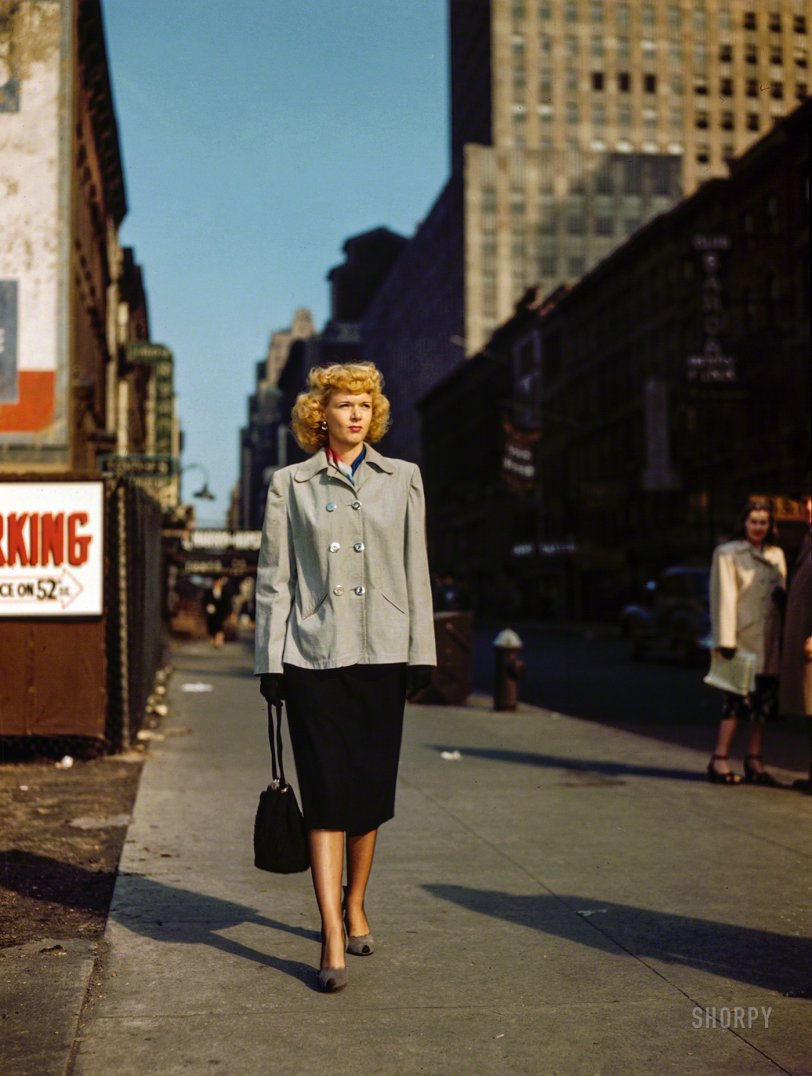
New York circa 1947. "Jazz singer Dottie Reid walking on 52nd Street." The stretch of pavement last seen here in a nighttime view. Kodachrome transparency by William Gottlieb for Down Beat. View full size.
PHOENIX, December 3, 2018 -- Big band singer and jazz artist Dorothy "Dottie" Reid died today at the age of 97. Dottie sang with Jimmy Dorsey and Buddy Rich, and went on a world tour with Benny Goodman. Born June 15, 1921, in Arkansas, she lived in New York and moved to Arizona in 2004.
House of Fleas: 1940
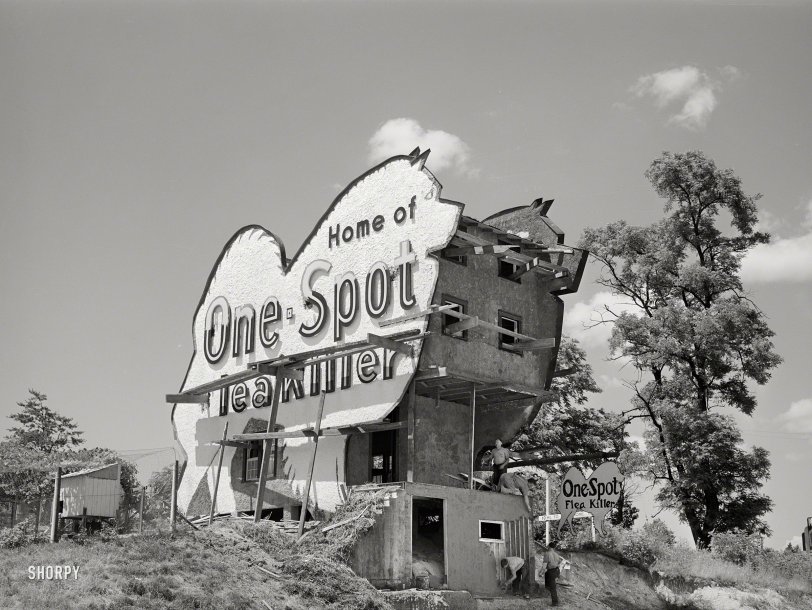
June 1940. "One-spot town along U.S. Highway No. 1, between Washington and Baltimore." Jessup, Maryland, was the corporate headquarters of flea-powder manufacturer One-Spot. Medium format negative by Jack Delano. View full size.
- 6 comments
- 11650 reads
Green Pastures: 1940
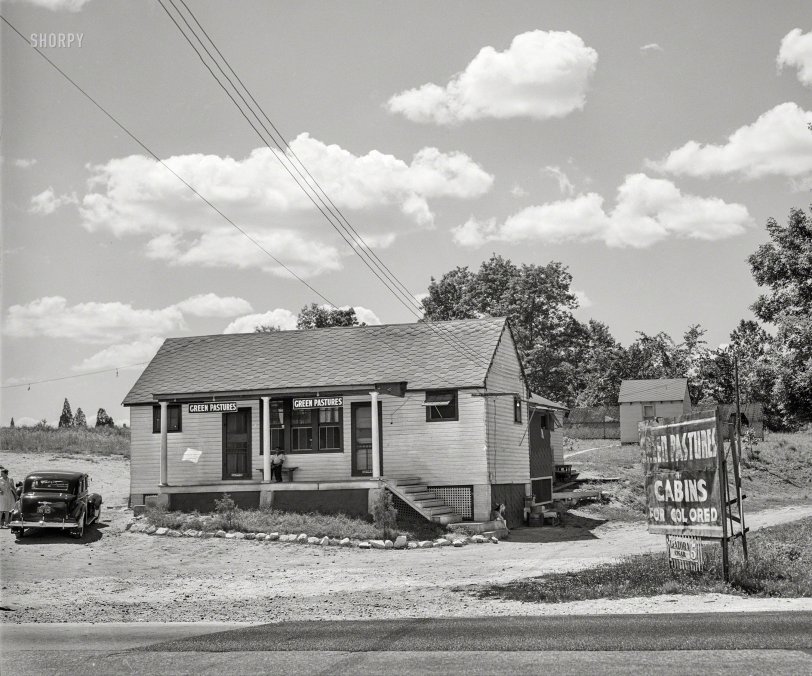
June 1940. "Colored tourist cabins along U.S. Highway No. 1, between Washington and Baltimore. Near Waterloo, Maryland." Medium format negative by Jack Delano for the Farm Security Administration. View full size.
- 6 comments
- 7945 reads
Lady & Mister: 1947
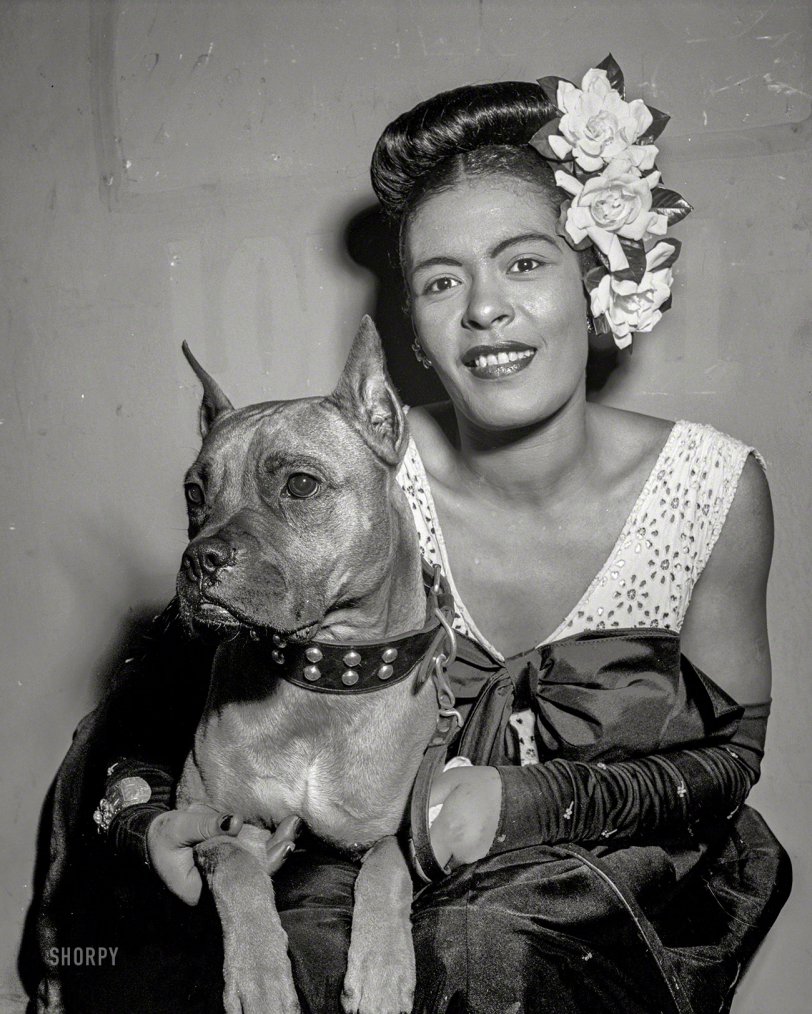
New York circa 1947. "Billie Holiday and her dog Mister at a 52nd Street jazz club." Medium format negative by William Gottlieb for Down Beat. View full size.
- 3 comments
- 8570 reads
The Great Escapist: 1900
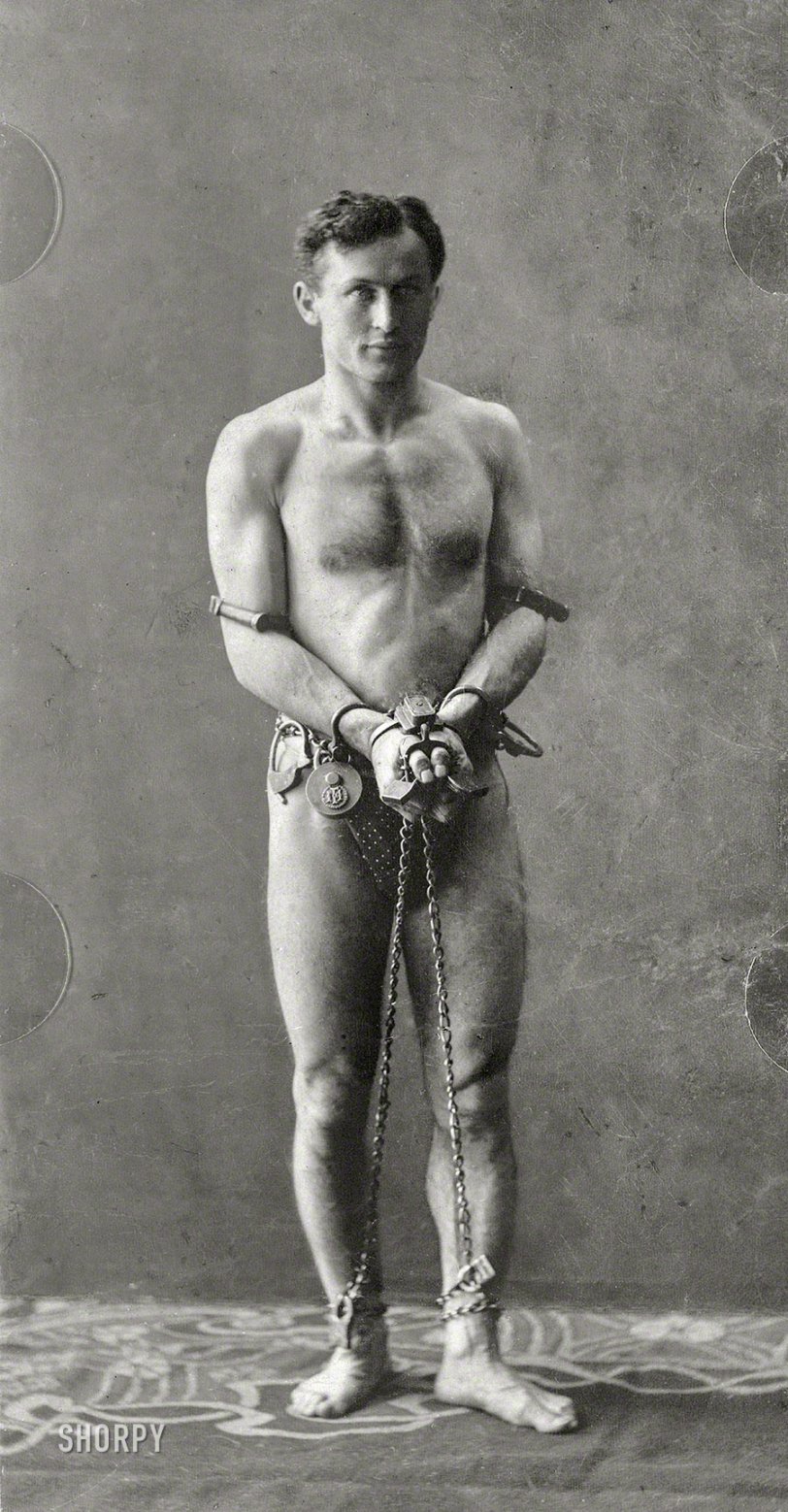
Circa 1900. "Harry Houdini (1874-1926), full-length portrait, standing, in chains." McManus-Young Collection, Library of Congress. View full size.
Longacre Square: 1911
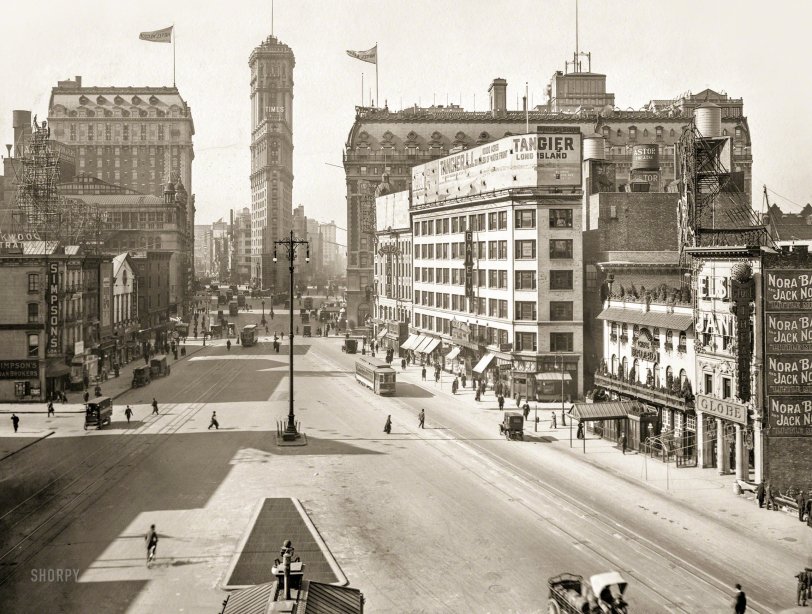
New York, 1911. "Longacre Square south." Times Square to you and me, with the Rector and Astor hotels flanking the New York Times building, now almost completely encased in electronic signage and launch pad for the New Year's "ball drop." Gelatin silver print by Irving Underhill. View full size.
- 3 comments
- 9392 reads
Houdini Swims: 1908
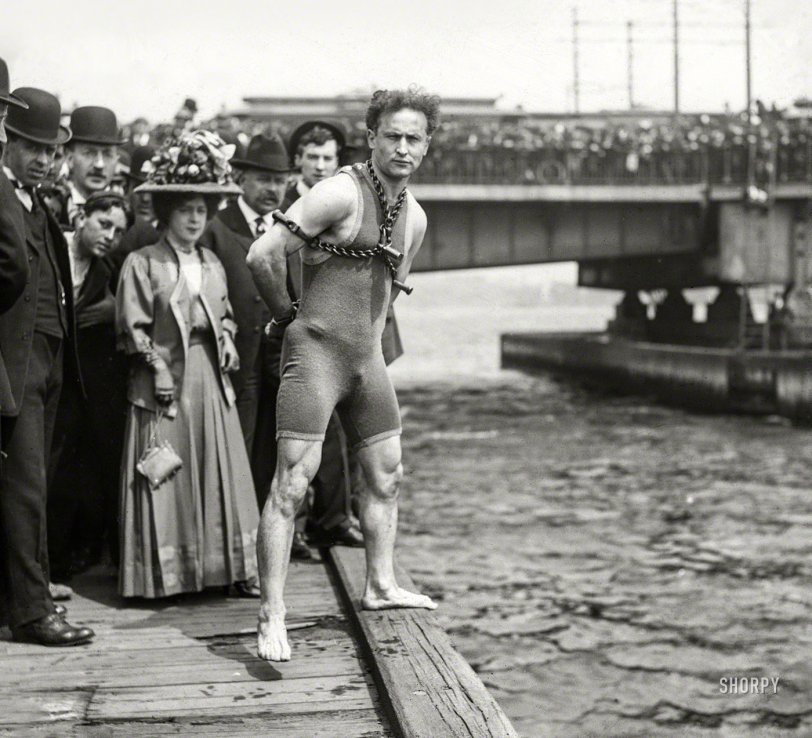
April 30, 1908. The Charles River in Boston. "Houdini in chains and handcuffs before jumping from Harvard Bridge." Photo by John Thurston. View full size.
- 10 comments
- 16552 reads
Manhattan Modern: 1933
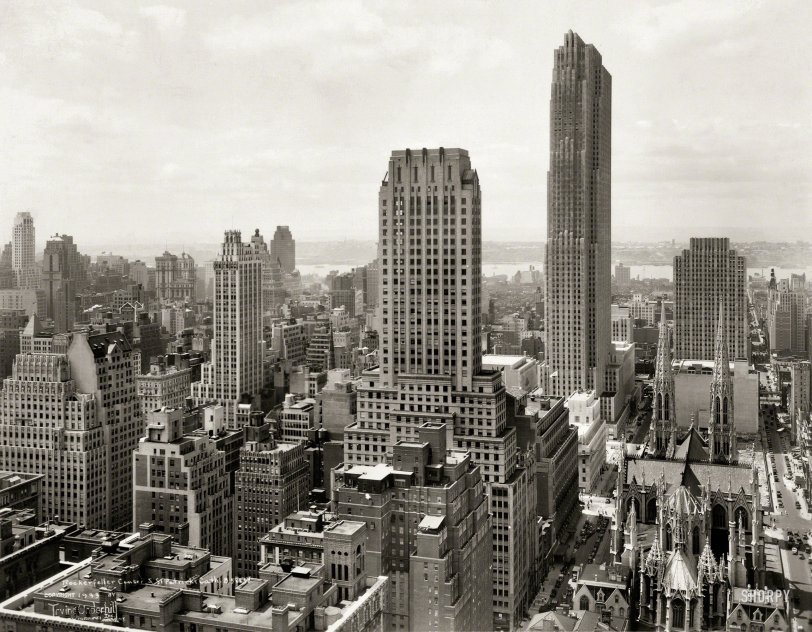
New York, 1933. "Midtown Manhattan skyline -- Rockefeller Center and St. Patrick's Cathedral." Gelatin silver print by Irving Underhill. View full size.
Girl Astronaut: 1959
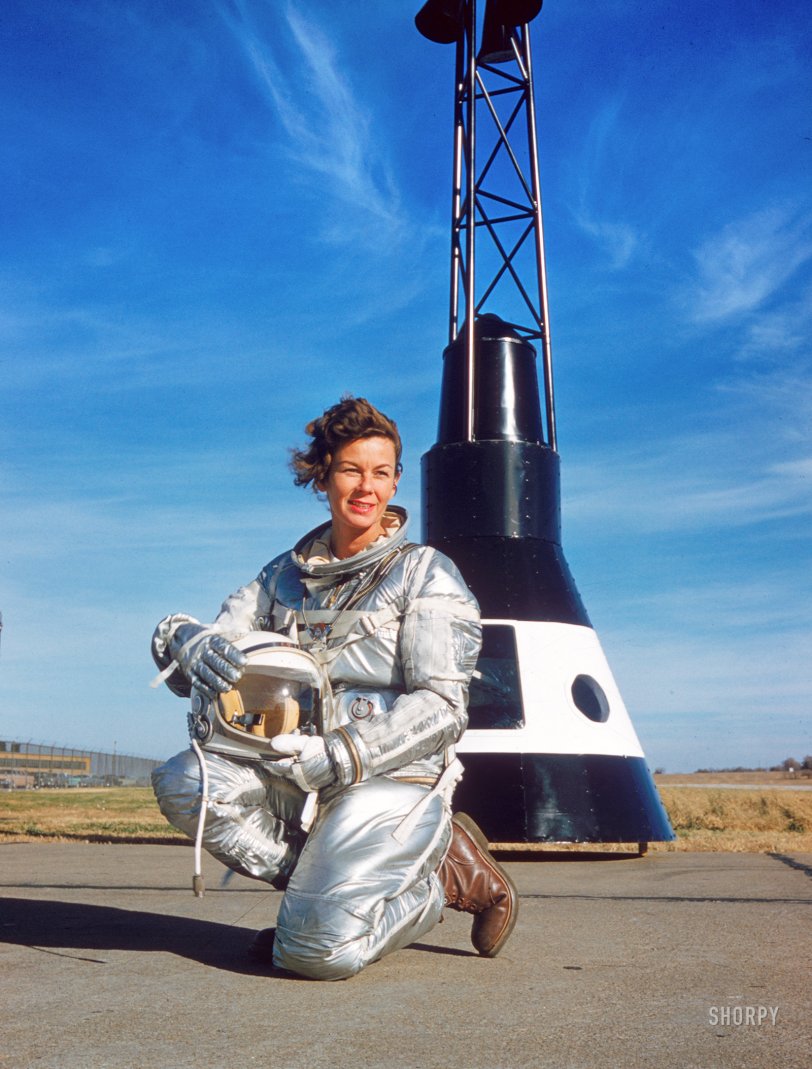
October 1959. "Pilot and auto test driver Betty Skelton at McDonnell Aircraft Corp., St. Louis. She is undergoing a multitude of physiological tests to assess her fitness to become an astronaut." 35mm Kodachrome by Bob Sandberg for the Look magazine assignment "Girl Astronaut -- Lady wants to orbit." View full size.
- 3 comments
- 12599 reads
Swing Street: 1948
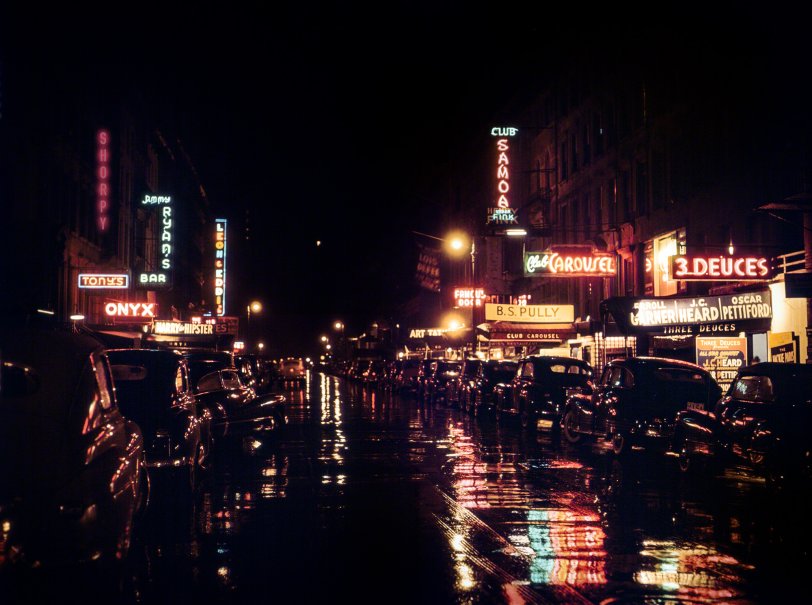
July 1948. 52nd Street in New York. "The Street is at its best at night, when the neons start to bloom. It loses some of its carnival atmosphere when daylight dims its gaudy luster." Kodachrome by William Gottlieb for Collier's magazine. If anyone needs us, we'll be digging Harry the Hipster at the Onyx. View full size.
- 13 comments
- 15530 reads
Gateway Center: 1952
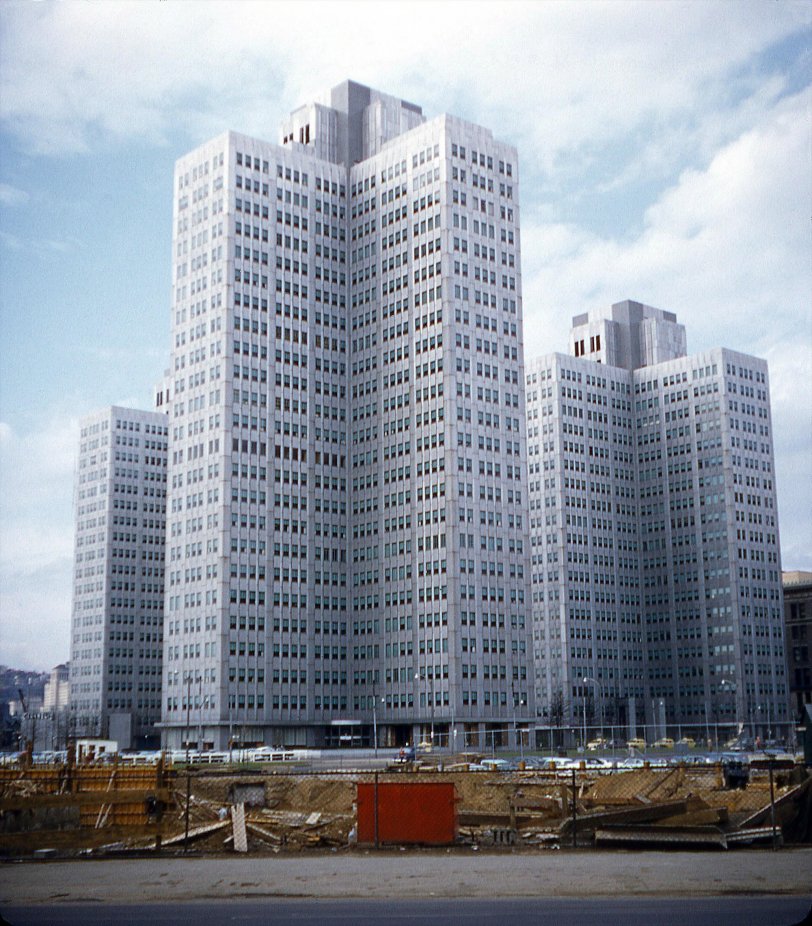
UPDATE: Our astute commenters have identified this as Pittsburgh's Gateway Center, circa 1952.
This is by far the most unusual photo (from a stereo slide) that my grandfather ever took. To this day it still does not look real to me but more like an artists rendering of what the building will look like when completed. I have no idea where it was taken but a good guess would be Pittsburgh, as that is the nearest city to where he lived (Titusville) and ran a camera shop for 32 years. I would guess the year is the late 1940's or early 50's judging from what I can see of some cars that appear to be taxis lined up in front of the building on the right side. I tried to estimate just how many sides and windows there would be in this building complex but gave up after still not being convinced it was real. View full size.
- 12 comments
- 12213 reads
Airport 1941
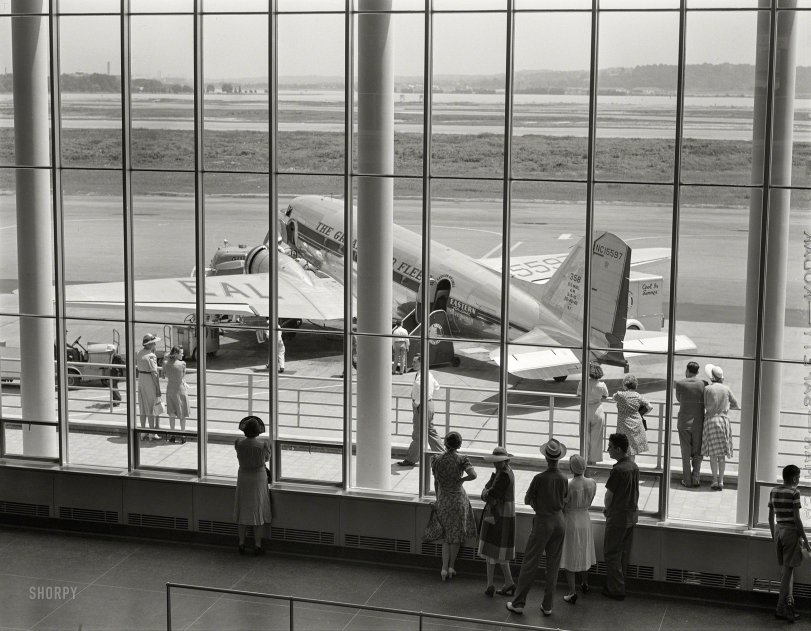
July 1941. "Observation deck and airliner on the field seen through the window of the waiting room. Municipal (National) airport, Washington, D.C." Medium format acetate negative by Jack Delano. View full size.
- 11 comments
- 11687 reads
Onward & Upward: 1941
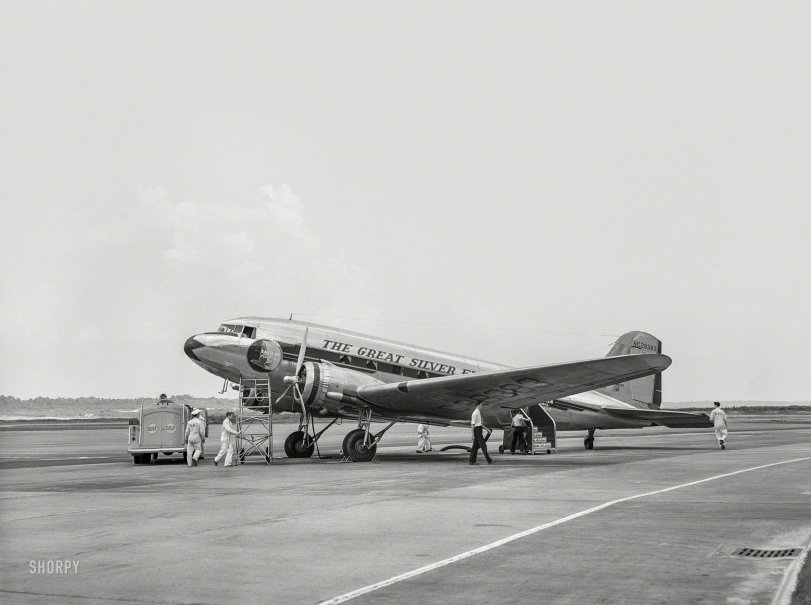
July 1941. "An airliner being readied for a takeoff. Municipal airport, Washington, D.C." Five years hence, this brand-new Eastern Air Lines DC-3 ended up on the wrong track. Medium format negative by Jack Delano. View full size.
- 6 comments
- 9054 reads

 Shorpy.com is a vintage photography site featuring thousands of high-definition images. The site is named after Shorpy Higginbotham, a teenage coal miner who lived 100 years ago. Contact us | Privacy policy | Accessibility Statement | Site © 2024 Shorpy Inc.